I’ve been working on another website design for someone and simply got all off schedule. Finished Sunday’s RTW post on Sunday and realized just now it is Tuesday and I’ve not selected a poem yet.
This is my life. Sometimes I’m ahead of the game and sometimes I’m not.
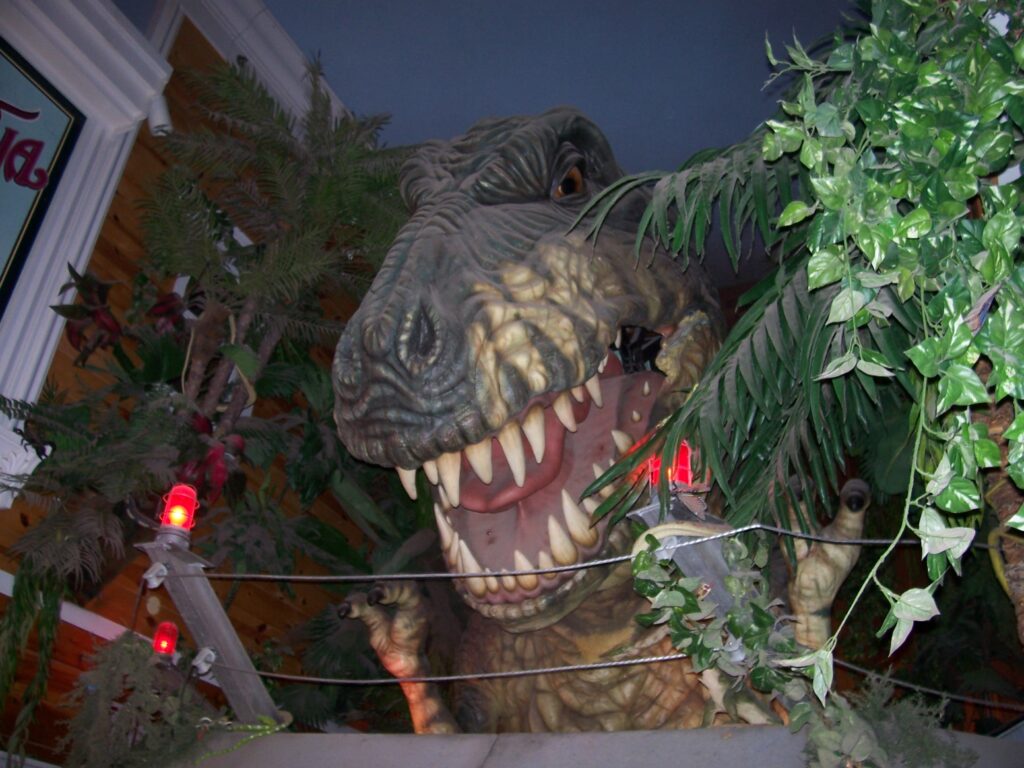
Today is all about driving toward Rock City to connect back up with Interstate-90 toward Wyoming. However, the biggest advantage of independent travel is that you get to set your own pace and route. That means we will leave enough time to stop at smaller attractions along the way. We have seen the billboards for Sitting Bull’s Crystal Cavern and Bear Country USA. Who could leave without checking those out, right?
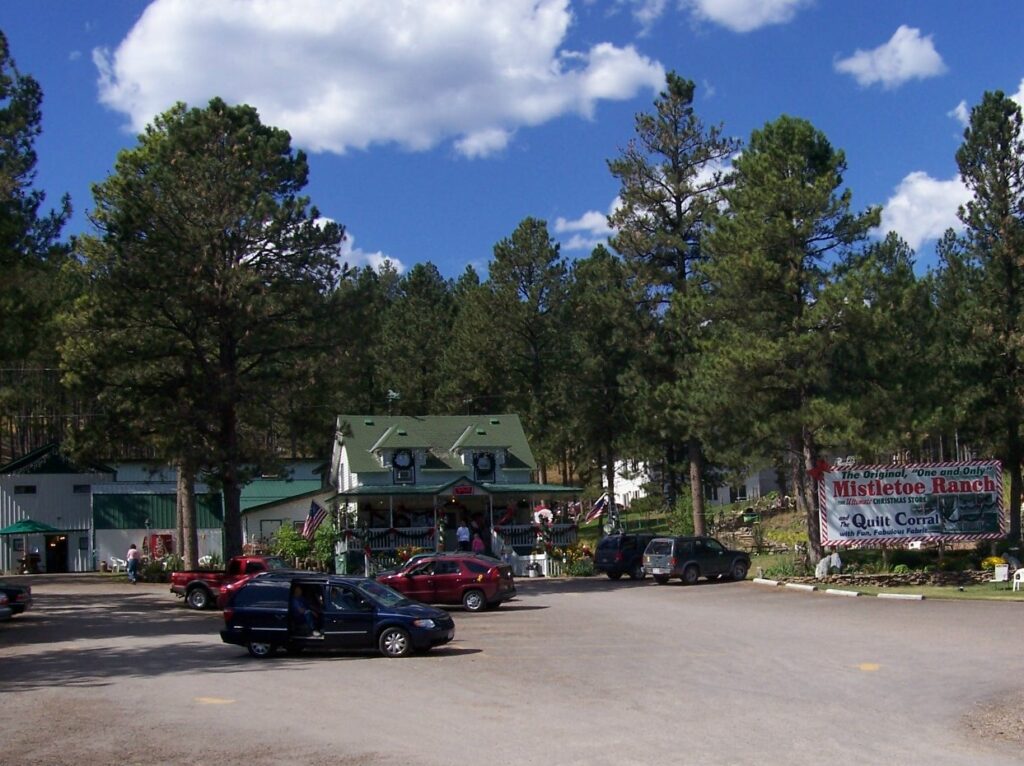
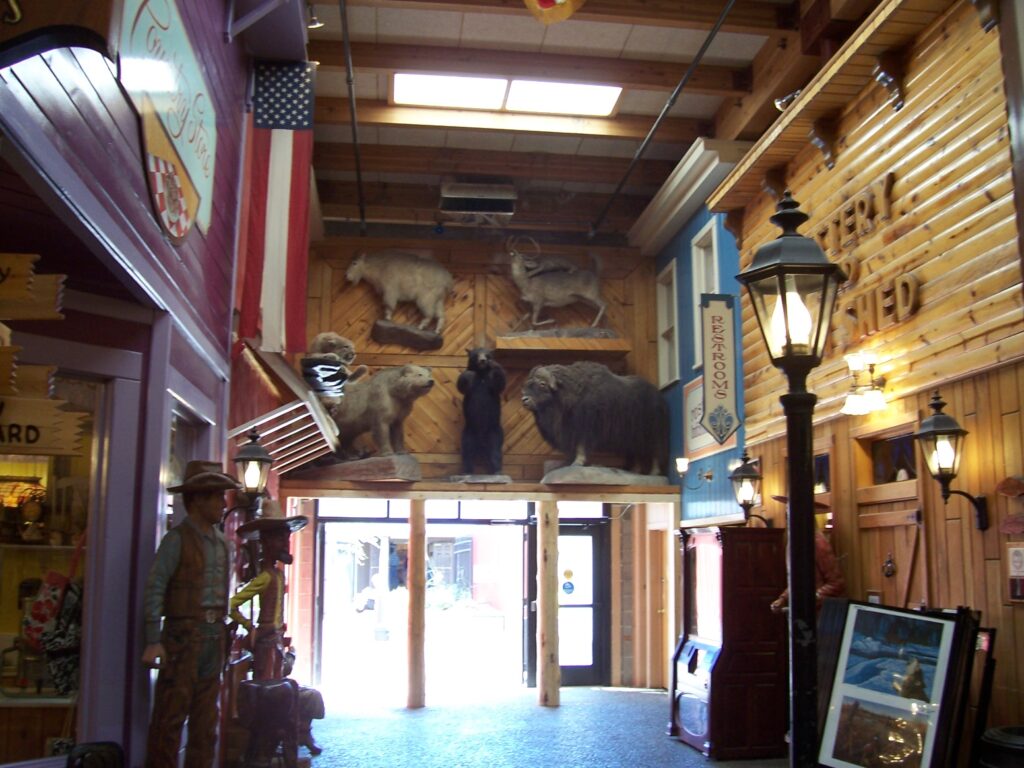
First, we stopped at the nearby Christmas Tree/Quilt store. Two of my favorite kinds of stores to dud through, in one! Rob noticed on our first stop that the shop was taking up a collection to help defray the cost of batting. It seems a group of local women are making quilts to donate to Hurricane Katrina victims. We made it a point to stop off again to put money into the kitty.
The woman at the nearby register was shocked that we tourists had seemly only stopped for this purpose. We explained our situation a bit and that led to me meandering through the fabrics. No willpower at all. I picked out a few fat-squares for Rob’s mother who is also a quilter. We’ll send them as a gift along with a box of supplies to be kept for safe keeping before getting on the freighter in Long Beach.
Sitting Bull’s Crystal Cavern
One of the secrets to happy traveling is that your companion/s enjoy the same types of things you do. For us, the list includes aquariums, planetariums, gardens, small themed museums, and caves. So the signs advertising Sitting Bull’s Crystal Cavern had us turning off the main road a mere nine miles from Rapid City.
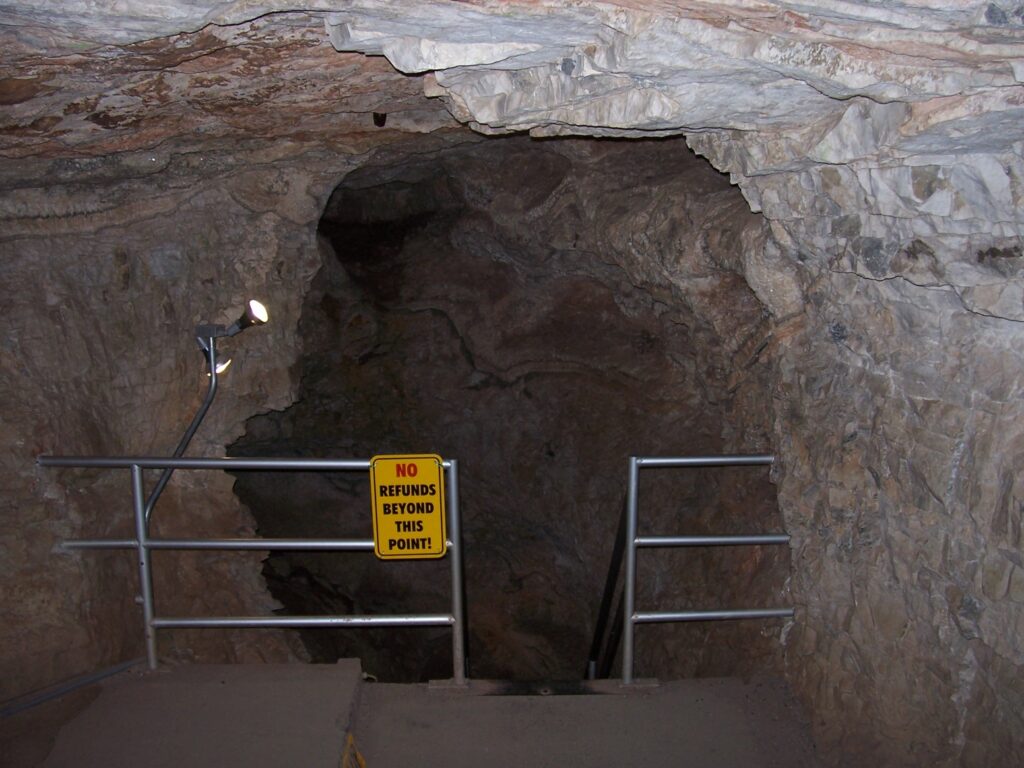
We followed the entrance drive, obediently honking the horn as the signs instruct before edging around some of the sharpest switchbacks we’ve ever seen. Eventually we turned into a parking lot. It must be a couple of hundred feet drop from the main highway.
As we walked toward the building, some kids got up from a picnic table. One boy chatted us up as we neared. It turned out he is the ticket salesman. He warned us the entrance is steep and involves, if memory serves, 165 steps and the temperature will be cold. We already have our jackets out. We are no novices to caves. We know how cold they can be and since the day is already hot, it will feel even colder.
The entrance drive and the ladder explain why this particular attraction is interesting but not on the most seen lists. As to the steps, we decide going down a ladder will be easier than going down the incline into the pyramids in Egypt where we were bent over at the waist in a near 90 degree angle.
We are game for it and follow the path to the entrance where, we are told, a party is getting ready to descend. The party turns out to be one woman and her (maybe) 10-year-old daughter. The guide appears. No burly mining type, but a teenage girl who grabs a flashlight, discusses cave etiquette and starts off down the stairs.
The World’s Largest Dog Tooth Crystal Awaits
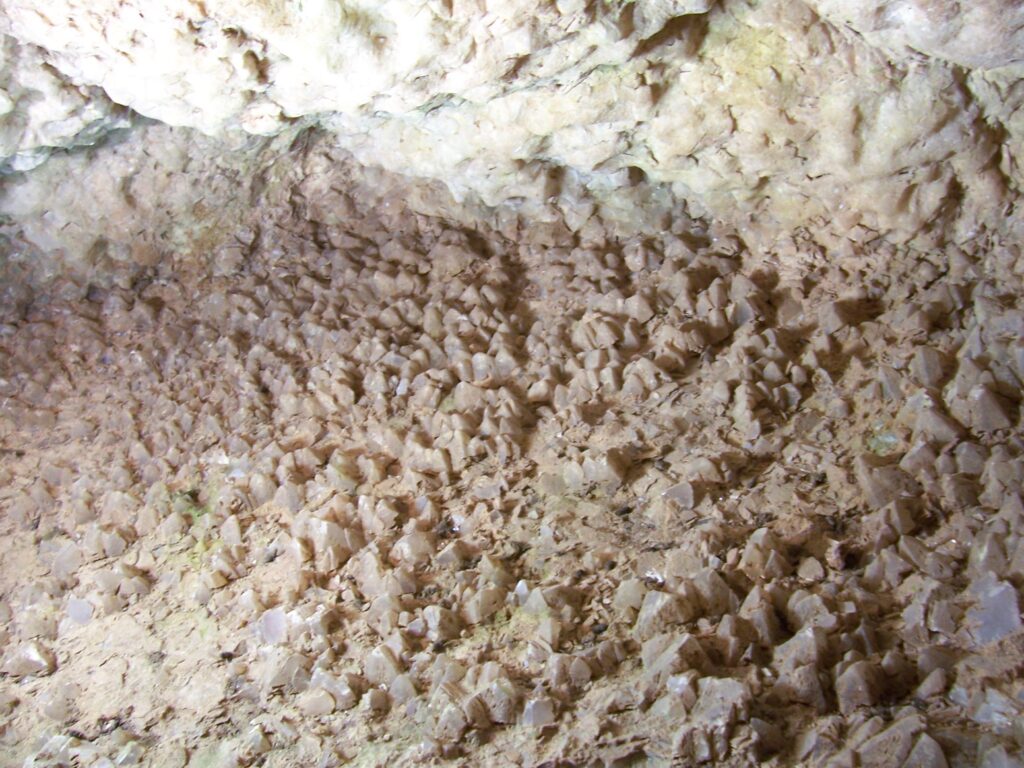
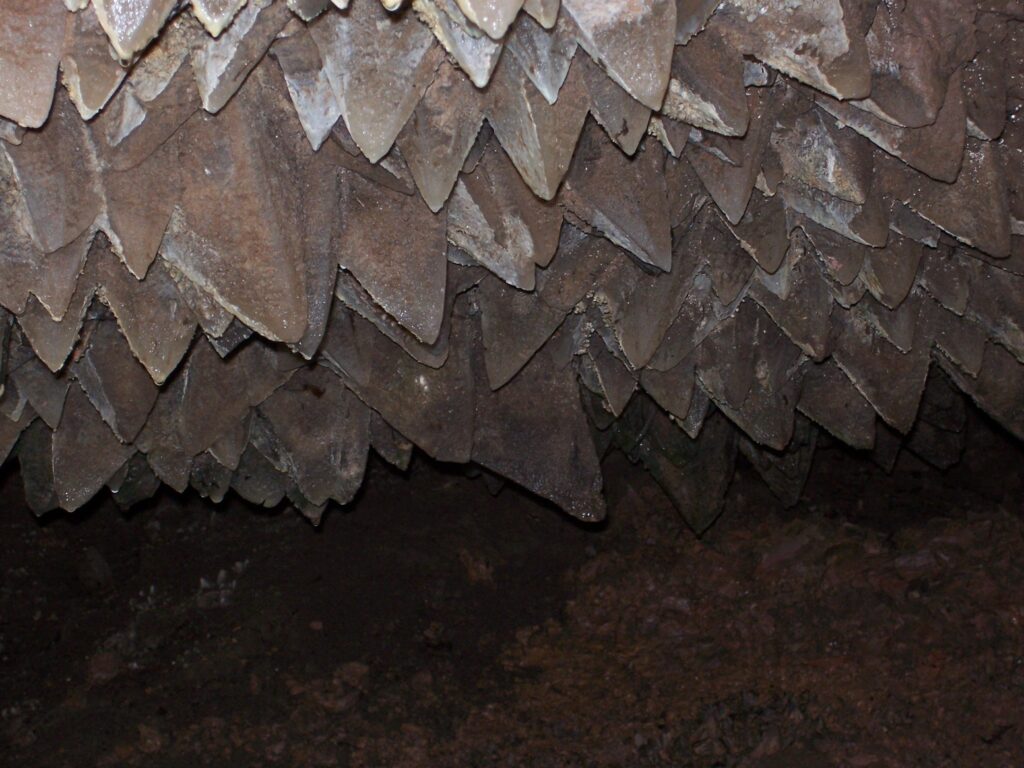
This particular limestone cave boasts the world’s largest dog tooth crystal. These types of crystals appear chocolate brown in color. Triangular in shape, they sort of have a folded fabric look, too. Hundreds of them cover a concave surface that is alongside our pathway. It feels as if we are inside a giant geode. Cool, indeed.
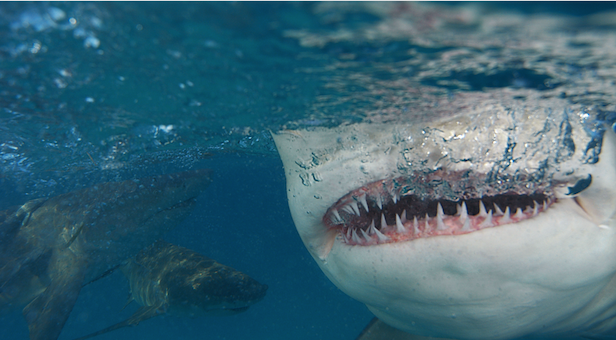
A dog tooth is not the kind of formation the masses gasp over. It is far smaller than giant stalactites and stalagmites. One, among the array, however, is impressive in its own right. The largest in the world clearly stands out among its smaller kinfolk. This is a lot like looking closely at an open-mouthed shark with rows and rows of teeth.
Dog tooth crystal beds look like a mouth full of shark teeth!
If you are the kind of person who seeks out the easily accessed touring caves (like Mammoth or even our local, upstate New York’s Howe Caverns), this place will seem crude in comparison.
Overall, we had a good time, learned something and enjoyed the company. The little girl was very inquisitive and bright. She found lots of things to look at and ask about. It was nice to see her curiosity.
Sad to say that after 82 years, the family who own this land have spread far and wide. Today’s descendants don’t have the interest in maintaining the cavern so in September 2015 the cave was closed down. This place was thought to be the winter home for Chief Sitting Bull long before the property opened to the public in 1934. Now, as the former manager said, “…it can become a cave again.”
More than just bears at Bear Country USA
You drive your own vehicle through Bear Country USA although no convertibles or motorcycles are allowed. That is a good thing since the animals roam free. During normal times they provide drivers and vehicles for those who arrive on motorcycle but that service has been temporarily halted due to the Coronavirus.
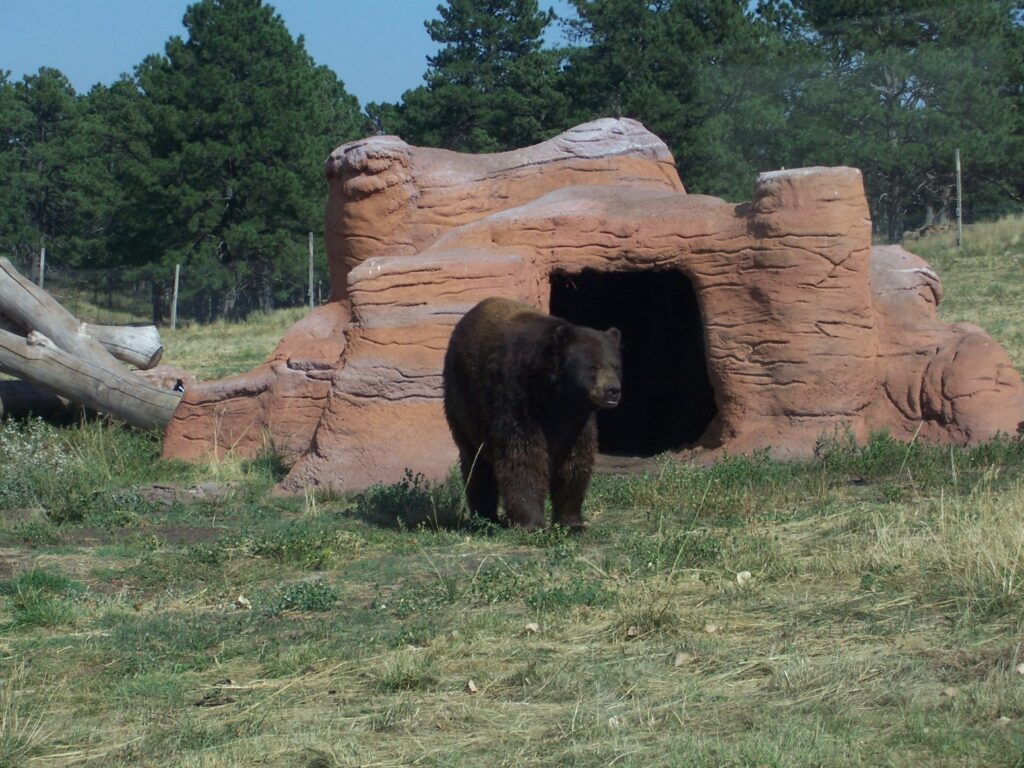
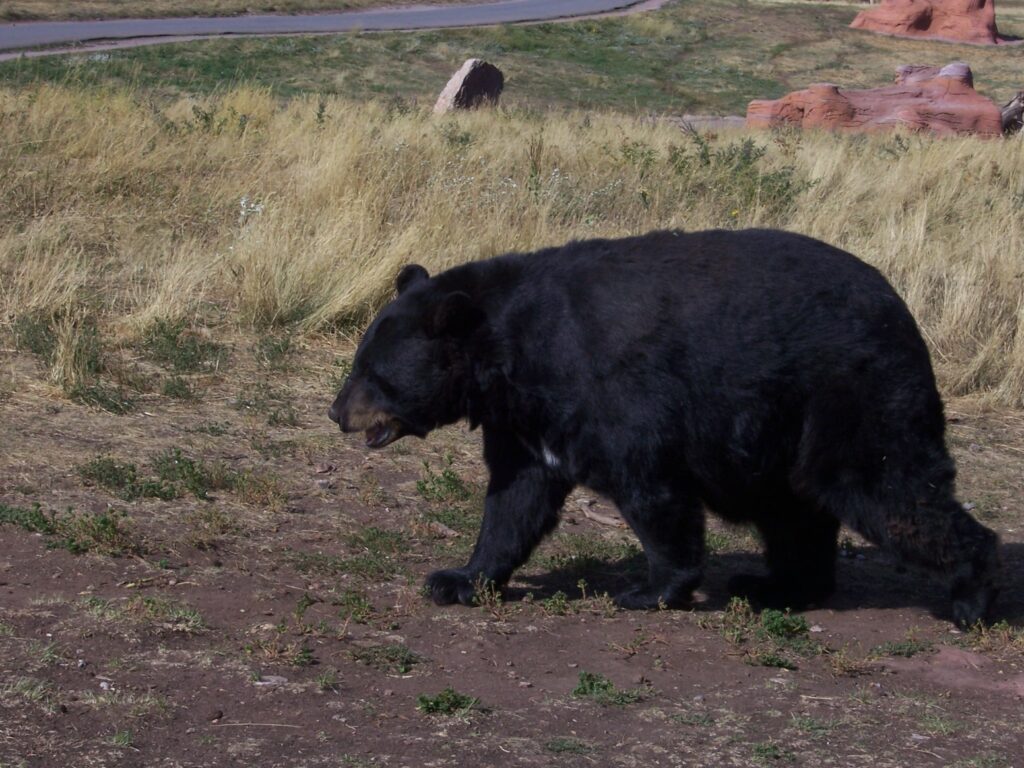
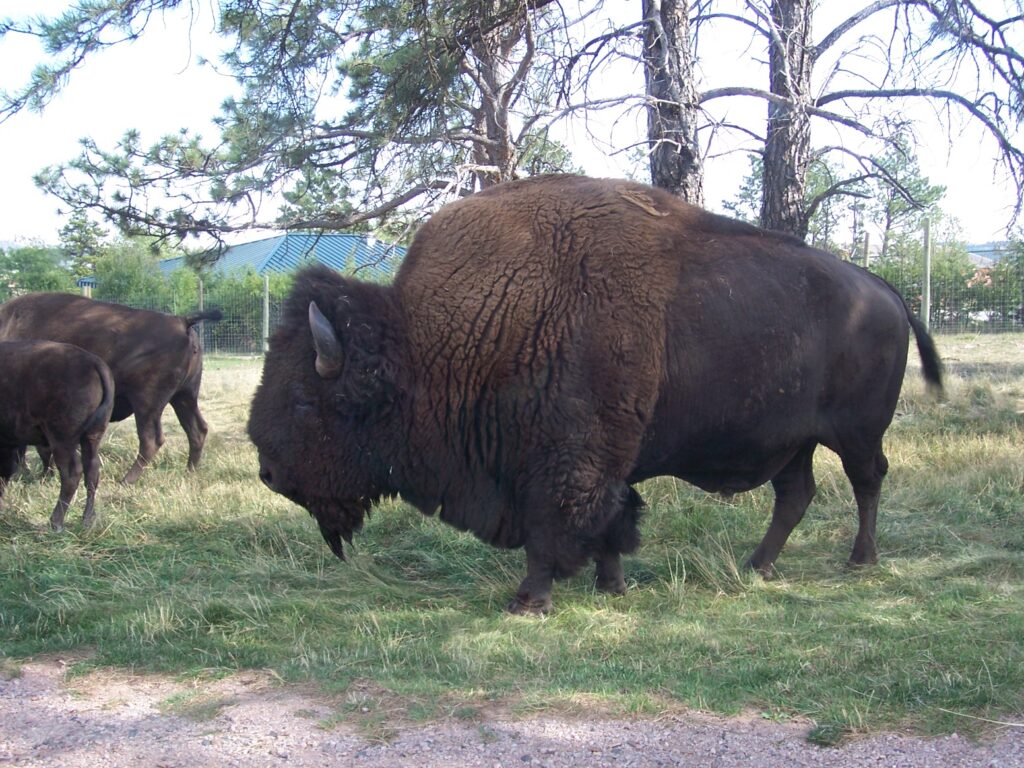
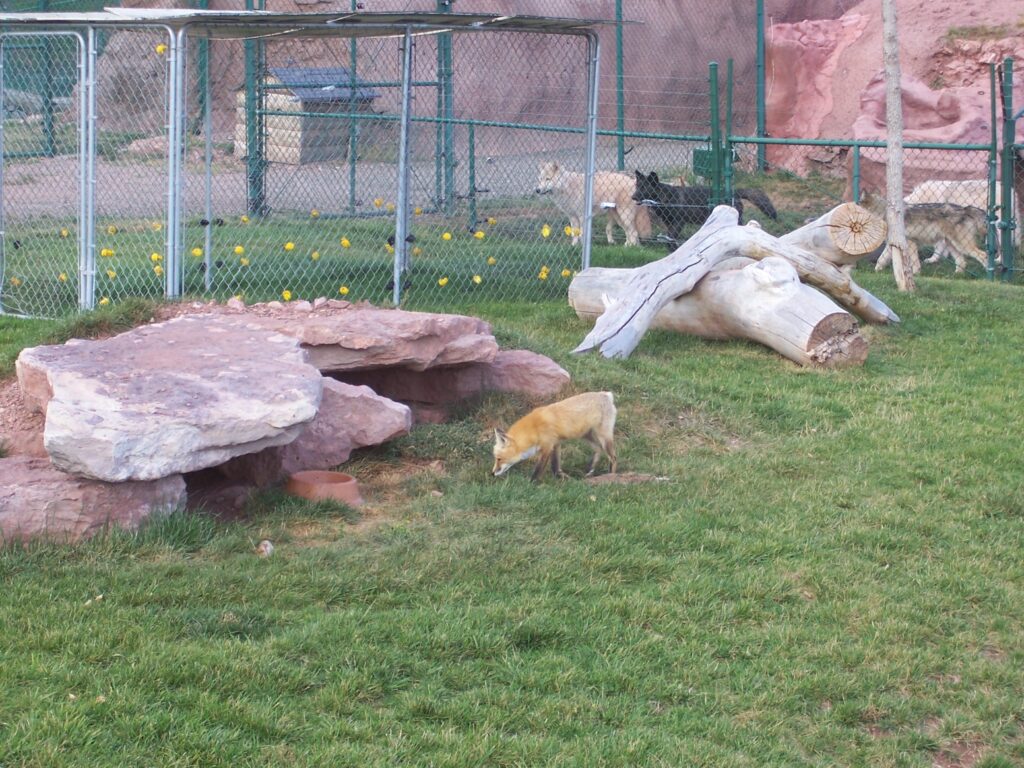
The looping road is a well-marked, one-way drive. Various wild animals loll around, munching delivered meals and looking rather bored in the mid-afternoon heat. The animals all look up as if to say, “Howdy.” I think they have become so used to cars, they pose as we stop, roll down a window, snap a photo and then move on – being very careful to roll that window back up, mind you.
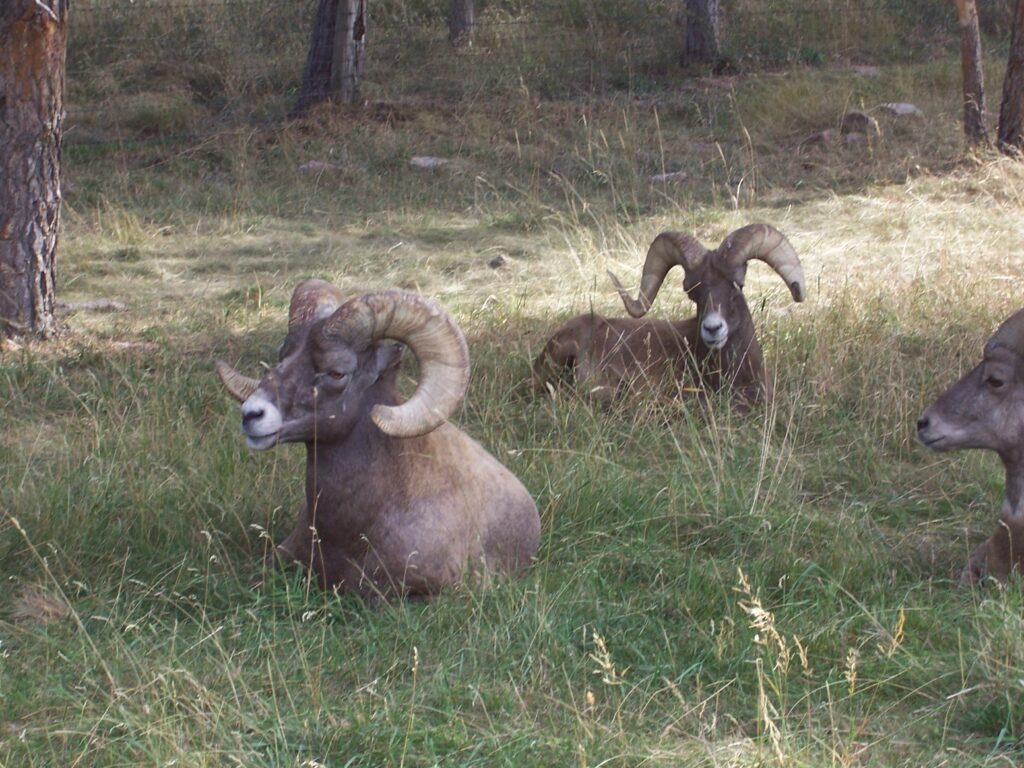
These puppies may seem bored, but that doesn’t mean their fangs and claws wouldn’t do a lot of damage. Arctic wolves and bears each have their own, unique scratch and bite instincts. I have to temper my desire to coo, “Cutie pie.”
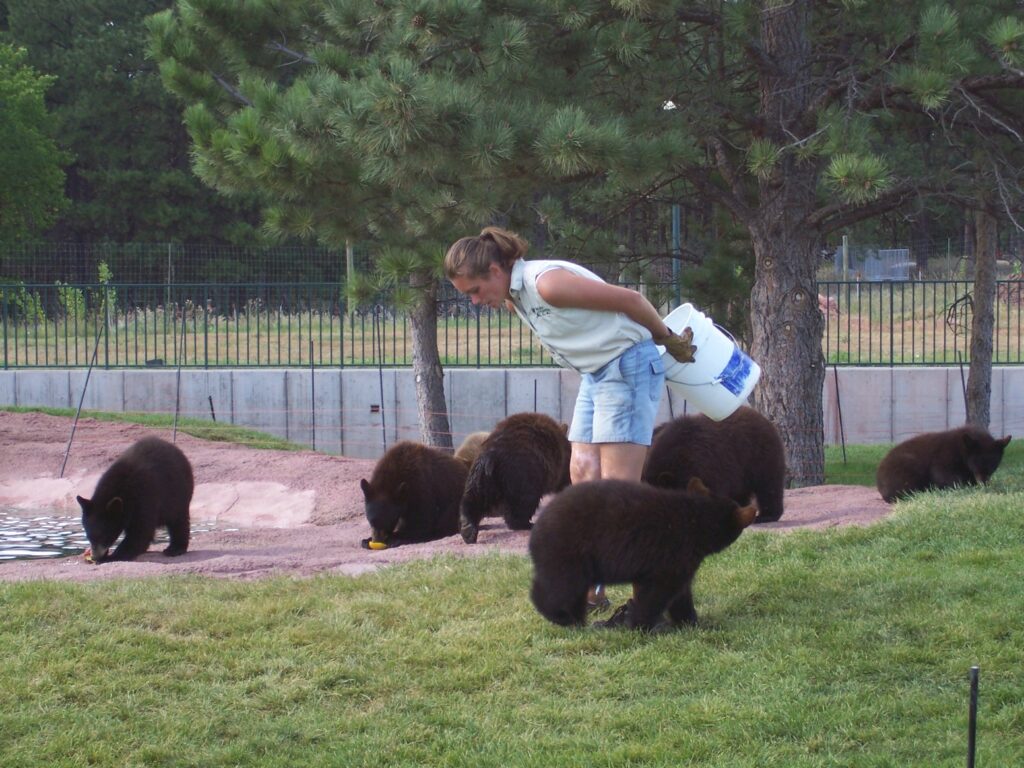
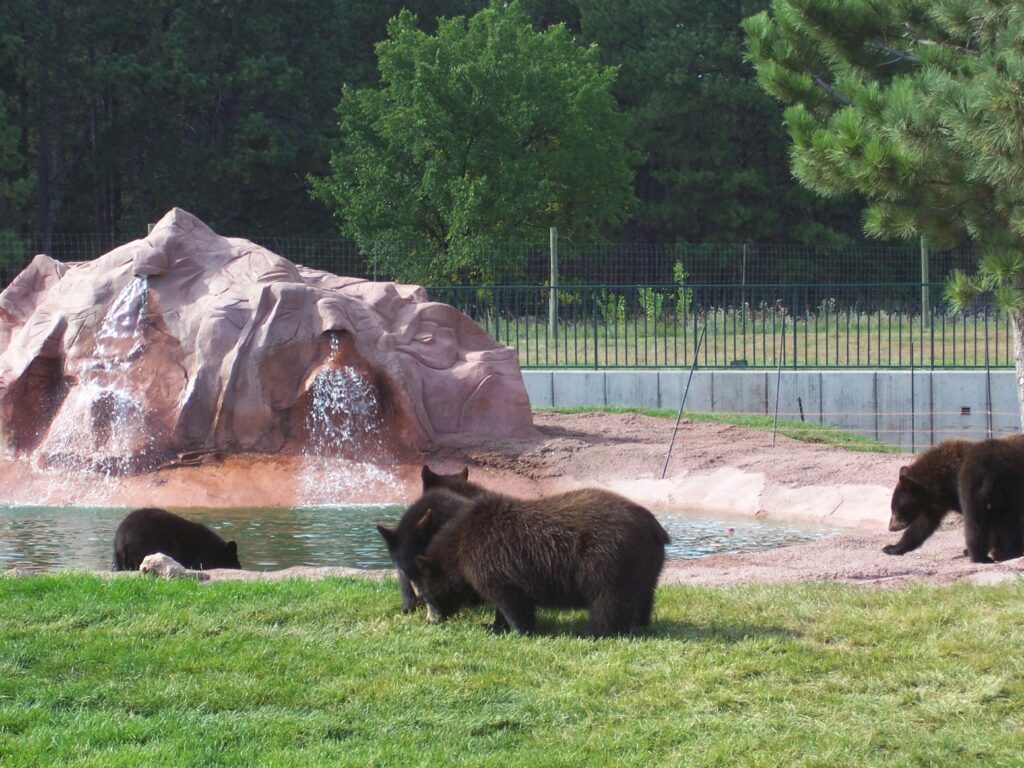
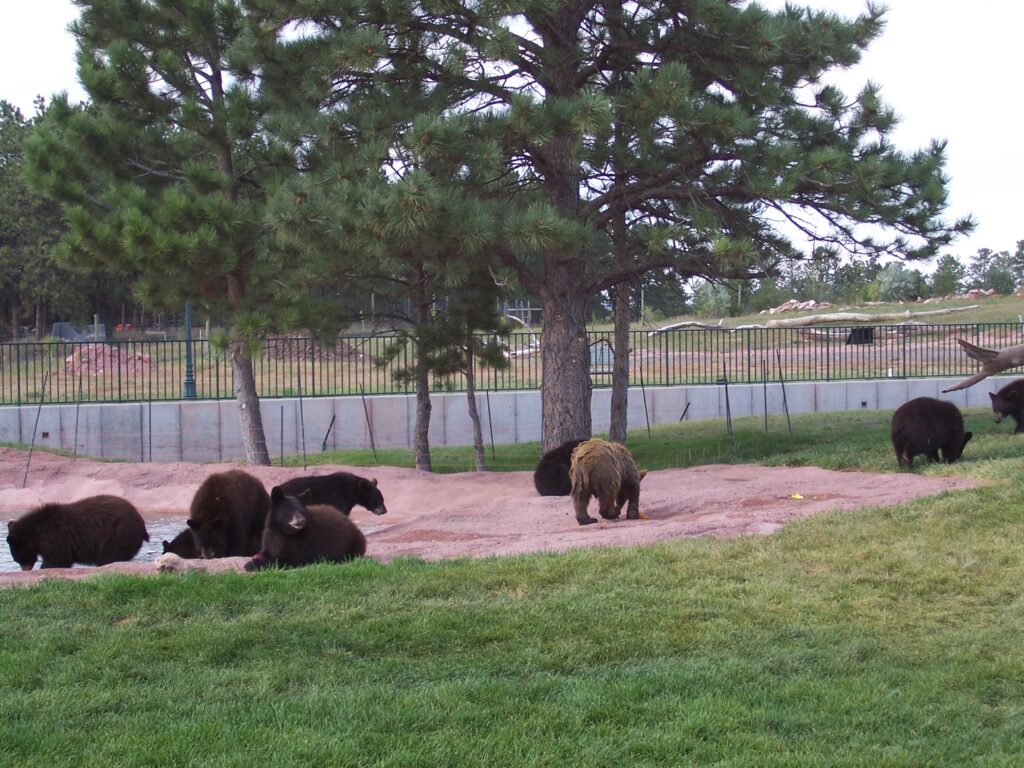
After the drive, we stopped to walk through the gift shop and then out to a pool area where the year’s crop of baby bears frolicked in a giant pool aka/pond. They are so cute you want to wrap your arms around them until you get a look at the claws.
Driving across the United States
PART 7: Rapid City is only 30 miles from Hill City; we checked out some local spots on the way to Wyoming
Mistletoe Ranch and Quilt Shop (bought out by winery in 2012; now used for tastings and events.
Sitting Bull’s Crystal Cavern
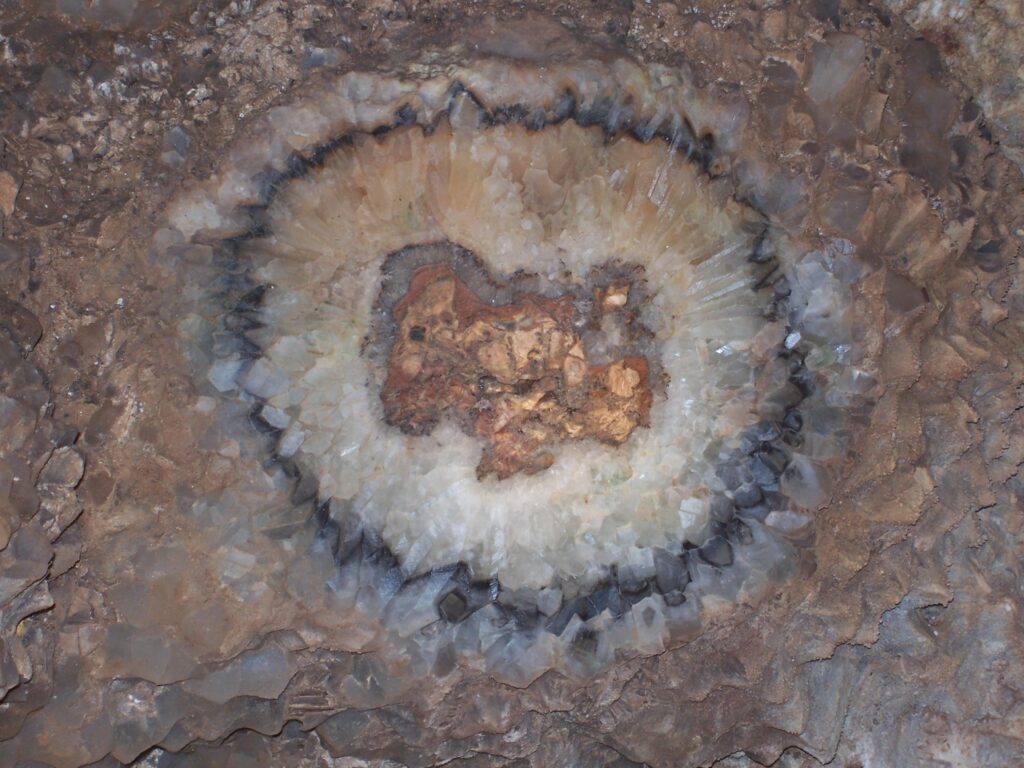
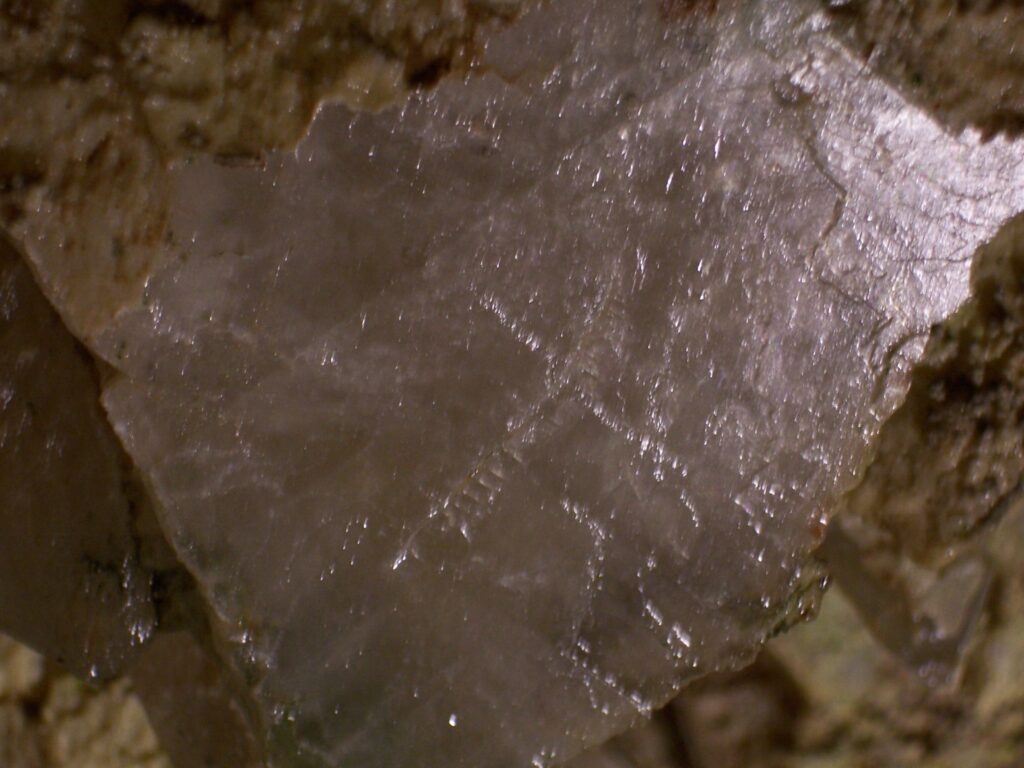
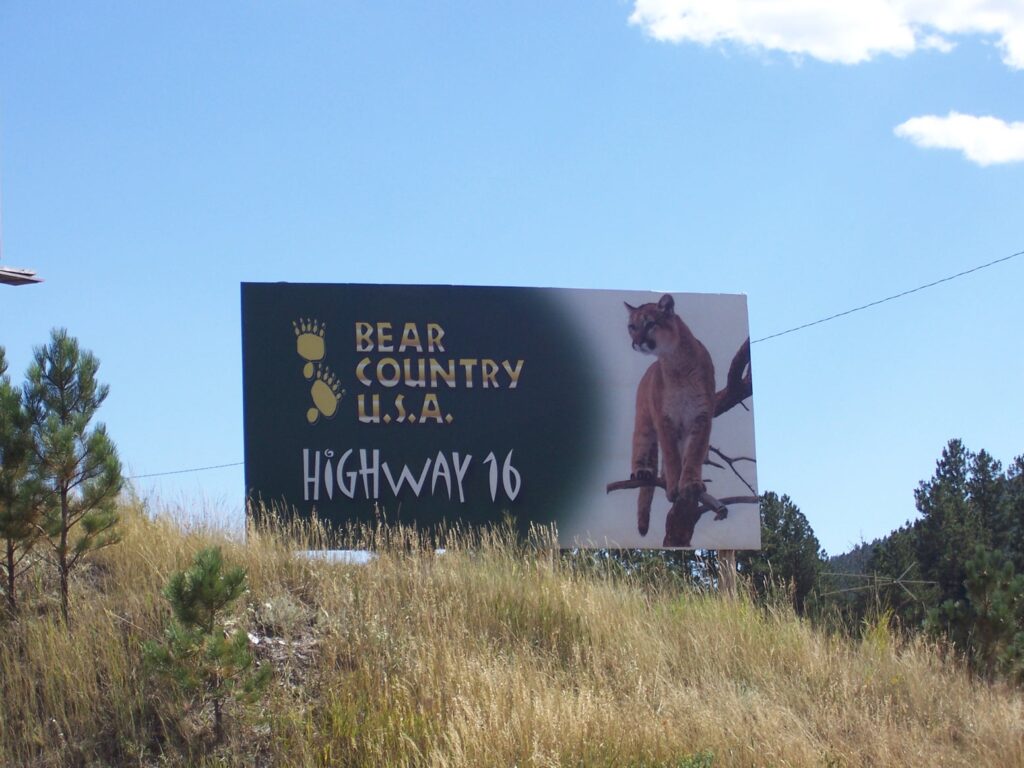
Entrance via ladderCrystal bedSection of dog tooth crystalsDog Tooth Root Canal???World’s Largest Dog Tooth Crystal is milk chocolate.Bear Country USA Billboard doesn’t show a bear?
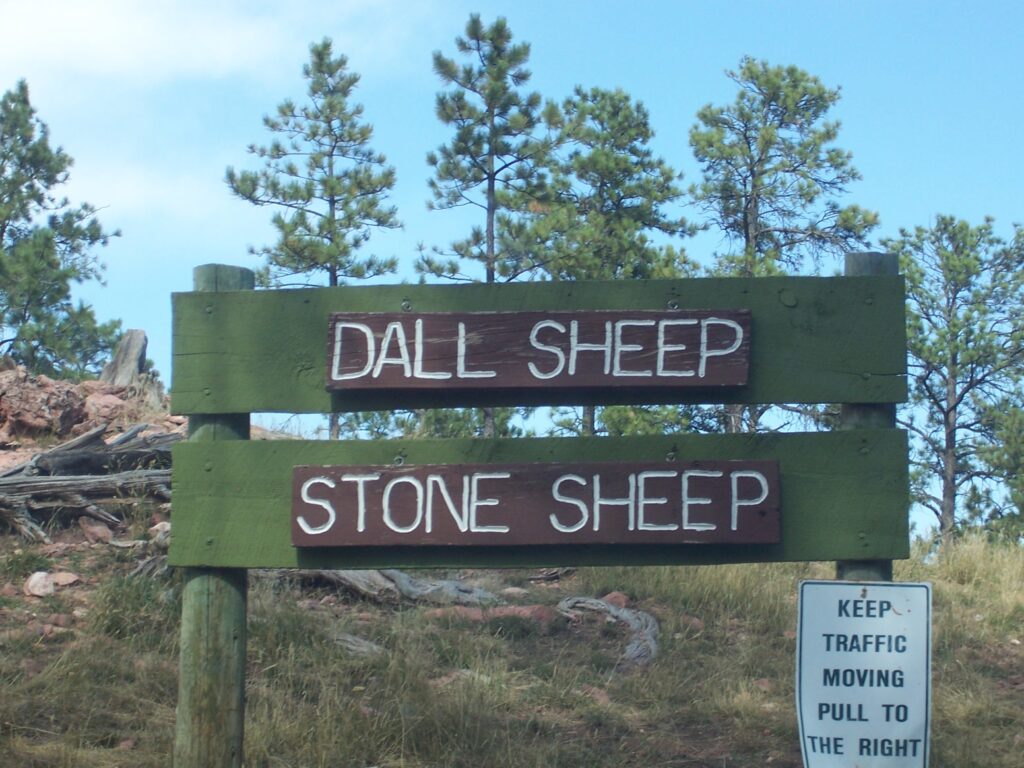
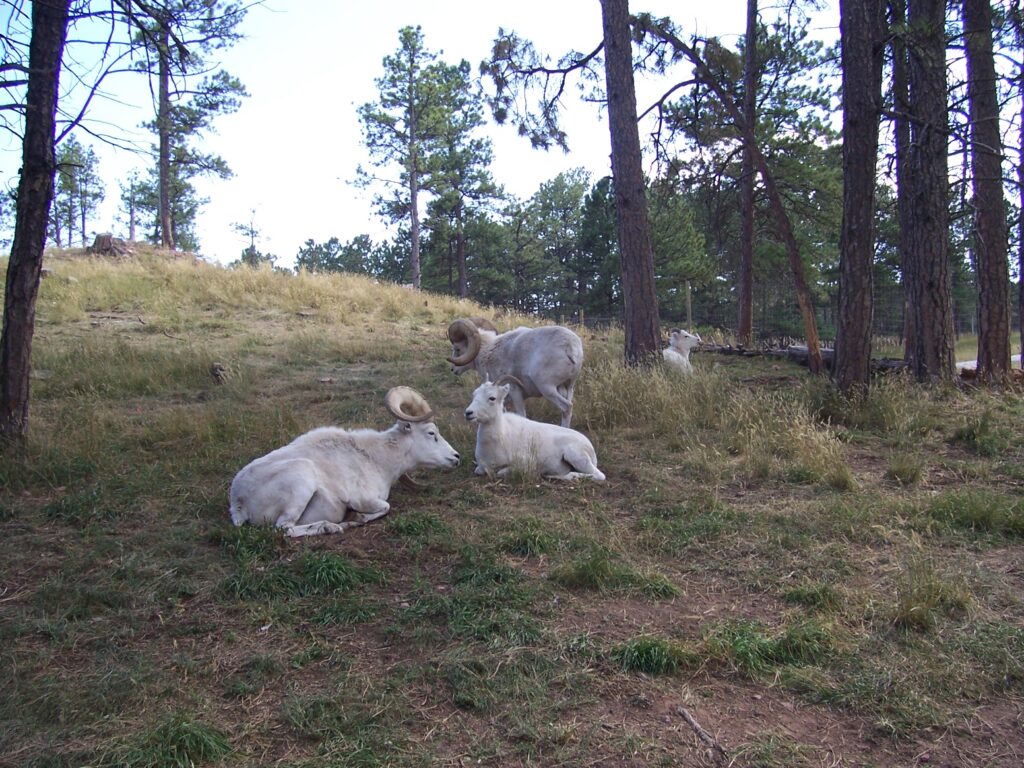
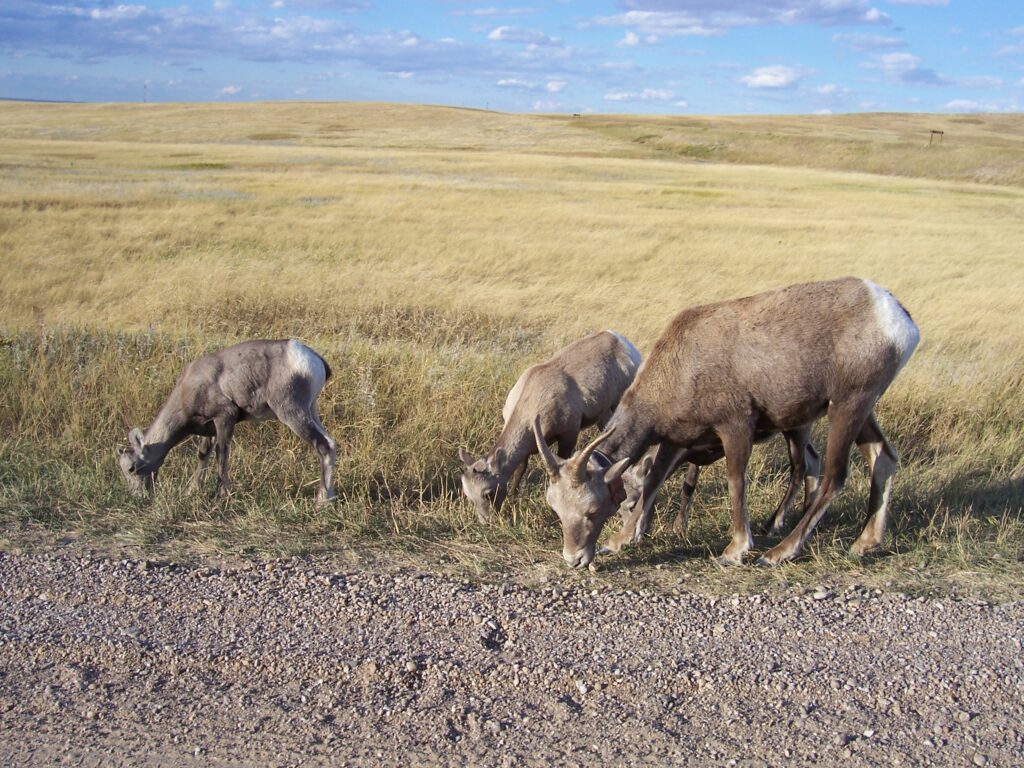
Two sheep
Three sheep
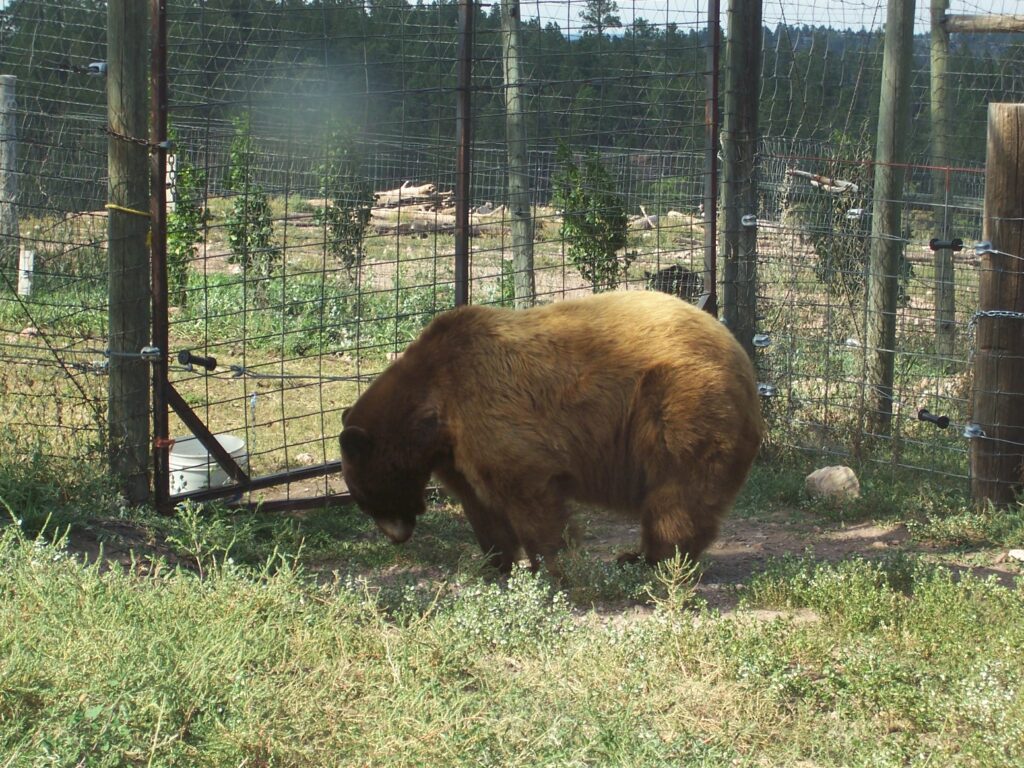
Brown Bear
Black Bear
Teddy Bear?
Bison aka/Buffalo
Red Fox
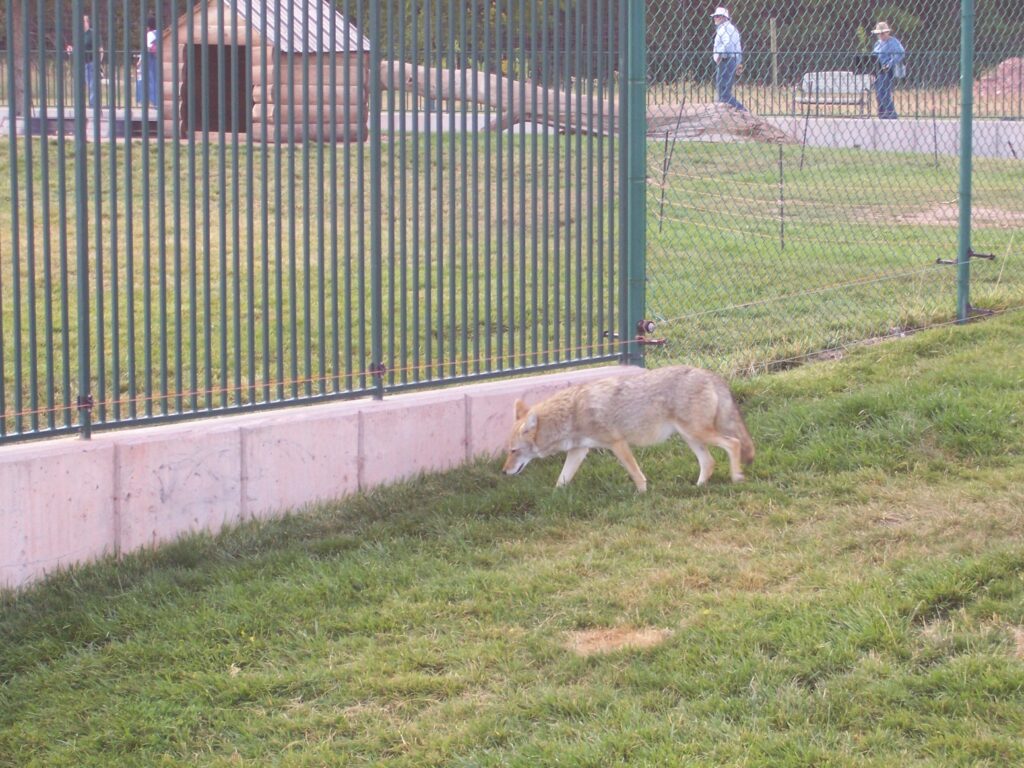
Coyote
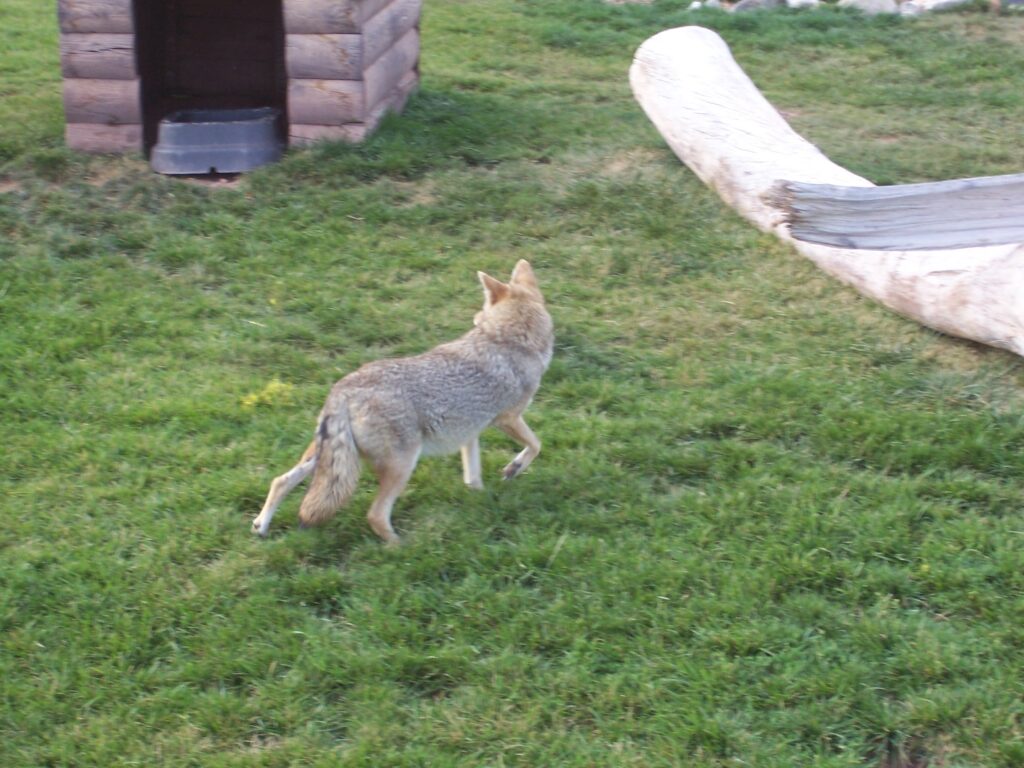
Turning his back to us?
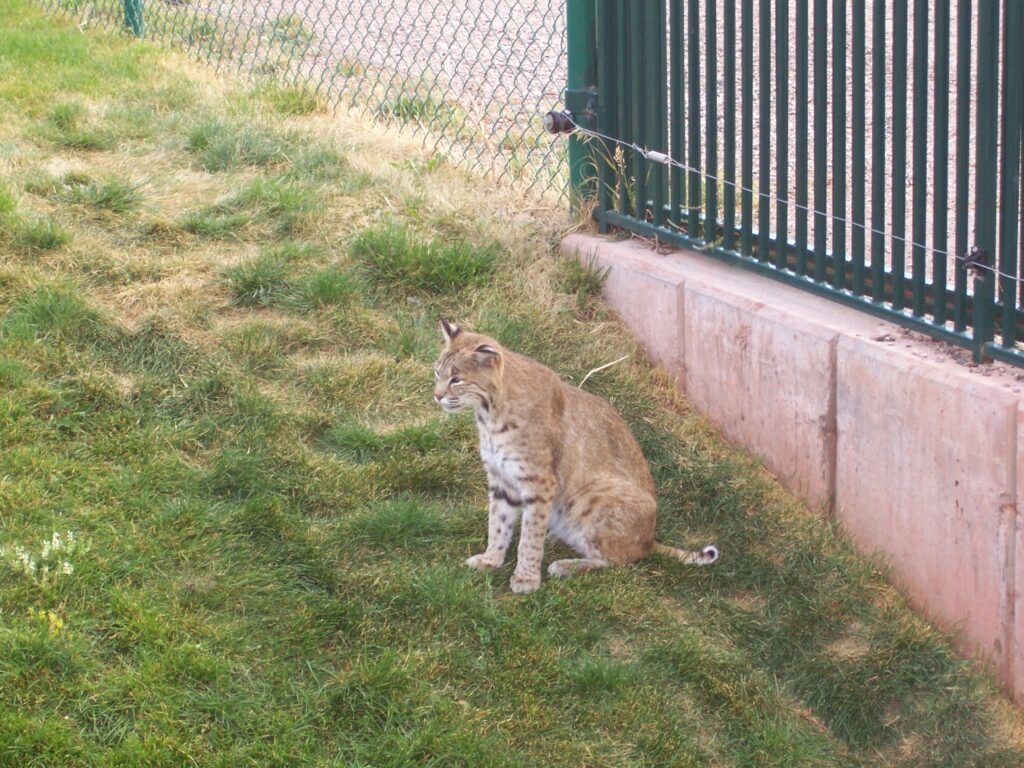
Canadian Lynx
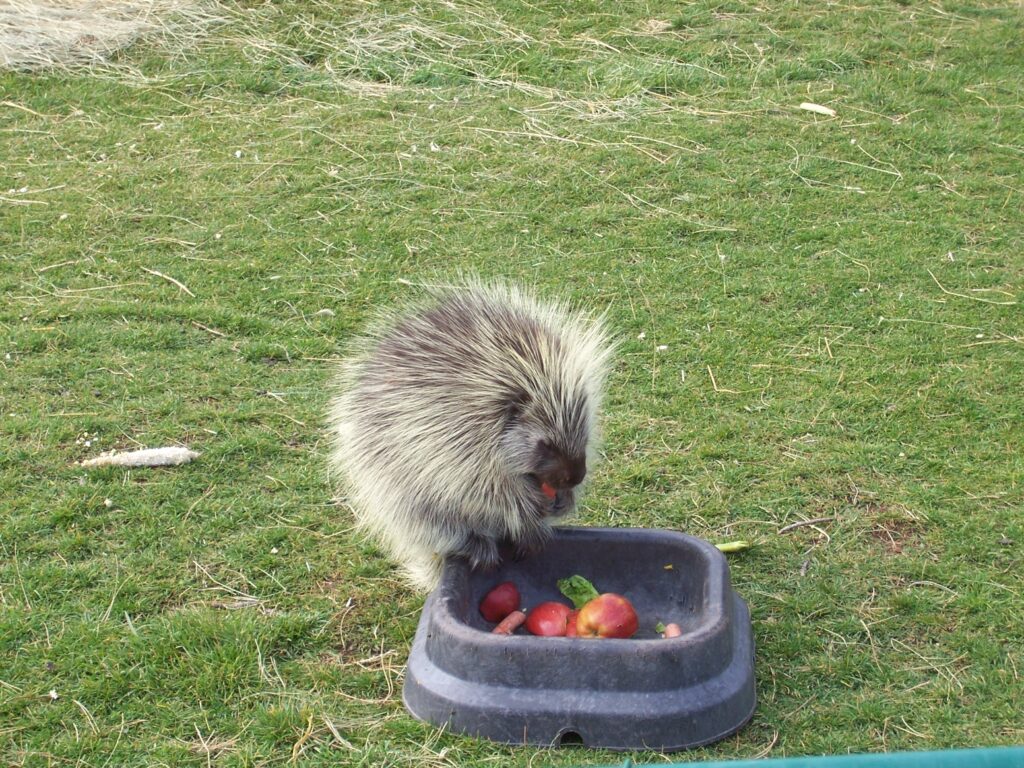
Porcupine
Afternoon fruit break
at poolside
for all the baby bears!
Bear Country USA, Route 16, Rock City, South Dakota
This post is one in a series that document our 400-day trip round the world (2005-2006). Each segment will be linked in at RTW.
Recurring thoughts and dreams
revolve around a common theme
            about a light within
            a throbbing goodness
            ready to burst forth.

Optimism wins each battle
despite a cynic’s cooling heart
            as white knights
            on silver steeds
            wage war within.

Reflections of a childhood
filled with Brothers Grimm
            where evil lurks
            but cannot conquer
            as goodness triumphs.

Tutored by a loving mother
who believed in simple things
            like golden rules
            random acts of kindness
            and good deeds.

Not surprising to find the seed
For all the light and hope within
            that erupts as words
            on a blank screen
            not so random as they seem.

By Marilyn Paluszak
Reprinted from a poem written in 2012 by Marilyn Paluszak
PART 6: Black Hills of South Dakota, Crazy Horse, Mount Rushmore, the Needles Highway and a fantastic dinner
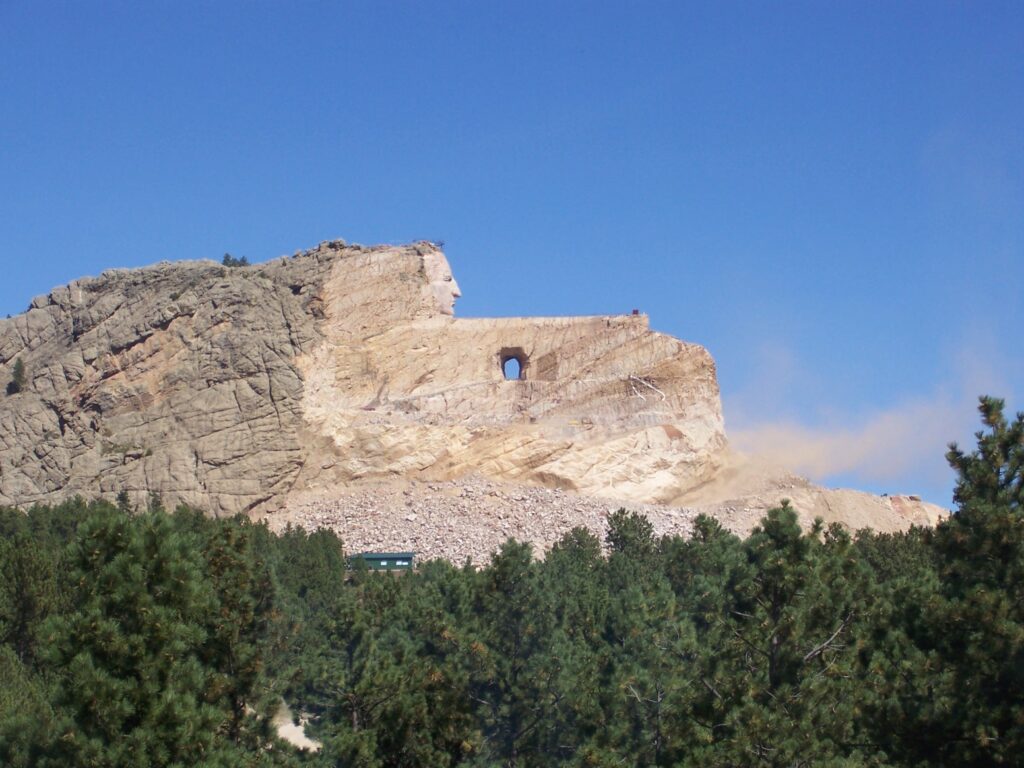
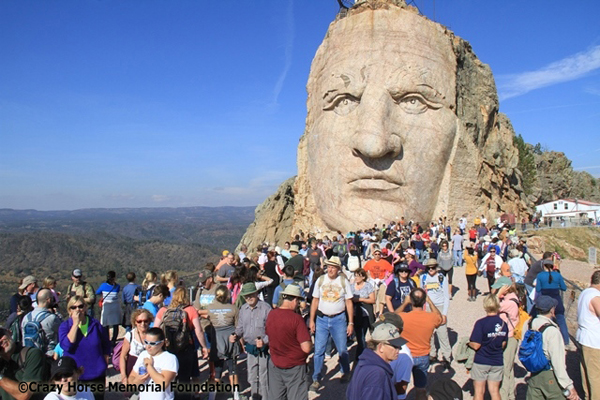
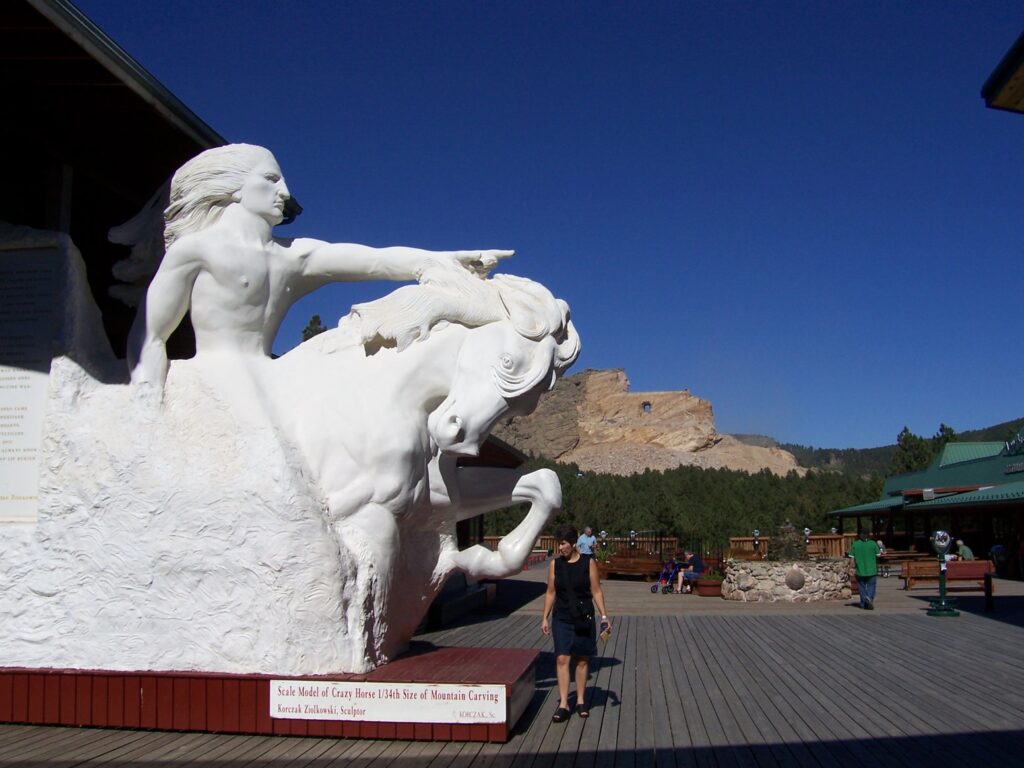
Korczak Ziolkowski, a Polish immigrant, had the vision to look at this mountain and see the greatness of Crazy Horse.
I love traveling with Rob … he has no problem going off track when something comes up that seems like a better option along the way. We are flexible about our route, about our accommodations, about what we will see and do.
AMusing Marilyn
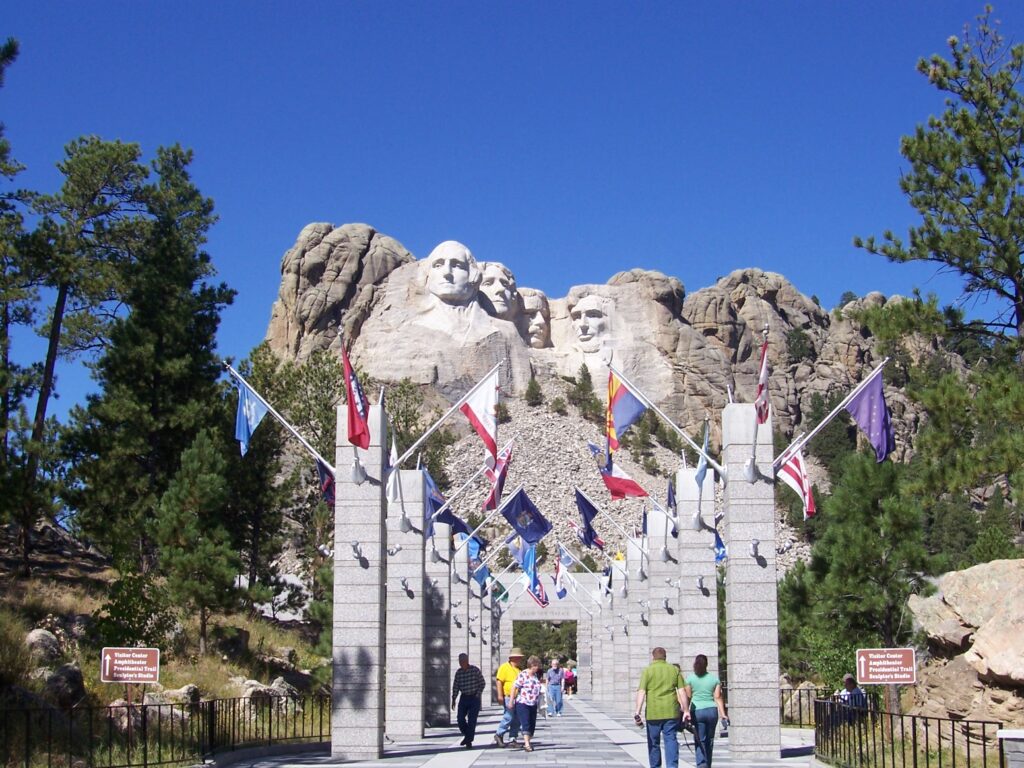
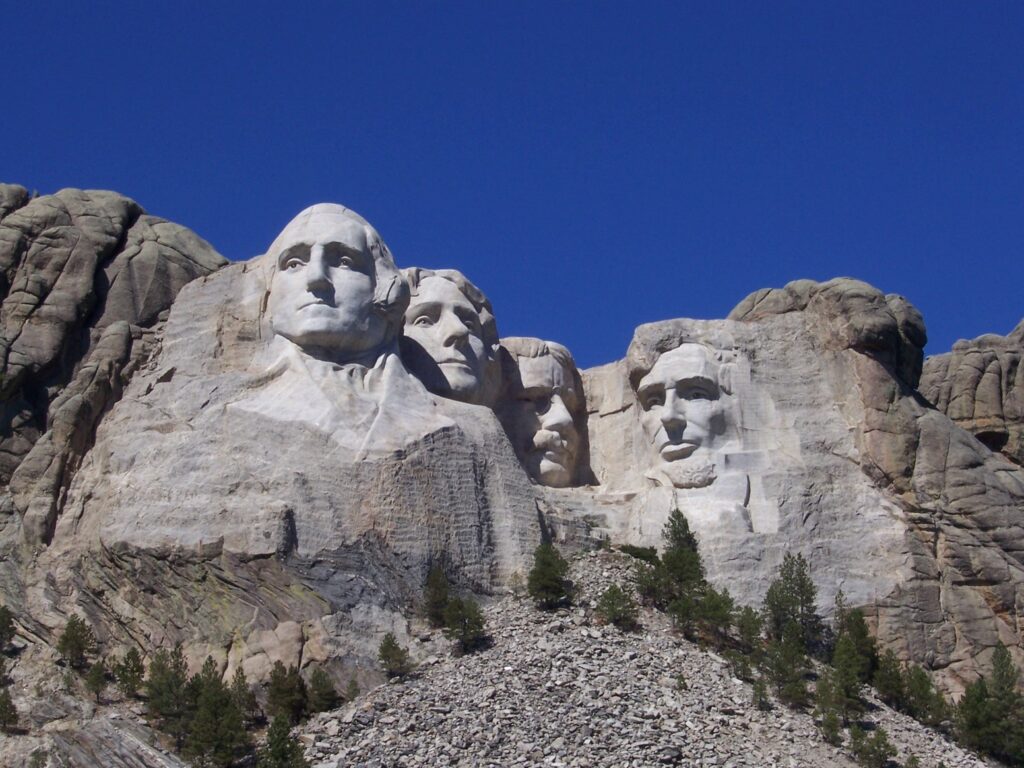
Mount Rushmore is a granite group portrait
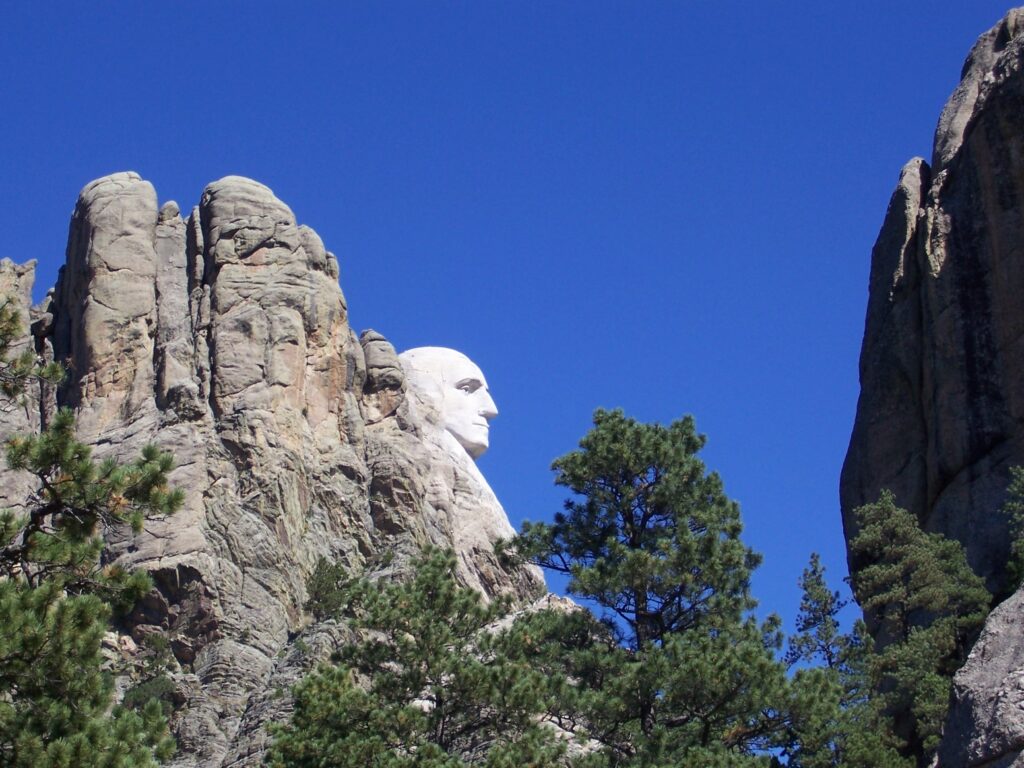
Observation DeckEach face is about 60 feet highThis view of George Washington from the road was a surprise!
Crazy Horse has become a destination
Wow … today the summit is a tourist destination. Sorry to see this, actually. I hope they don’t destroy the fragile hole or the spirit of Crazy Horse.
Custer State Park has scenic highways and walking trails
The Needles Highway is only 14 miles long but takes an hour or more to drive
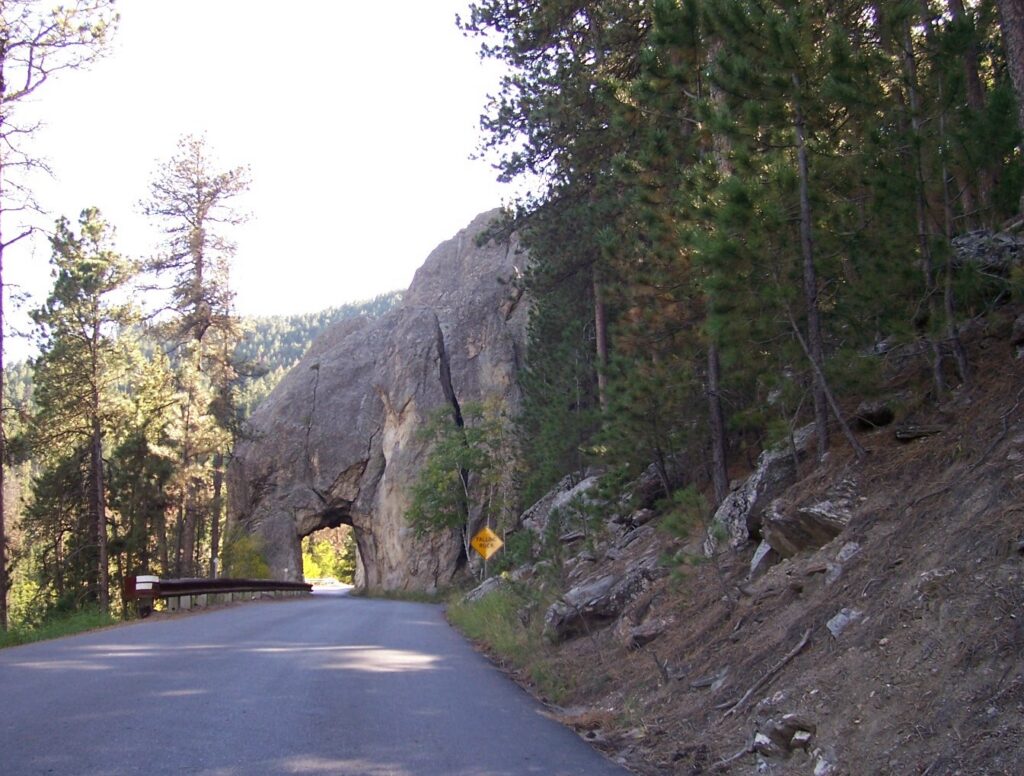
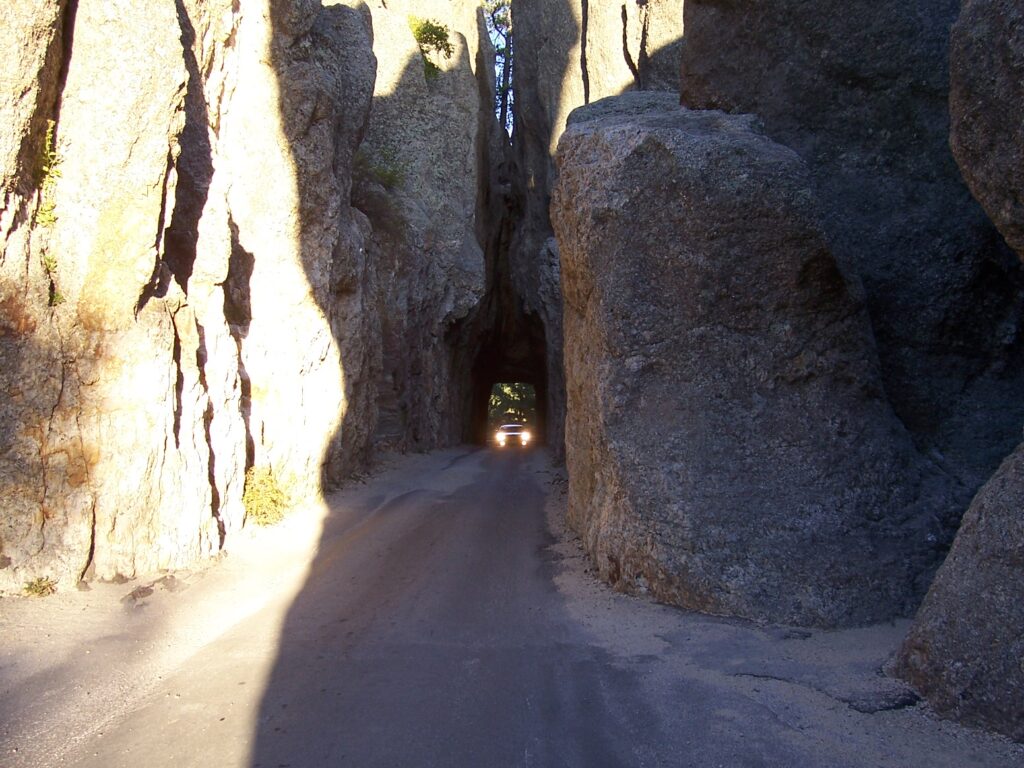
Needles Highway is narrow.Eye of the Needle.Headlights are a needed courtesy.Everyone needs to be a polite driver. Please!!
Little Devil’s Tower Trail
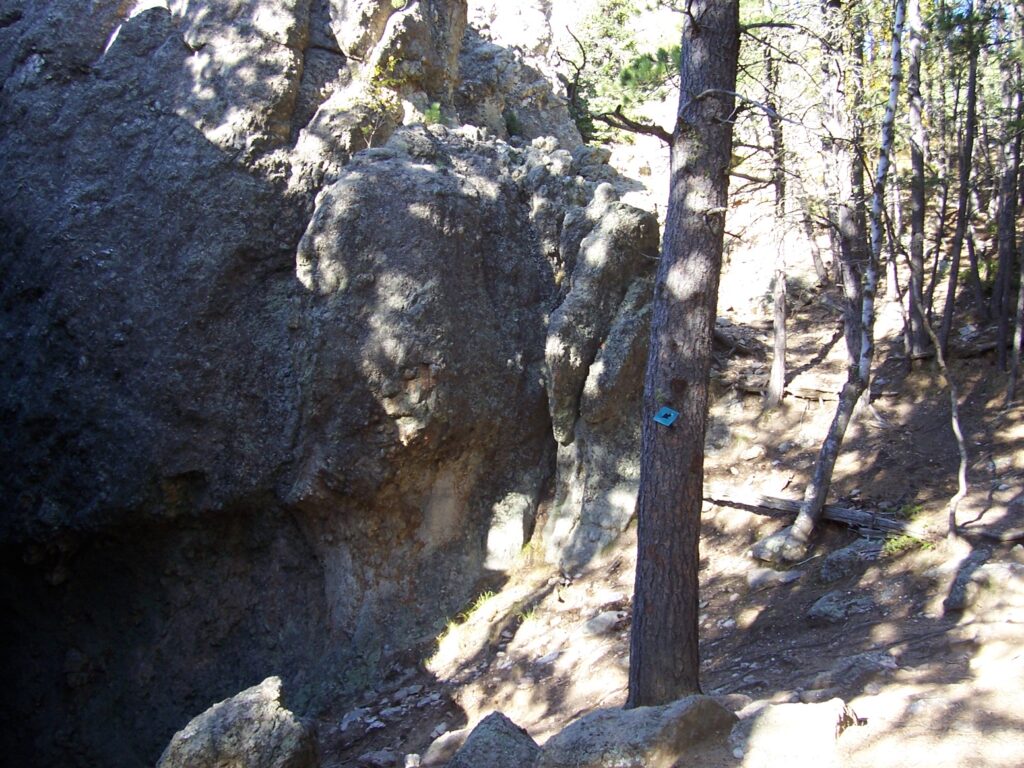
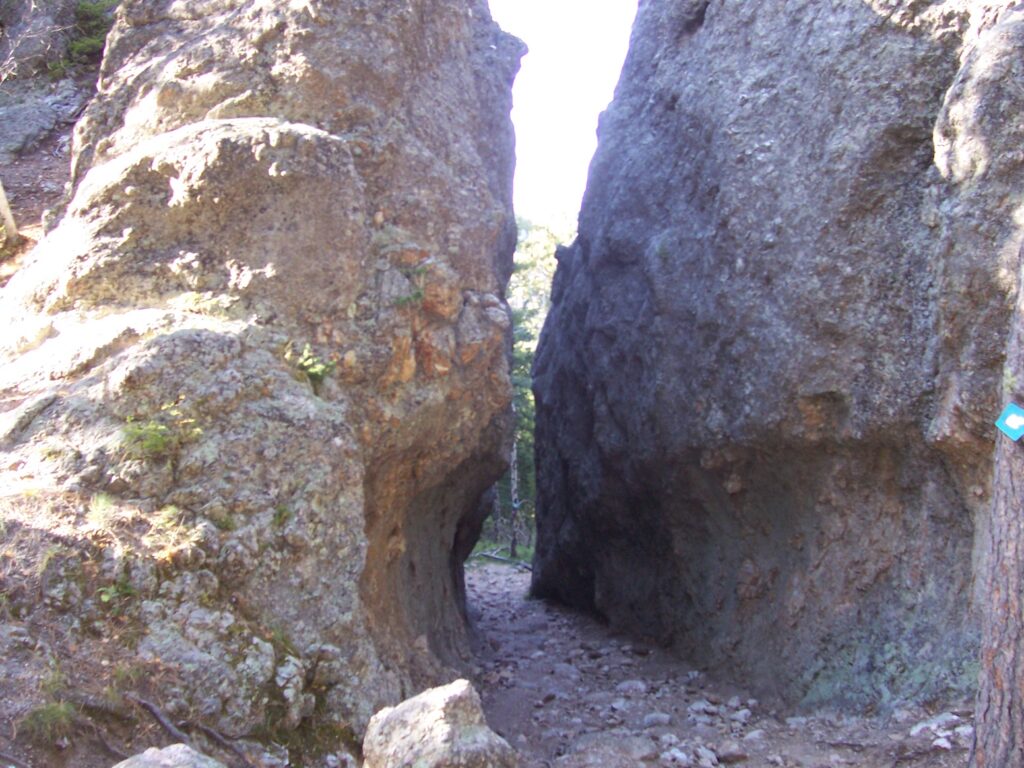
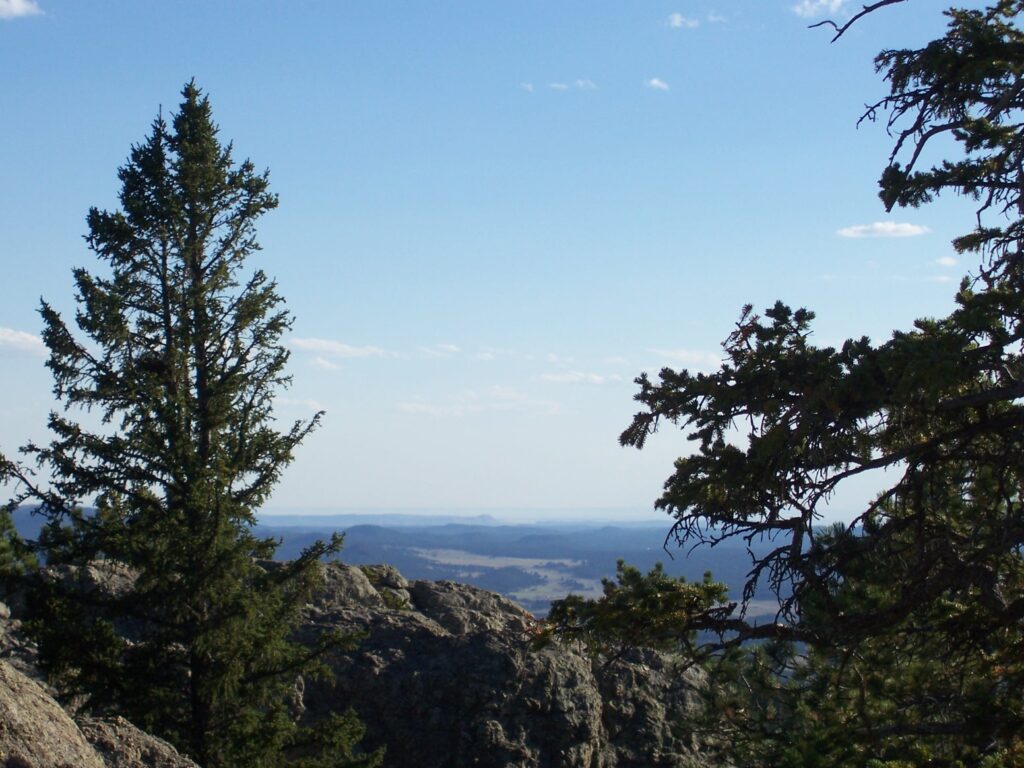
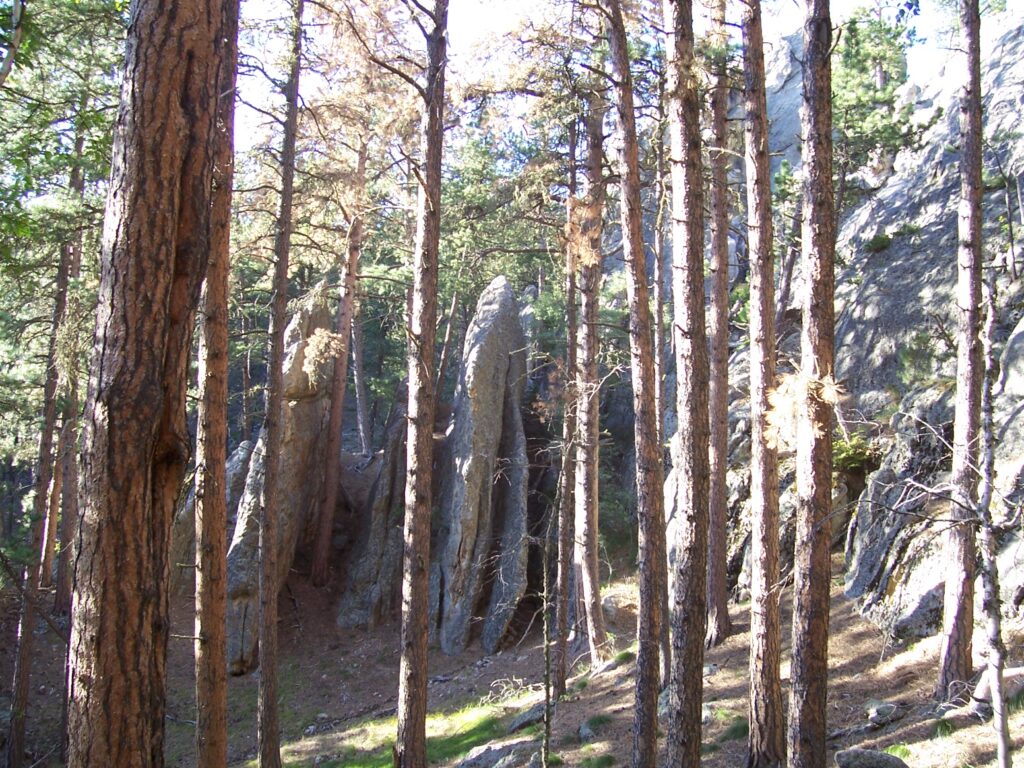
Little Devil’s Tower Trail; the easy part.We called this “The Squeeze.”View beyond The SqueezeTrail Needles?We see you.Thank you for the full moon.Our Black Hills HomeMountain lions??
Foreground is the goal; the actual carving in the mountain is already generations in the making. (Photo from 2005)
Some sights in a journey are so exceptional that you don’t need a camera to make a record, a memory. In this segment of our drive across the United States, Crazy Horse stole my heart. It is an engineering marvel and a testament to one man’s vision. It is a monument that exudes the spirit it represents even in the construction phase.
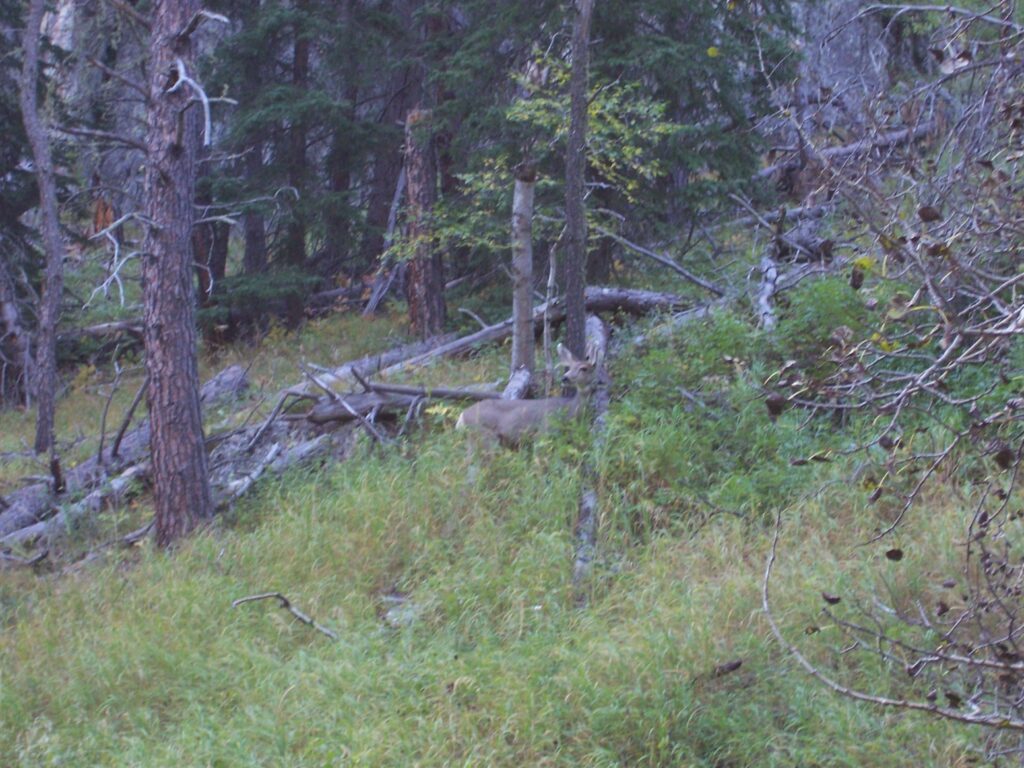
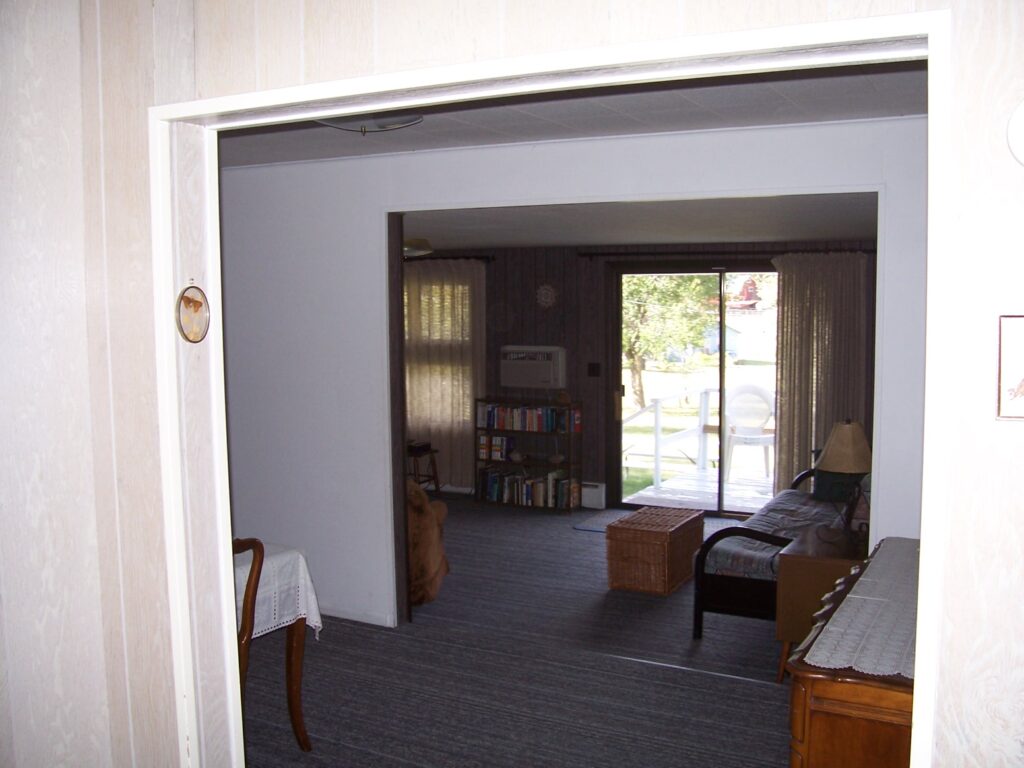
Rob made reservations for the Walker Homestead in Hill City for three nights; elevation 4,992 feet. This is familiar terrain despite never having been here before. The mountains are made of solid stone, covered in evergreens and dotted by scenic lakes and streams like our beloved Adirondack Mountains of New York. The homestead even came with three deer who wandered down through our back yard in the twilight hours.
In one long day, we saw Mount Rushmore and Crazy Horse before driving the Needles Highway and stopping for a long walk. By the time we returned to Hill City it was 8:00 p.m. so we stopped at the Alpine Inn for dinner. It seemed like half the people in the Black Hills were there. But it was worth the 30-minute wait for a table.
Mount Rushmore National Memorial
Along life’s path there are some places you “need” to see because they are simply so well known that you figure you really should stop and check it out for yourself. Who goes to Paris and doesn’t make an effort to see the Eiffel Tower, right? The problem for me — and this is very personal — is that after seeing the photos as illustrations for hundreds of magazine articles, posters, postcards and on TV documentaries, the actual sighting can seem diminished. (Not always; Eiffel is worth it!)
It’s rather like getting excited at the opportunity to view the Mona Lisa in person, only to find that the original is just a dark little painting you wouldn’t want hanging on a wall in your home. Sorry to say, but that was actually my first thought way back on that first trip to Europe.
I realize that a lot of people go all mystical over these icons, but I’m a cynic at heart. I believe those feelings sometimes have more to do with strategic marketing than any inherent beauty in the item or place itself. The response is a self fulfilled prophecy because who wants to say, “Yuck” to a $500 bottle of wine after it has been sold to you as a connoisseur’s rare delight? Anyway, I found Rushmore more annoying than spectacular.
Don’t get me wrong. The drive through the Black Hills is great. When we turned off the road, however, it was to enter a multi-level parking space reminiscent of the Mall of America on sale day. The Mount Rushmore National Memorial has a museum (facts and gift store) and then a wide deck with flags on either side leads to a viewing area. The National Park Service does a great job of making the view available while preserving the Black Hills.
In the end, I stood, looked up — and saw the same photo I had seen a million times already. Four former American presidents carved from the granite rock of a mountain. The big difference is that now I can smell the pines, the high mountain air. I close my eyes and understand why this place is sacred ground to many Native Americans. Too bad this memorial couldn’t have been carved in the Appalachians.
I took my obligatory photo alongside a couple of hundred other people. They were from tour groups bused in from retirement homes and veterans organizations across the country, mixed in with a few dozen biker groups, and many American and international families — Mom, Dad, Bro and Sissy — on a late-summer educational vacation.
Crazy Horse is a work of art in progress
In comparison, Crazy Horse is a horse of a different color. And no, after much reflection, I’m not sorry for that turn of phrase!
I fell in love with Crazy Horse. Maybe because the horse and man are as one? Or because the power and the majesty of the image is striking? Or maybe it is because of a distant memory of seeing this “crazy man” with long hair and a beard in a 1950s-era documentary, when Korczak Ziolkowski was nearly single handedly hacking at a hillside? He was a man with a vision to carve a colossal statue to this amalgam of a Native American hero.
The mountain is still a work-in-progress. Today, the work is being carried forward by the children and grandchildren he had neither sired nor envisioned when he first began his work in 1948. A far more challenging endeavor than the Great Pyramids in size and complexity. It was awesome to witness it being made. The introductory film, the (now) Indian Museum of North America and the Native American Educational and Cultural Center made for a nice afternoon.
The museums were a work in progress when we visited 15 years ago and have been greatly expanded. There is so much to see and do here. I could easily spend an entire day and would love to return to see the newer Mountain Carving Gallery.
The Black Hills are a sacred place and somehow this facility – the exhibits, the very buildings themselves, the story they tell – filled me with a sense of majesty. It is awesome to think of this lone Polish orphan from Boston taking on the task of exemplify the spirit of an entire culture; to carve a mountain. This place is about Spirit and I found it wonderfully uplifting.
The Needles Highway is a fun drive for those who love drives
Leaving the Black Hills National Park area, we moved on to Custer State Park, home to at least three scenic highways. We chose to do the 14-mile road known as the Needles Highway. First we stopped to take a walk up, up, up one trail and then down, down, down…to find a half dozen deer on either side of the path in a glen. It was a great diversion and good exercise.
Rob and I like to enjoy the journey as much as the destinations. Life for us is not racing to the next “thing” but to take in the sights and sounds and smells along the way because they are the next thing. The drive on the Needles Highway is well worth the time. Leave SUVs and trucks at home, drive 20-25 mph, and enjoy a couple of hours taking in Mother Nature at her finest.
A rock climber’s delight
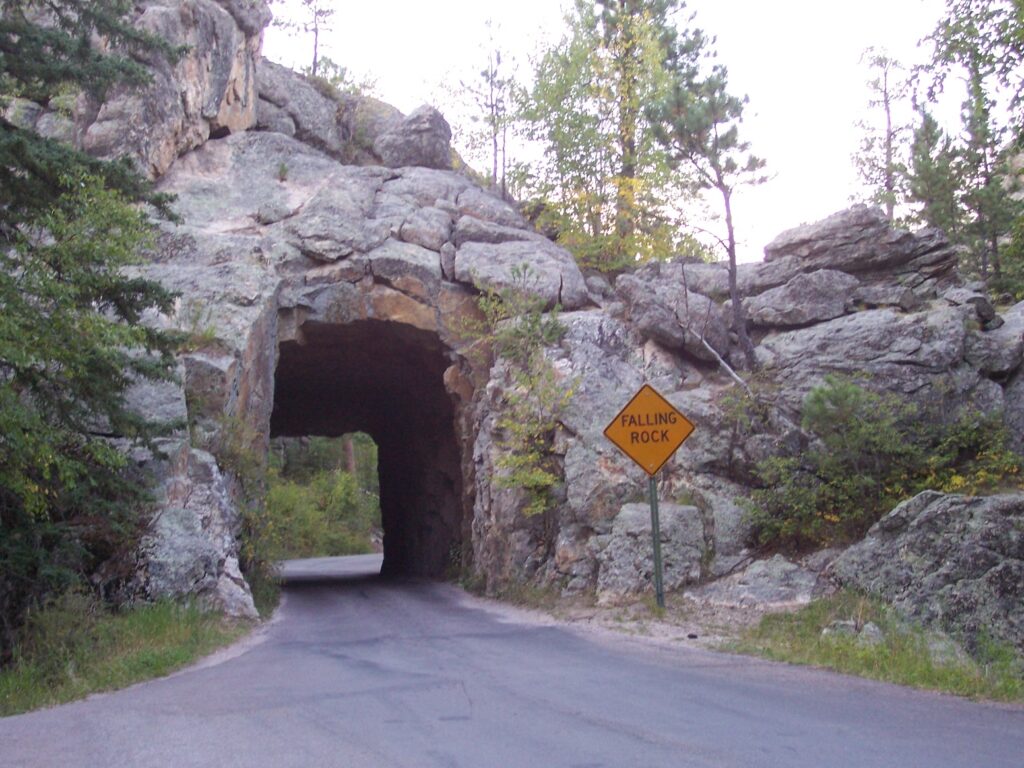
There are three low, narrow tunnels – all short enough to see through so cars take turns, if needed. And there are plenty of spots to pull over and take photos.
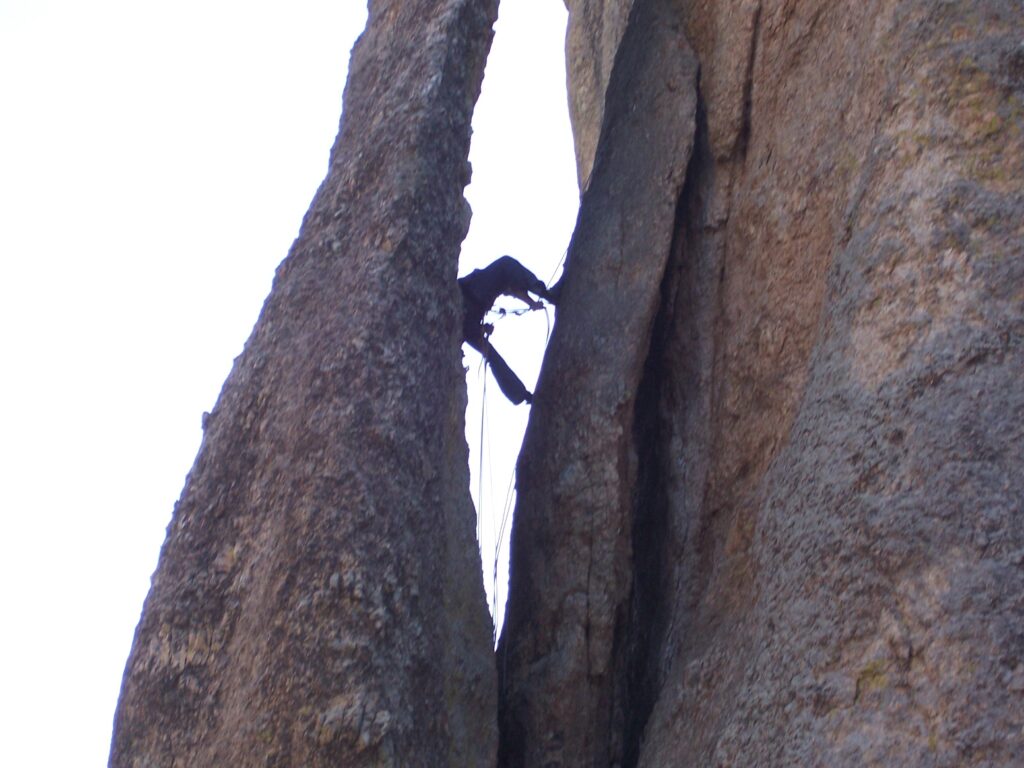
The needles themselves are large rock formations that jut up from the forest like — well, like needles. We stopped to take photos and watch for a while as an Englishman did a rope climb up though the Eye of the Needle – a fairly easy climb as these things go apparently, and often the destination for those who count rock climbing coup the way mountaineers count summits.
Memories for our eyes only
After going through the third tunnel, we chose to go back to Hill City via a road that would become unpaved. What a trip that turned out to be! The paved bits had switchback after switchback, and it wound up and up and then down and down, then back up and back down and then repeated itself again and again, like a roller coaster ride.
Unfortunately for us, we were still driving our wreck of an old car and not the delicious sporty roadster that will be awaiting us in Europe next year, in the Spring.
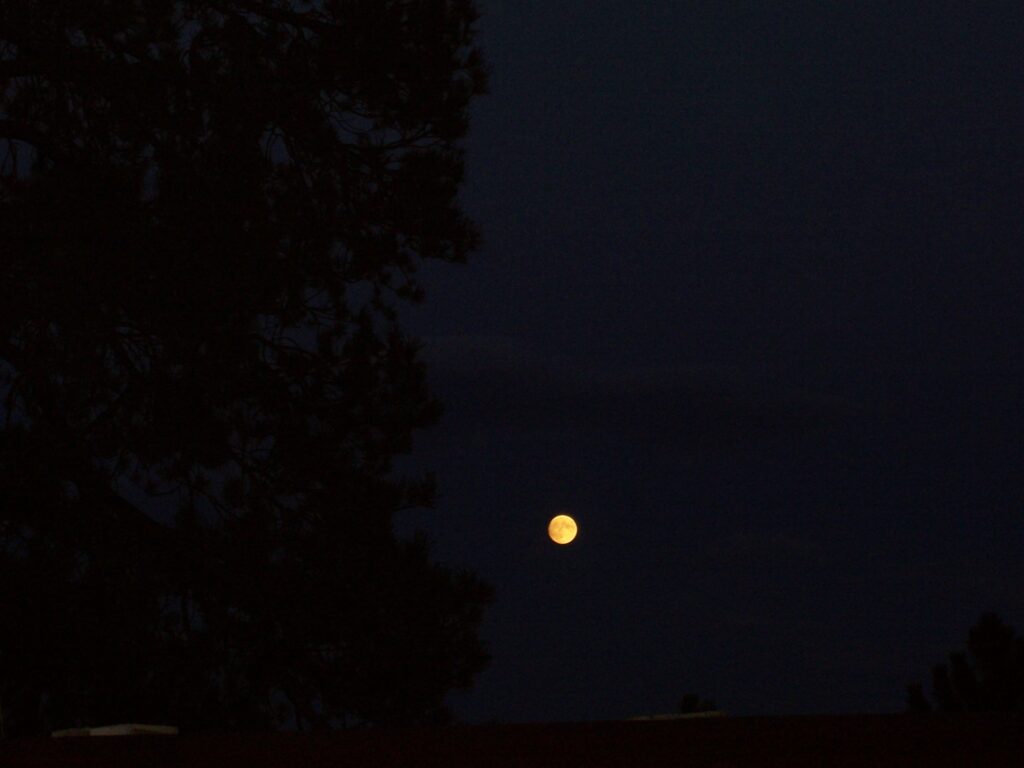
At one point, it must have been around 6:00 p.m., give or take 30 minutes, we could see the full moon just as bright as a headlight, sitting low in the deep blue sky, framed by the tops of 50-foot Ponderosa pines overlooking the Black Hills. The same trees we had driven by at their bottoms, some untold number of twisty turns ago. Each turn brings forth another view-picture, another memory for tomorrow. If this road had a name, we never saw it.
Just as some things are meant to be seen on the BIG screen, many of the images we see in the Black Hills are for our eyes only. No camera could capture the fluidity of the light and shadow changes, the depth of the views. No words can truly describe the feeling one gets when, while walking through a mountain glen a family of deer suddenly stand at attention, waiting to see if we are friend or foe, and then honor us by accepting our presence and begin to nibble on the grasses again.”
From our Journal, September 2005
Alpine Restaurant in Hill City was worth the wait
After one very long day in the Black Hills, the Alpine Inn in Hill City seemed like a wise choice when the alternative was me cooking a meal. We didn’t notice the sign that shows the night’s menu, but were happy to sit on the porch and wait for a table – marveling that there were so many people waiting although it was past 8:00 p.m. on this Friday night in a town with a total population of 860.
As we sat down, our waitress arrived promptly with pen and order book in hand to ask if we know the menu. No, we respond. Oh, well it is 9-ounce filet wrapped in bacon for $9.95 or a 6-ounce filet similarly wrapped, for $7.95, salad and baked potato included (2005 pricing; add $4 to those for 2020 prices). Certainly made it an easy choice and, fortunate for us, we weren’t hankering for a pork chop. We did get a drink choice and, as the waitress passes through to the next room, Rob wondered aloud what need she had for an order book.
After gorging ourselves on a very tender and tasty dinner, the waitress reappeared with a dessert menu – not quite 20 scrumptious things to choose from. It seems we had done this dinner backwards! Additionally, that order book suddenly made way more sense.
Boot Hill Cemetery — the final resting place for Wild Bill Hickok and Calamity Jane
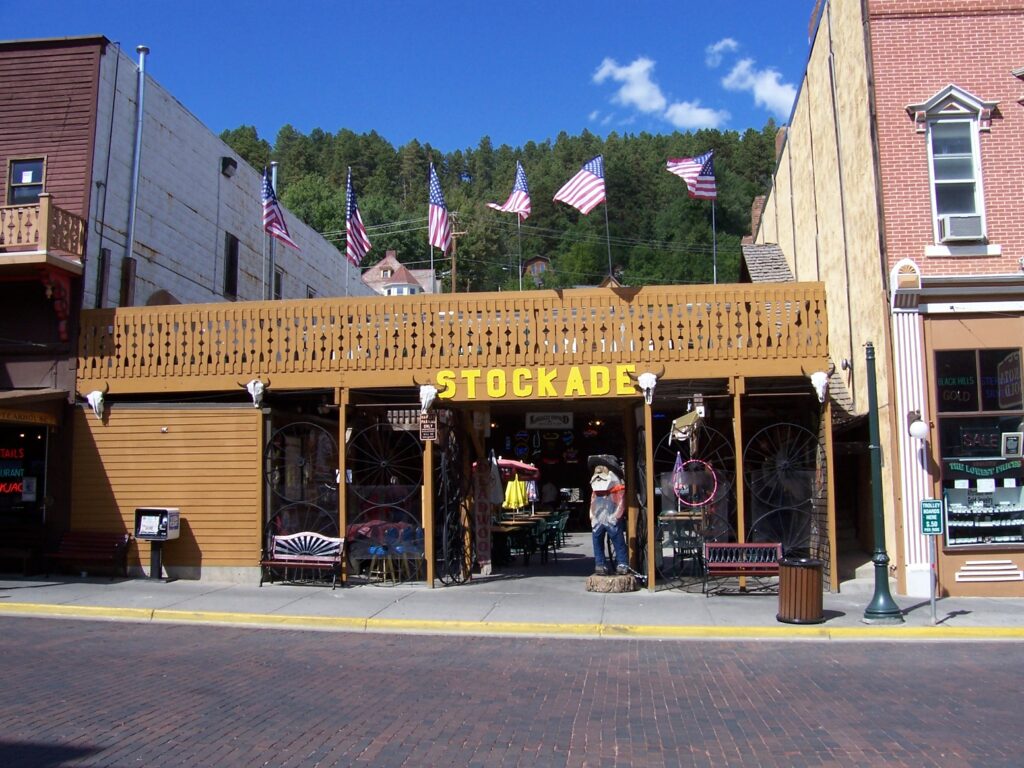
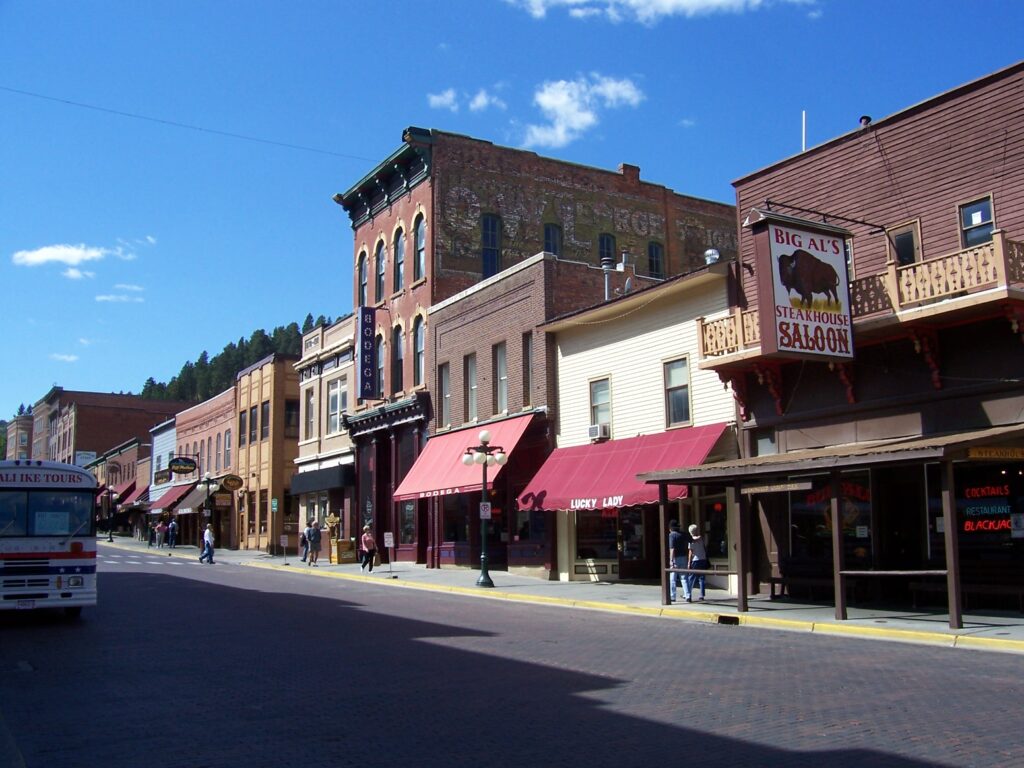
What trip to the Black Hills is complete without Deadwood? This is the dusty town featured in untold numbers of American Westerns. Just seeing the name on a sign shouts Boot Hill, and poker games gone astray in saloons with six-shooters smoking hot. Cowboys jingling spurs and saloon girls being naughty.
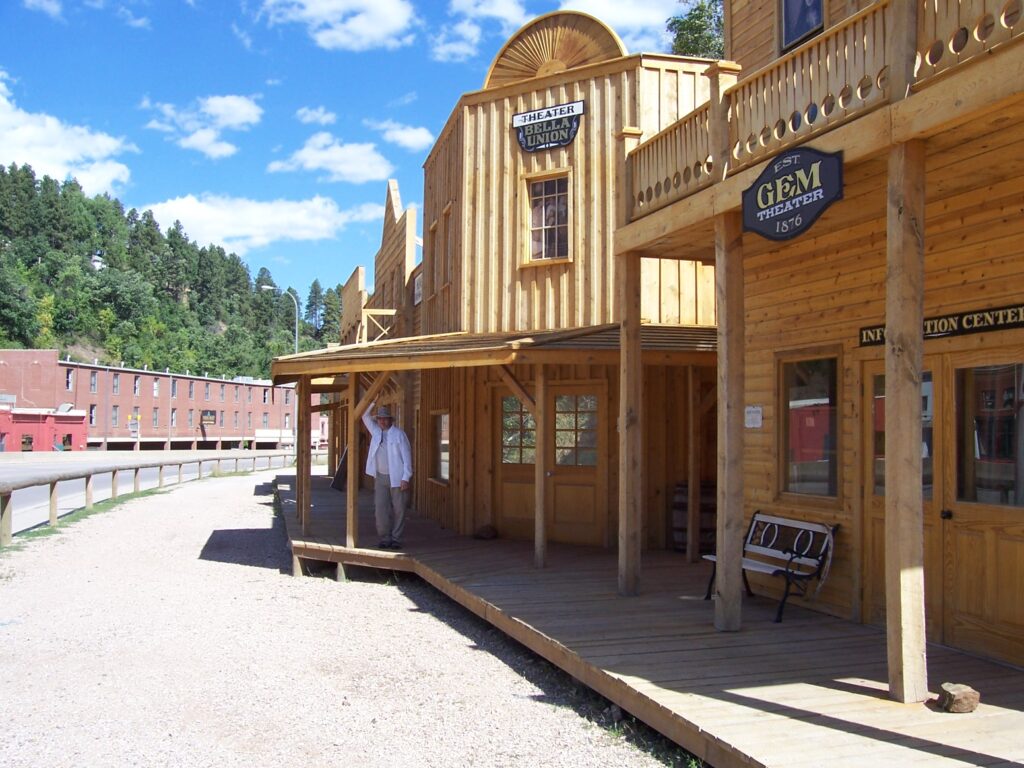
Alas, some expectations are too hopeful to be matched. We lost the battle to maintain the images of the Wild West from our youth and ceded to modern day vehicular traffic and gaudy souvenir shops. The main parts of Deadwood were just too touristy for us. It didn’t fit the terrain but seemed popular with city folk who don’t know better.
And then we wandered off the main drag and found a museum – a gem, and the only redeeming quality in town for us. Although small, the museum packs in a lot of information in a pleasant way and we enjoyed learning about the town and the lives of some of its more famous residents.
A quick look online today, to see if I could find a name for the museum — and to discover if it still exists — resulted in a TripAdvisor post titled, “The 10 Best Museums in Deadwood, South Dakota.” Who knew??? I guess 15 years can bring a LOT of changes to a town. As a warning, the link only shows eight places and not all are actually museums. I believe the one we toured was the Adams Museum.
Stockade
Main Street?
New (2005) construction
This post is one in a series that document our 400-day trip round the world (2005-2006). Each segment will be linked in at RTW.
Allusive words where are you
when the poem begins to fade
and begs for something special
to complete its mood.

I call upon the Rhyme-Gods
in hopes they will convey
a way of resurrecting
an ending for Monet.

-- Marilyn Paluszak
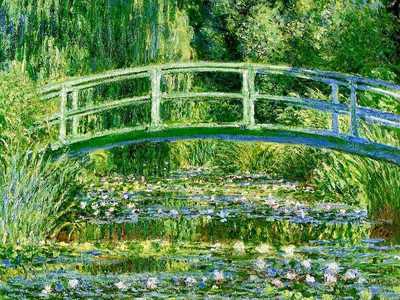
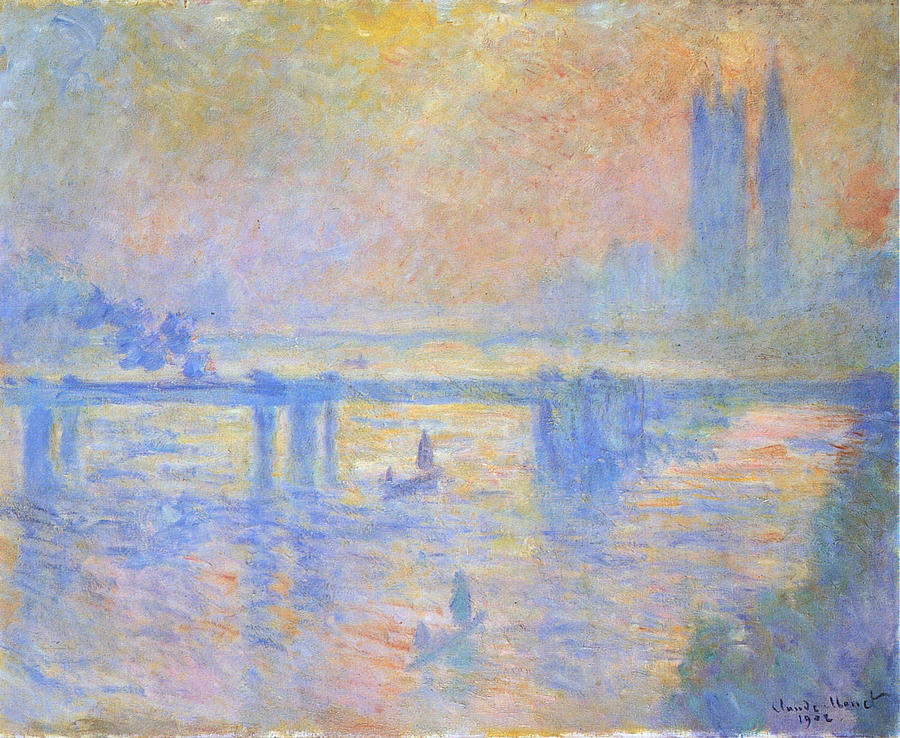
Japanese Footbridge and WaterliliesCharring Cross Bridge, London
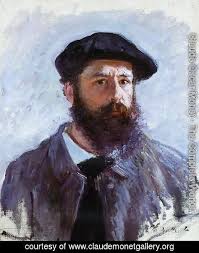
Oscar-Claude Monet (1840-1926) was one of the founders of the Impressionist school of painting. People often confuse Monet with Manet until they study their art.
Monet worked largely outside (en plein air) unlike Edouard Manet who worked in a studio. For an interesting read on both of these artists, check out this illuminating article from Artst.
Monet started out drawing charcoal sketches that he sold for a few francs. It was Eugène Boudin who taught him how to use oil paints. Boudin also taught Monet the technique of en plein air painting.
PART 5: Wall, South Dakota; the Prairie Museum; and Badlands National Park
As we continued across South Dakota, it became apparent we would be driving through Wall and the nearby Badlands National Park. I told Rob about how enthused my parents had been about the “amazing badlands” and how it was one of those places everyone should see for themselves.
With that destination set, we slowly climbed higher and higher. Randomly spaced Wall Drug signs kept us amused and were our encouragement to keep going — for some 200 miles.
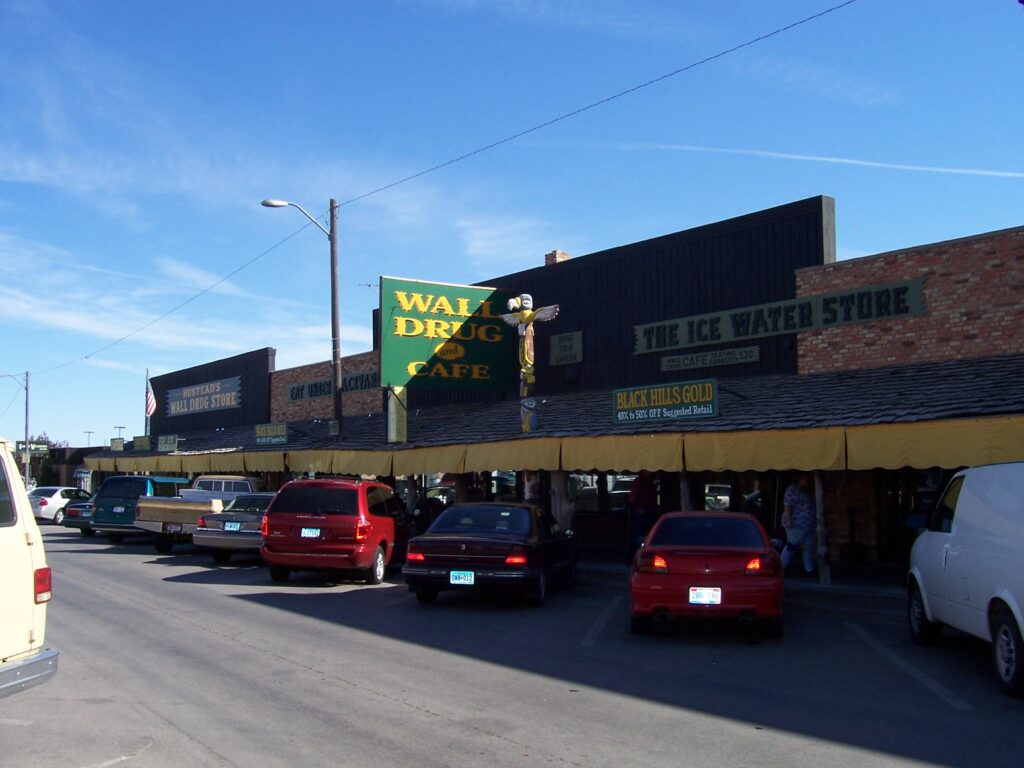
Wall, South Dakota: Home to Wall Drugs
Wall Drugs, Wall, South Dakota
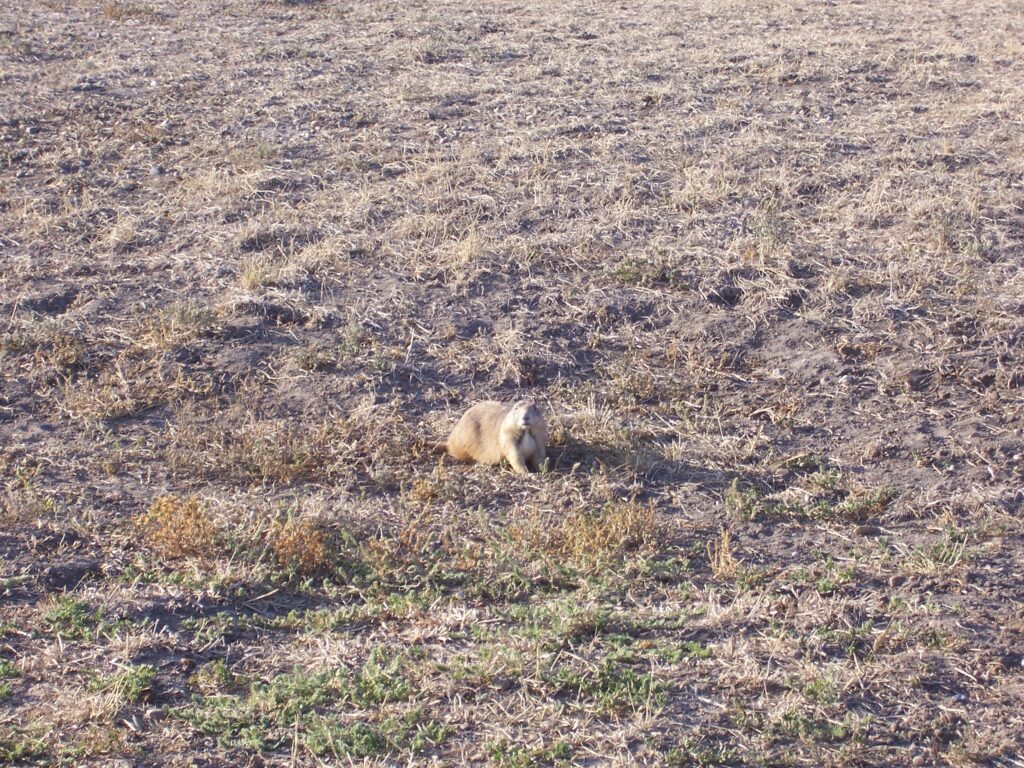
A small town of some 850 human residents, Wall also is home to an untold number of stuffed and manufactured “others,” not even counting living bison, bighorn sheep and prairie dogs that call this area home. The town itself is a bustling little place that hosts about two million visitors every year.
We found Wall to be a friendly town. The main street resembles the sets from all those Western movies we saw as children. Wall Drugs is a very BIG drug store with quite a history. There are several souvenir shops and lots of oddities.
Prairie Museum
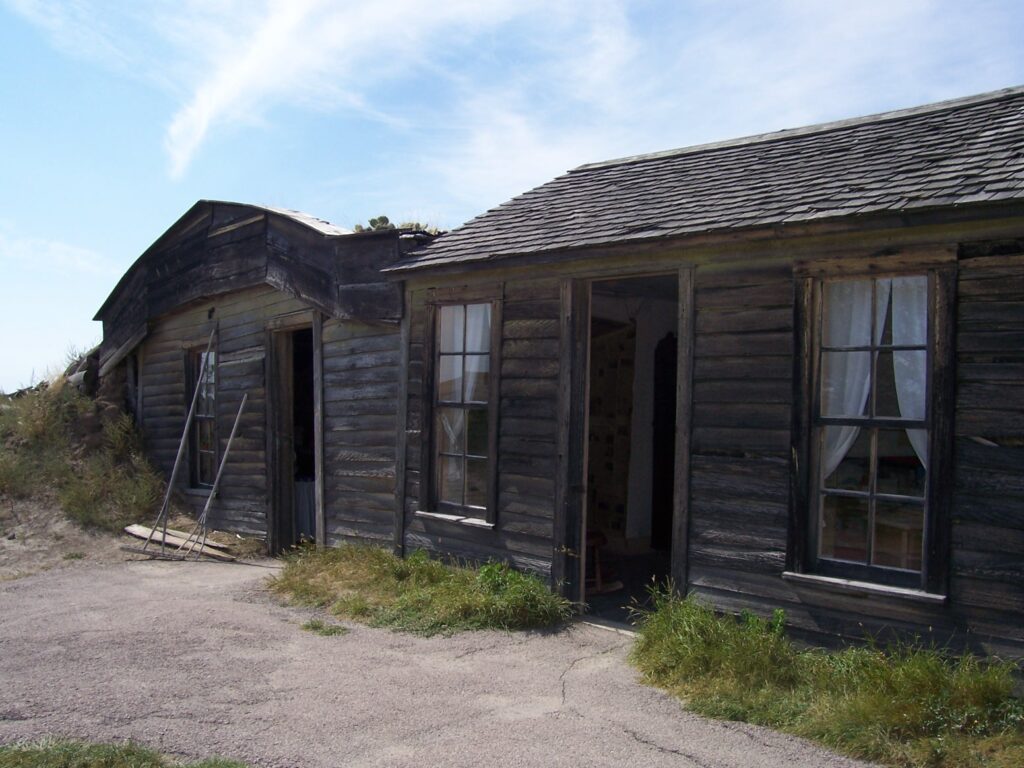
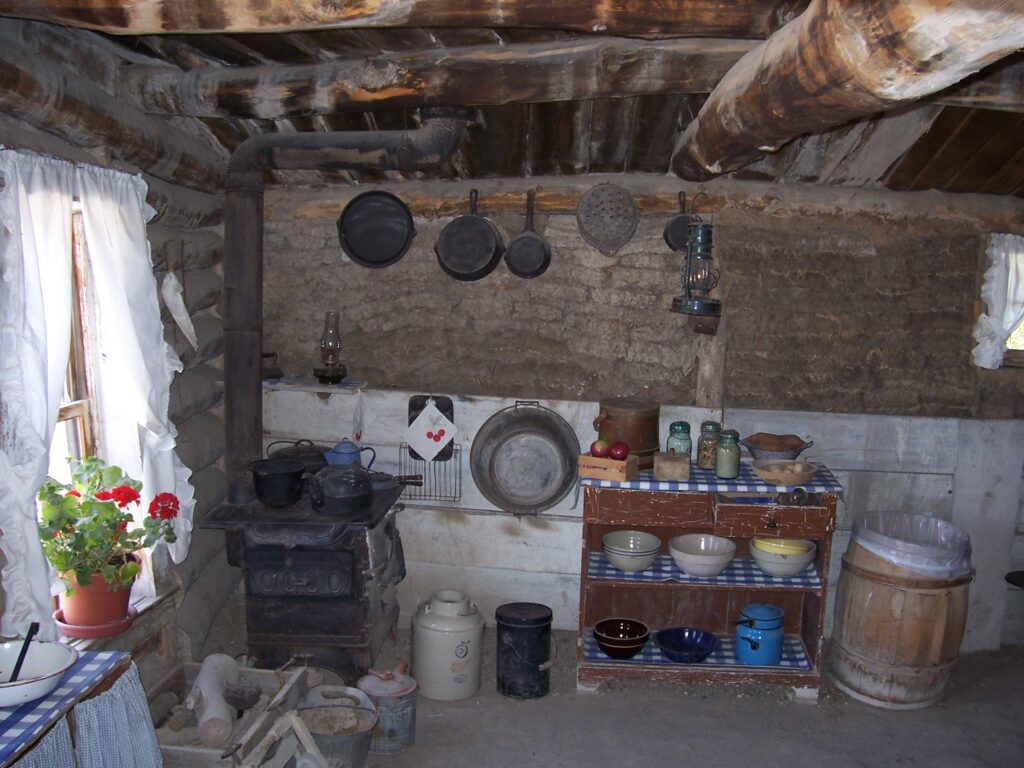
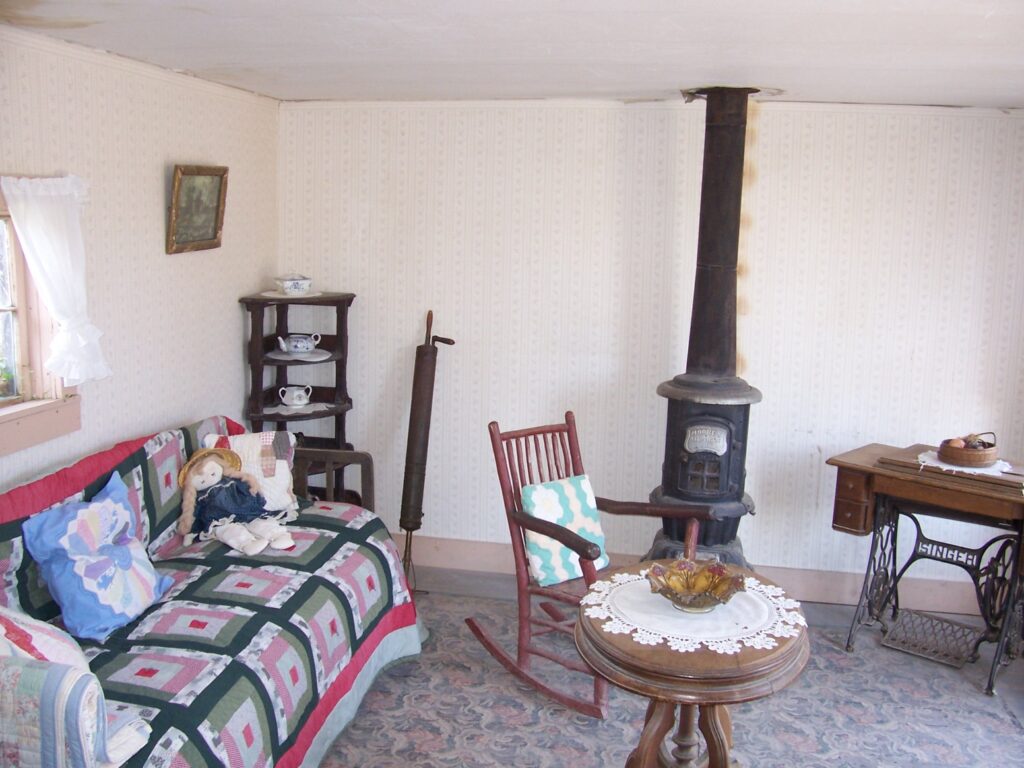
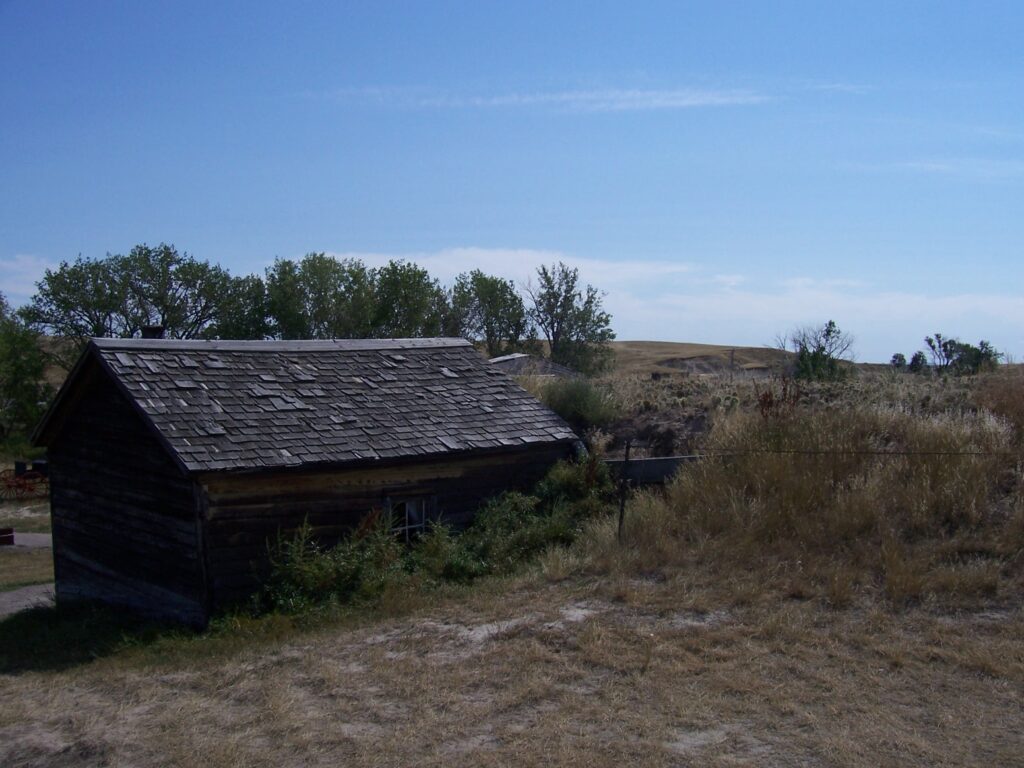
On the road leading to the entrance of the National Park, we stopped for a café that had prairie dogs frolicking outside; and again to visit a Prairie Museum. For a fee, you first watch a short tape giving the history of the family who settled here and then you walk outside and roam on your own around the buildings and surroundings to get a feel for what living on the prairie was like in the early-1900s.
The buildings are made from wood but trees are a premium. So it leaves you to wonder how many buildings any homestead plot could have produced. Or, for that matter, how they kept the home fires burning to cook or heat in the winter months.
Times were tough and the people had to be hardy to survive in this place. They mounded dirt up around the windward side of the buildings to give them some protection and insulation from the winds which had to be brutally cold, come winter.
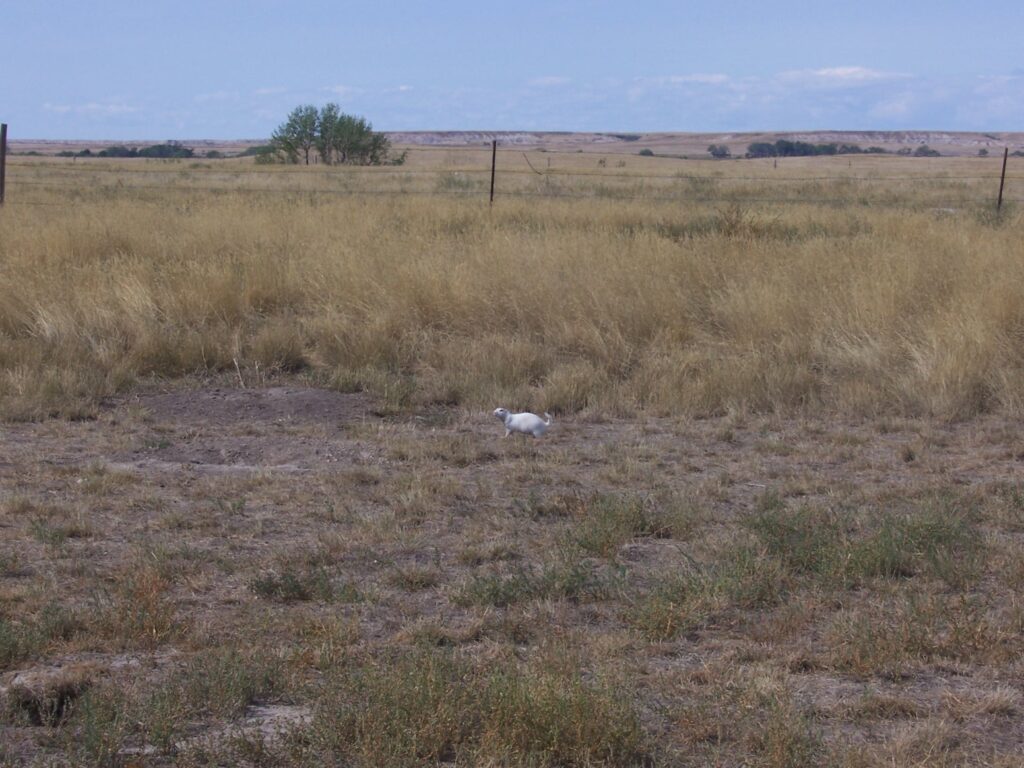
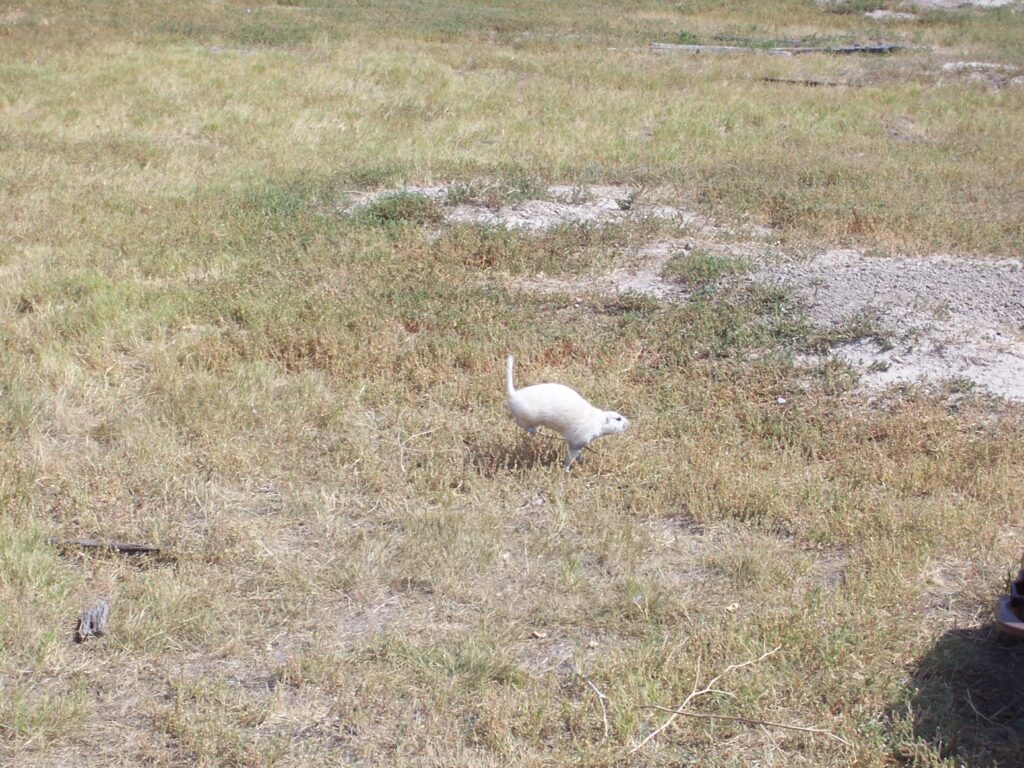
The shed is just big enough to give some protection to whatever minimal livestock the family may have had. Today, the grounds are home to a family of albino prairie dogs – they scatter and run so fast at first you think you’re seeing things; then the shear number of burrows starts to filter through to the brain. You try to imagine how many of these little guys live under your feet.
The Lakota people called this area Mako Sica (bad lands)
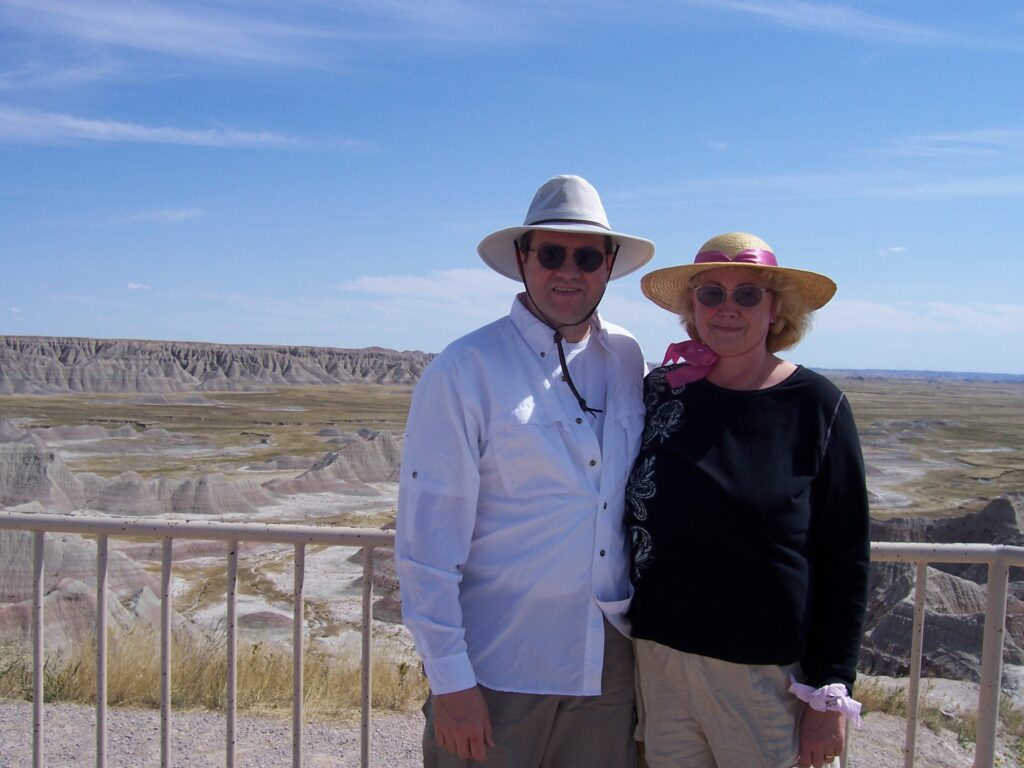
Badlands National Park, South Dakota
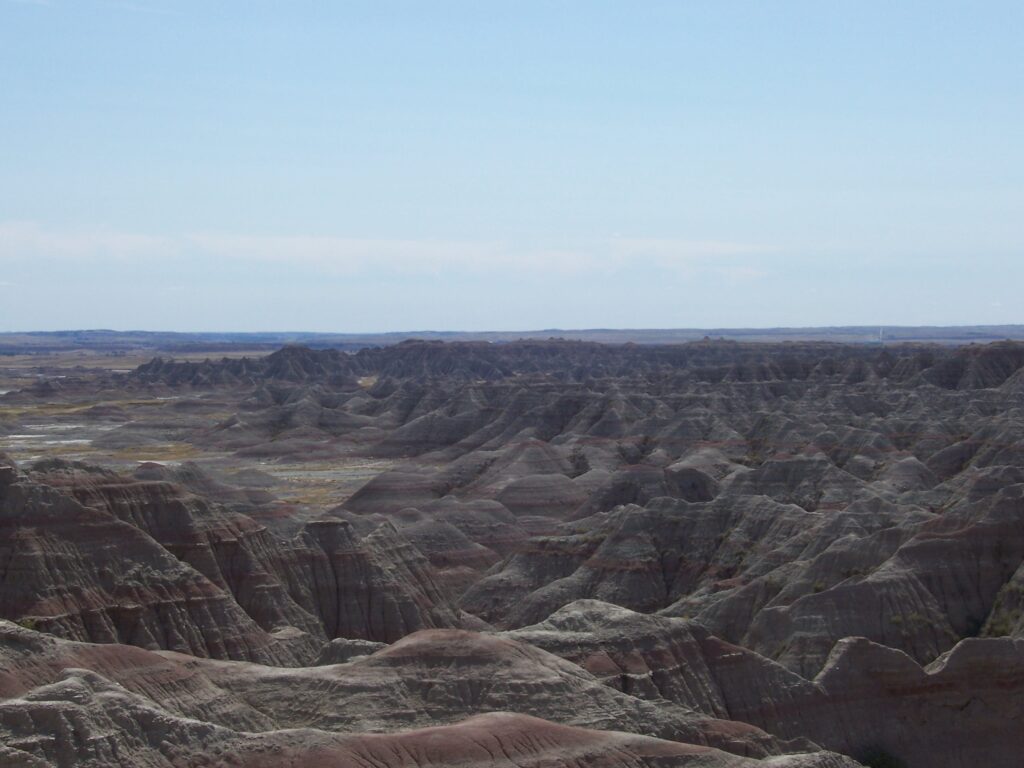
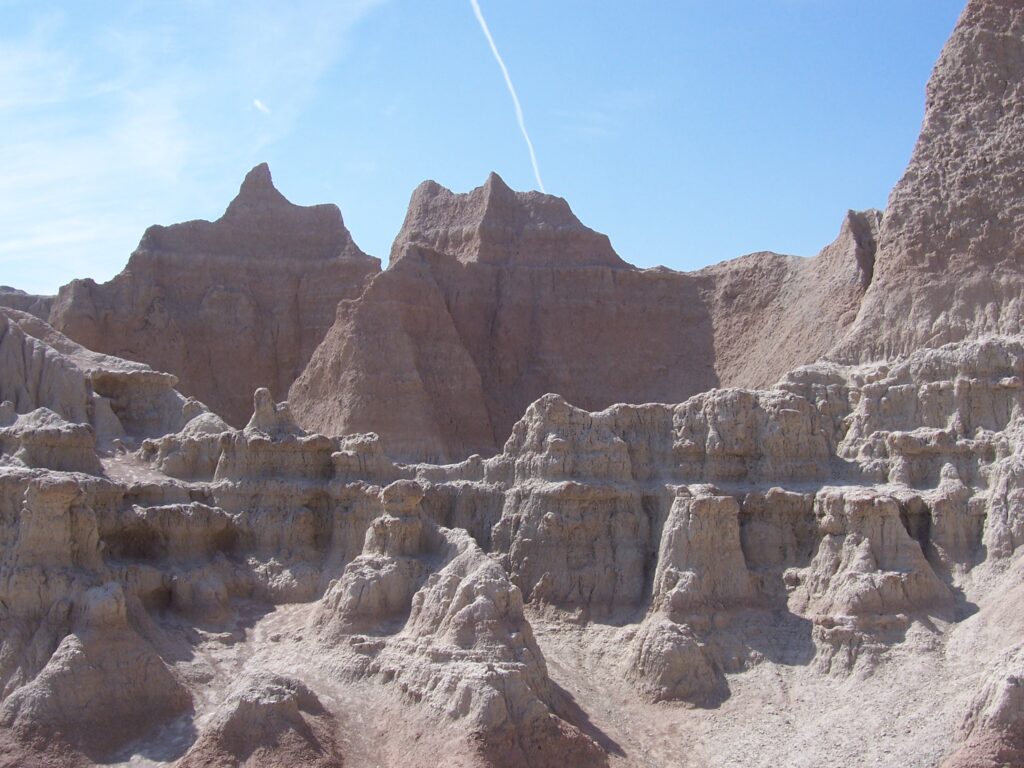
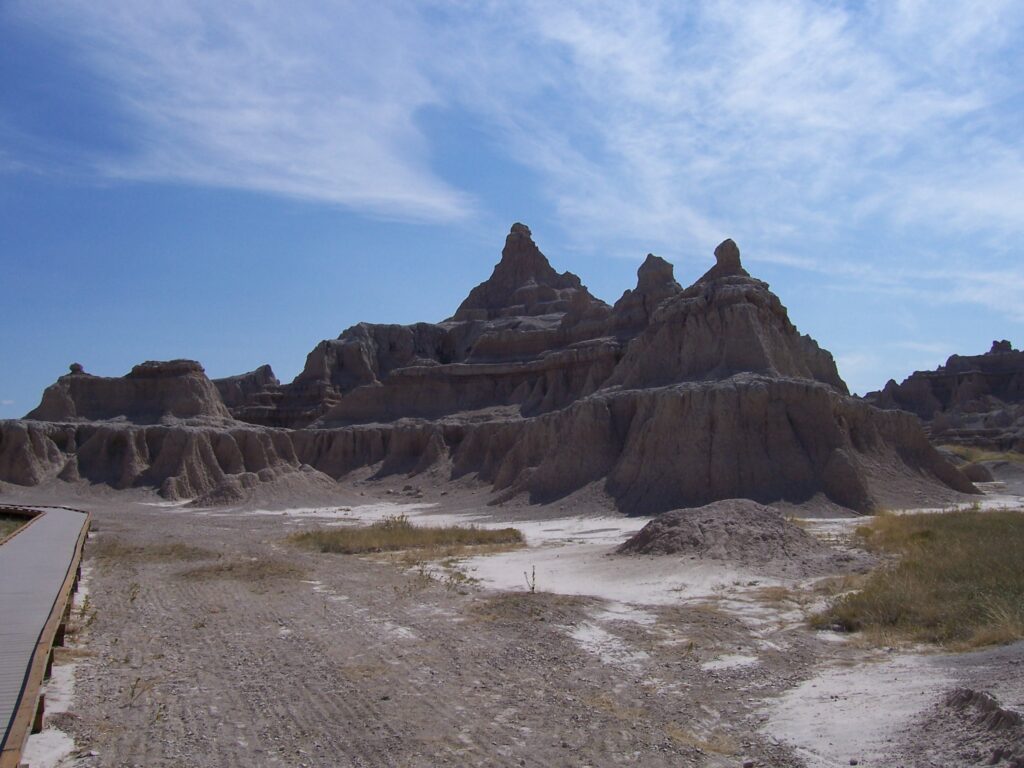
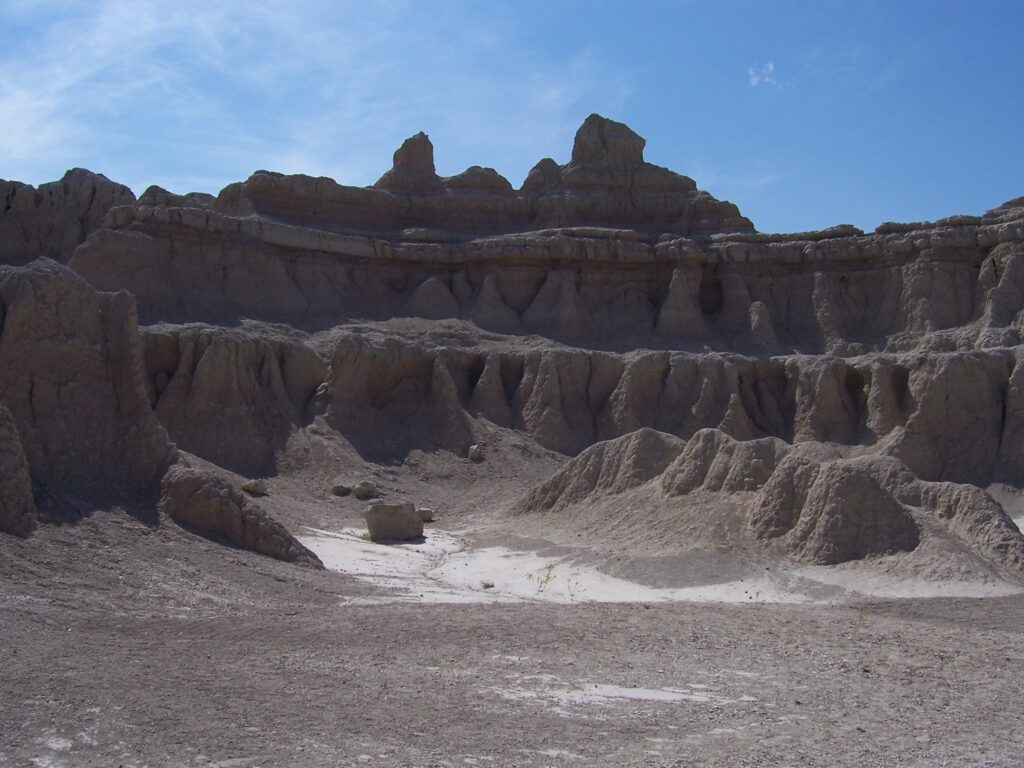
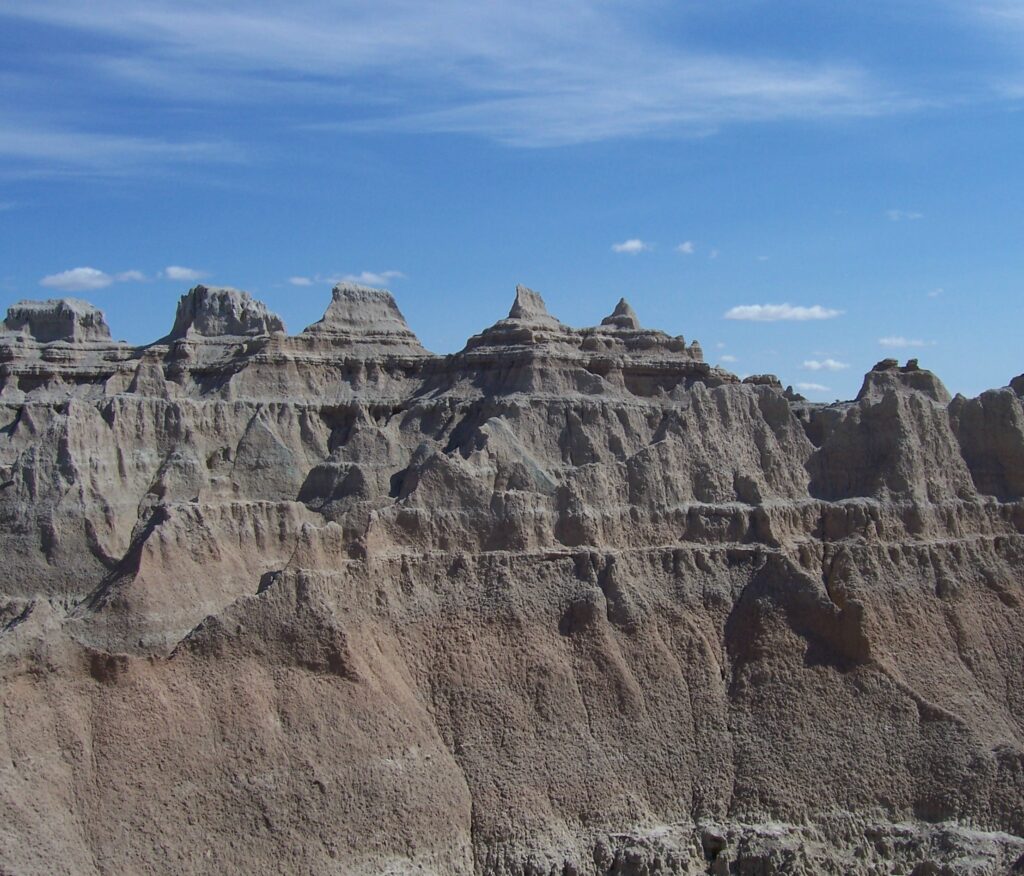
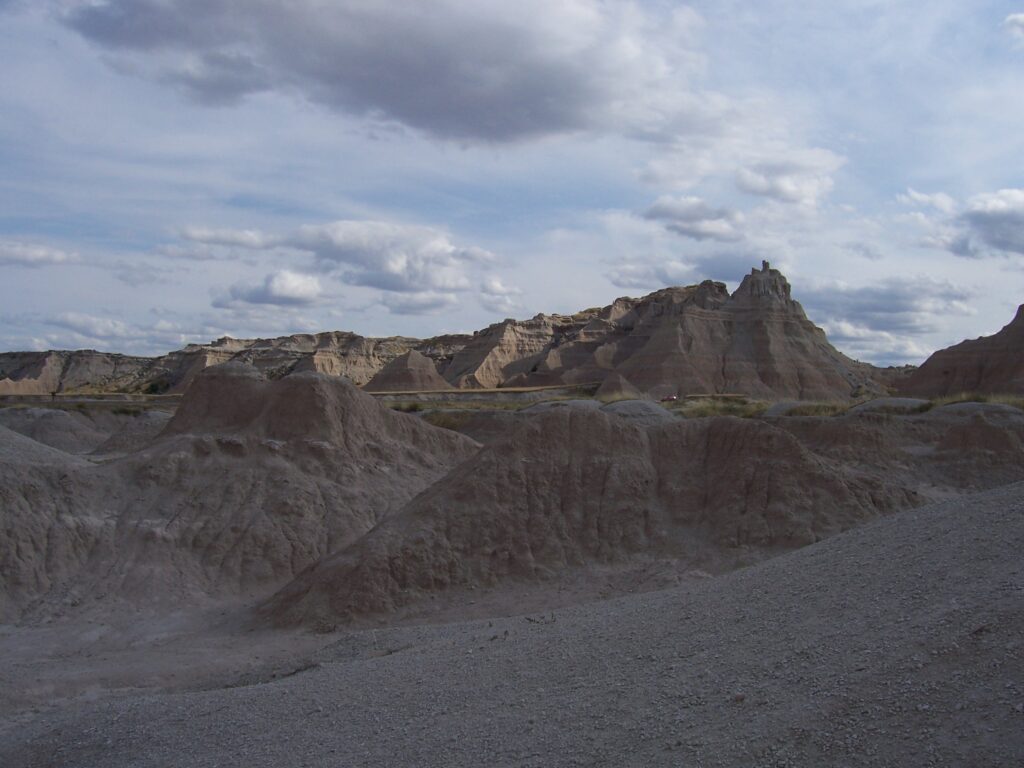
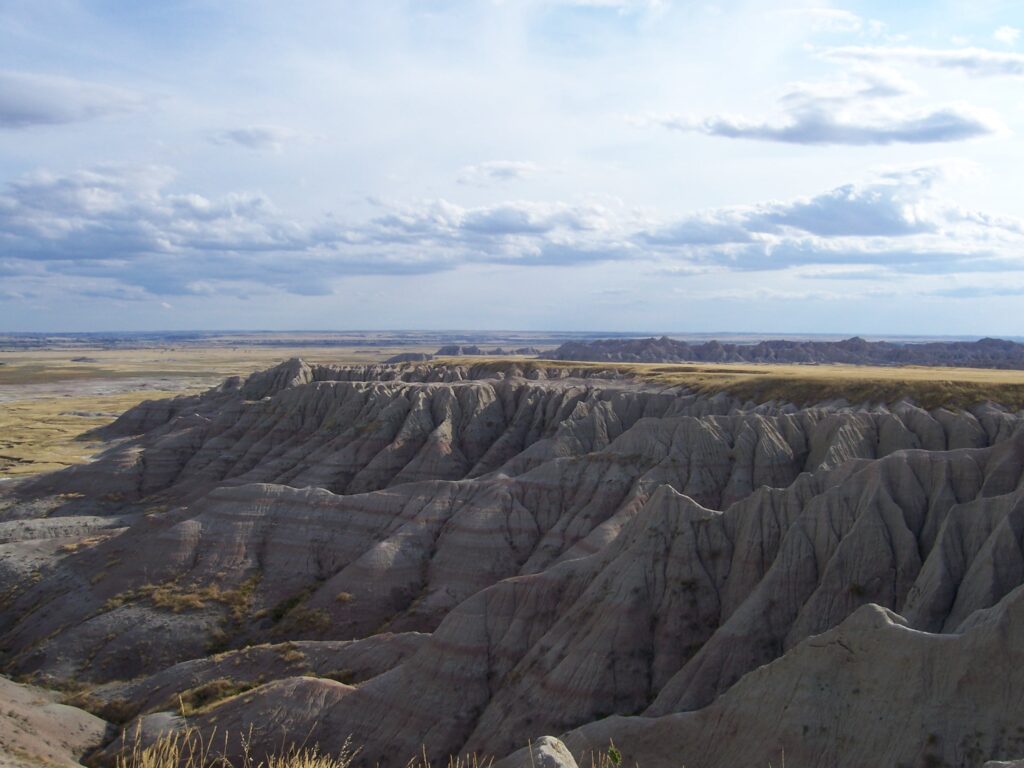
As you enter the Badlands National Park you finally understand where Wall, South Dakota, got its name. A 60-mile long, sheer cliff escarpment quite literally is the formation known as “The Wall.” It is made of near vertical exposed sandstone and defines the boundary between the lowlands and the highlands.
The entry fee in 2005 was $10 and good for three days. The paved loop road winds around and has several designated scenic overlook spots from which you can take photos, walk around and learn about the amazing terrain.
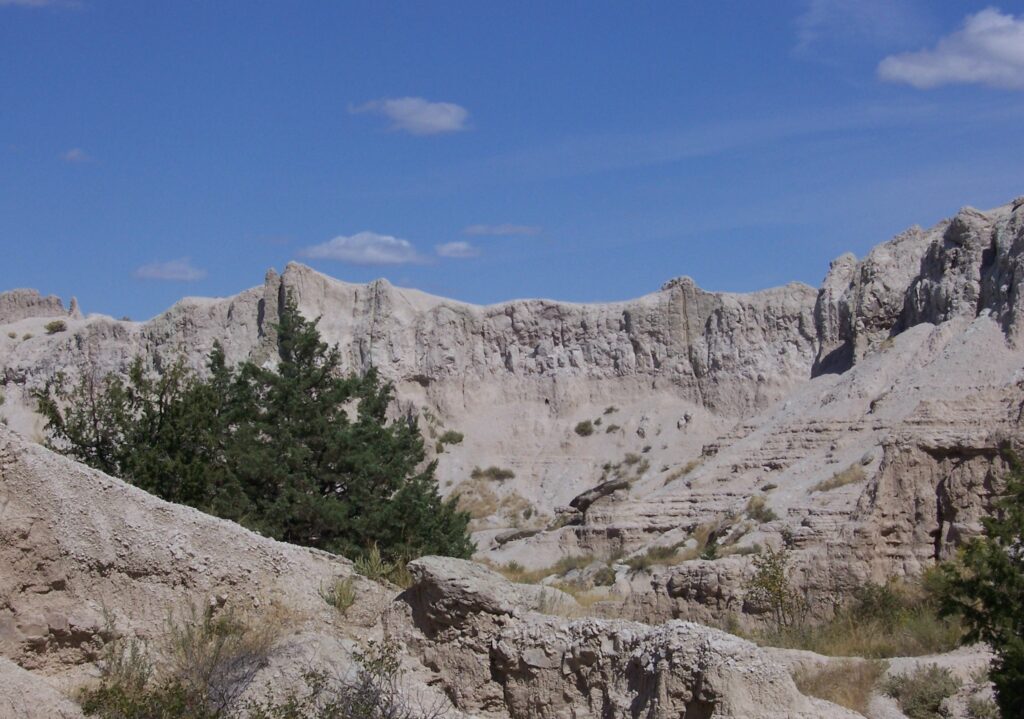
The signs say The Wall is moving north, each year. At first glance, that seems amazing in itself; that this apparently solid “thing” could move. When you get closer, however, you can see how much of nothing these rocks really are – even though they don’t crumble to human touch.
A geologist’s dream terrain
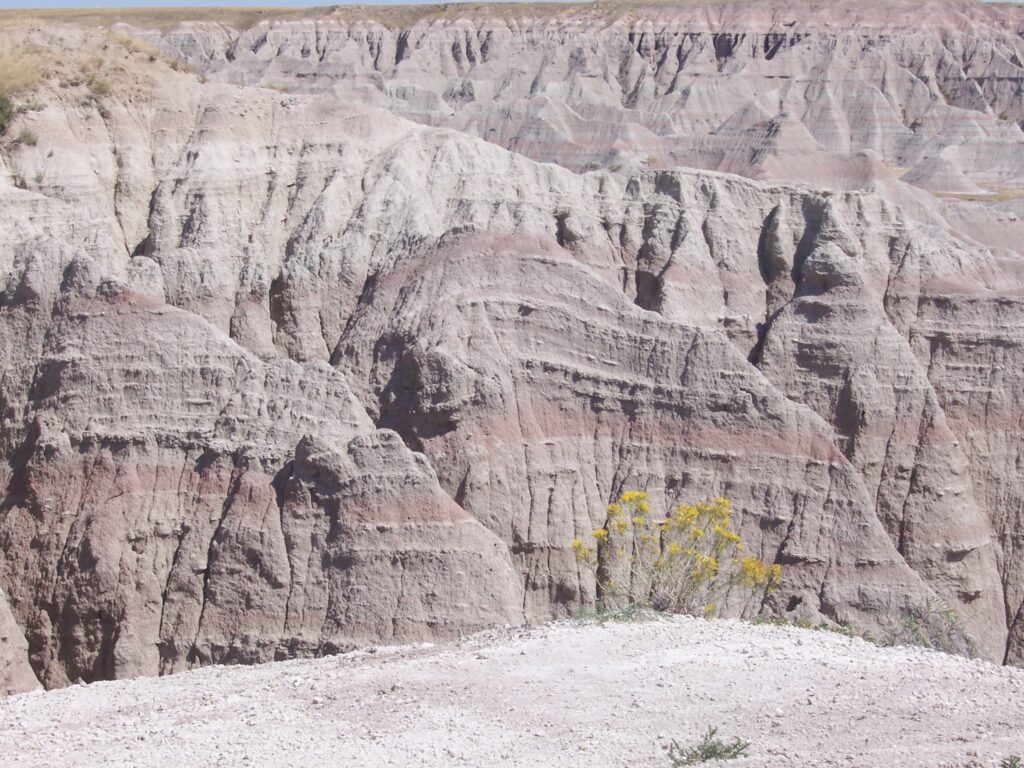
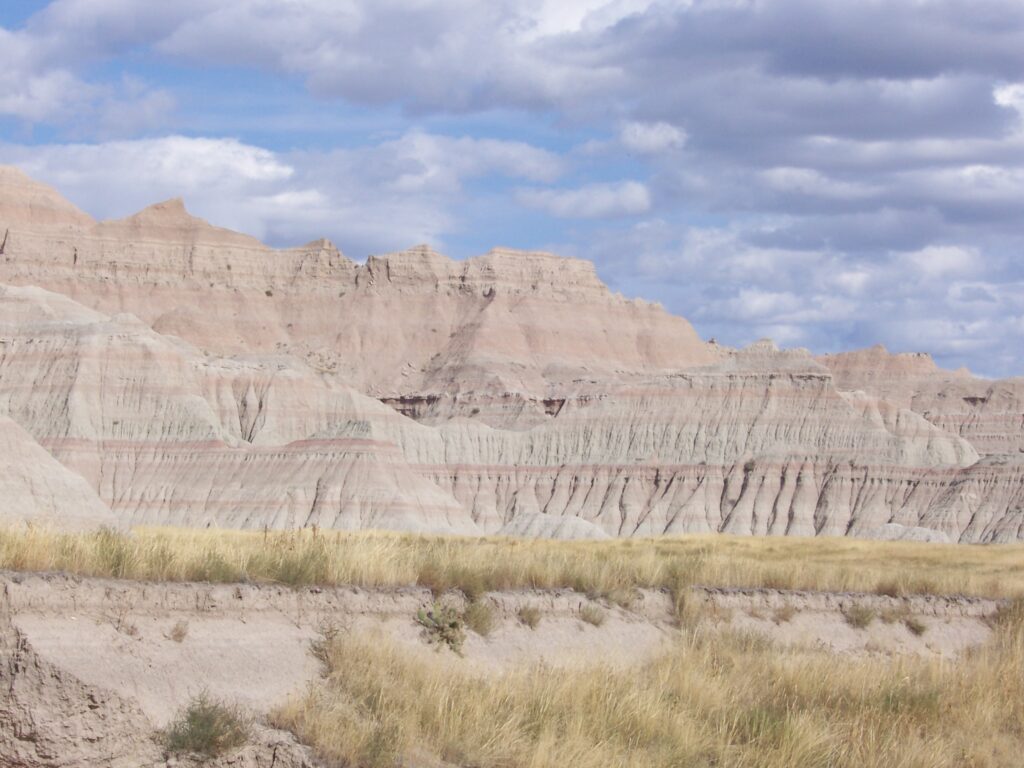
Geology students must love this place where it is so easy to see the different levels of rock as horizontal bands of red and white stretch for miles. Okay, they are probably more mauve and light grey, but not everyone has an artist’s sense of these things.
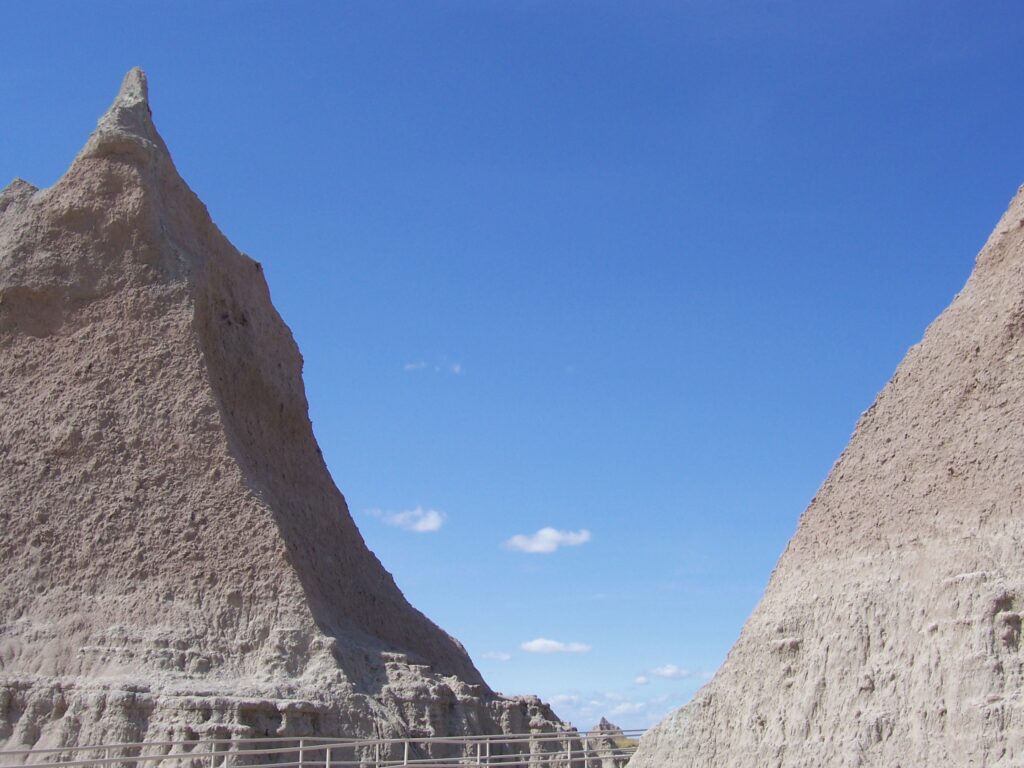
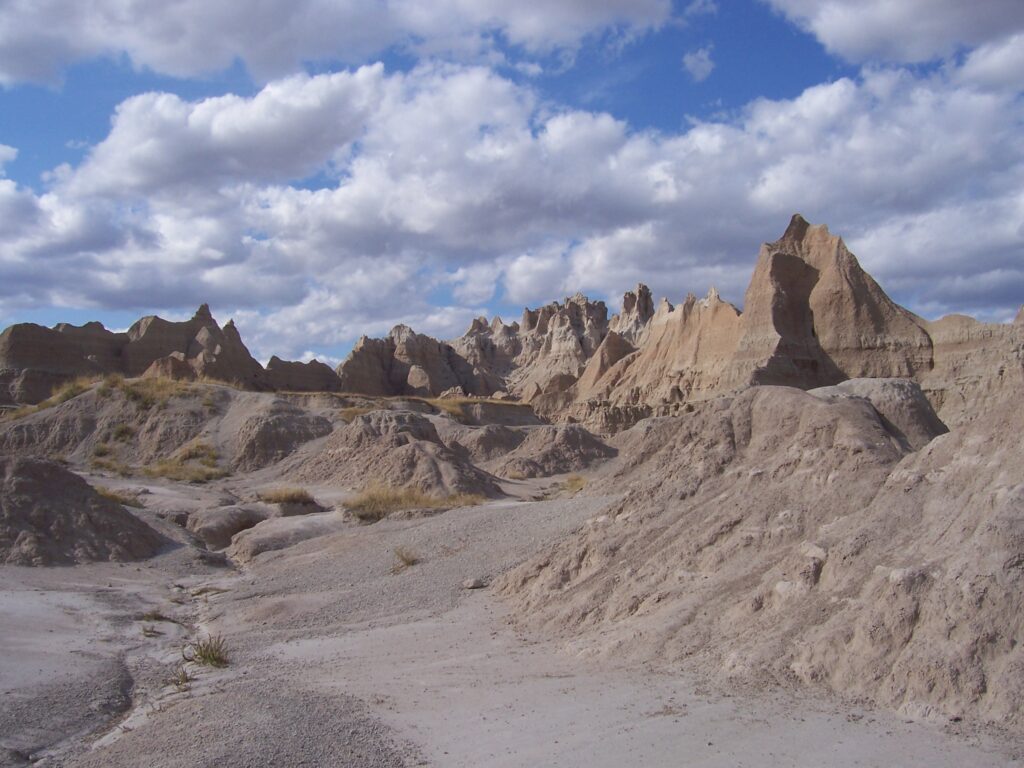
Even the parts that could be called “wall” are not perfectly straight vertical cliffs. They more resemble a series of inverted cones, squished together at their bases…the effect of wind erosion that blasts pieces off the face at the top and scatter the debris at the base, building up piles every year.
The winds whipping up and across the prairie are powerful forces. We know first hand about prairie winds now, too, as we stopped several times to walk around. The winds don’t seem to stop because there simply is nothing to stop them. No respite from what starts out as refreshing but in its never ending huff, becomes oppressive in itself to this nor’easter.
An artist’s eye to landscape design
Each color of rock has its own granularity. Up close, the white is much larger grained than the red with splotches the size of a fist, interspersed in a macro-grain.
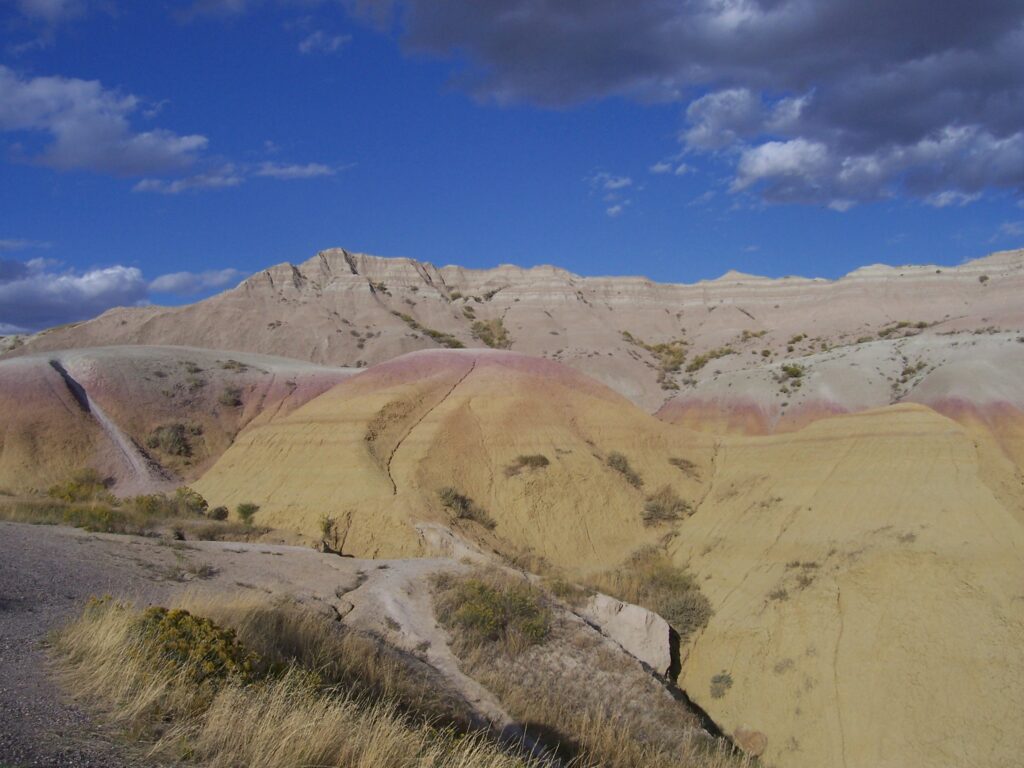
The red bits are much finer, but still coarse. None of this terrain looks like the solid rock we see in the northeast. At one point, a yellow rock is added that seems to make the red brighter. The yellow, it turns out, is from prehistoric lake bottom and the red was blown over from the west.
The Badlands are oddly beautiful for all the desolation. There are places where you can look across an abyss to see cone-walls with horizontal bars of red and white; dusty, almost fuzzy, like well washed flannel.
The futility of capturing beauty*
The blue sky against the top, white level is bluer than blue – like those fabulous calendar photos we see of the ruins in Athens, Greece. The rows of puffy clouds that hang in the sky with smudgy dark bottoms are unlike any others we have ever seen. This vision, this personal mind-picture, must be saved as a memory for no camera could do it justice; maybe it could be painted as a watercolor, but oils would be too harsh.
We marvel at this place, for it is special. We understand now why all who have come before have remarked on its beauty. Well, everyone except for the Lakota chieftain who, when brought nearby to relocate onto a reservation, remarked, “Land bad.”
Experienced visitors set alarms so they can see the Badlands as the sun comes up. Our tardiness this morning means we are not in sync with all of them as we drive through. This is good, as we enjoy the less populated rests at the overviews.
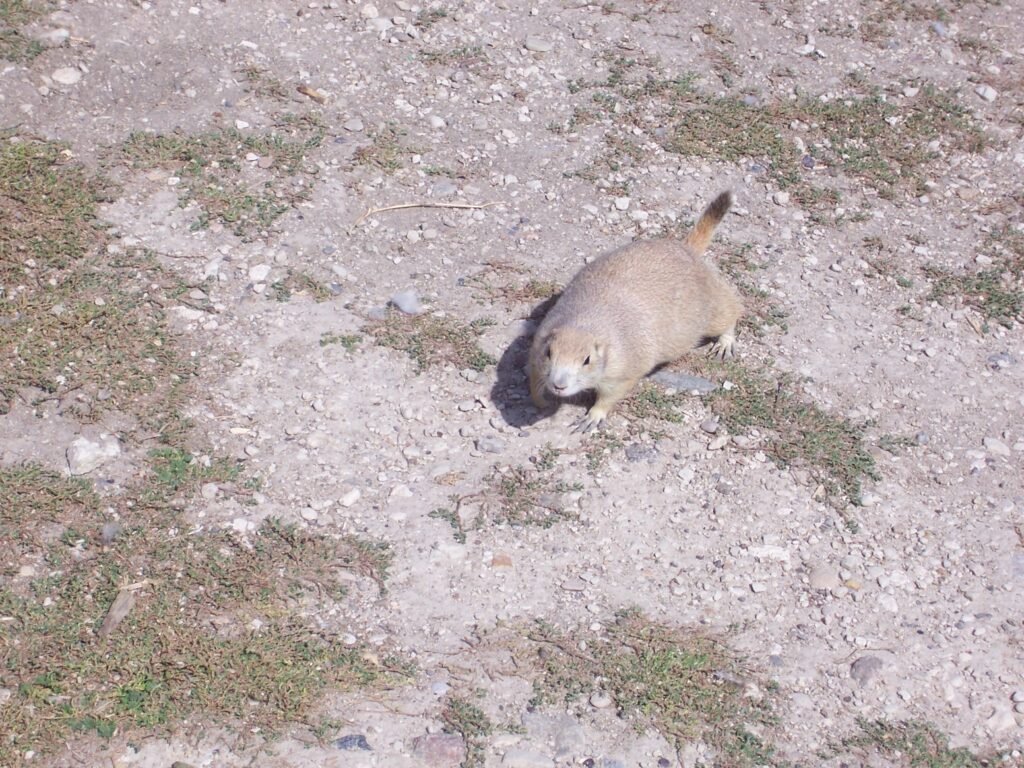
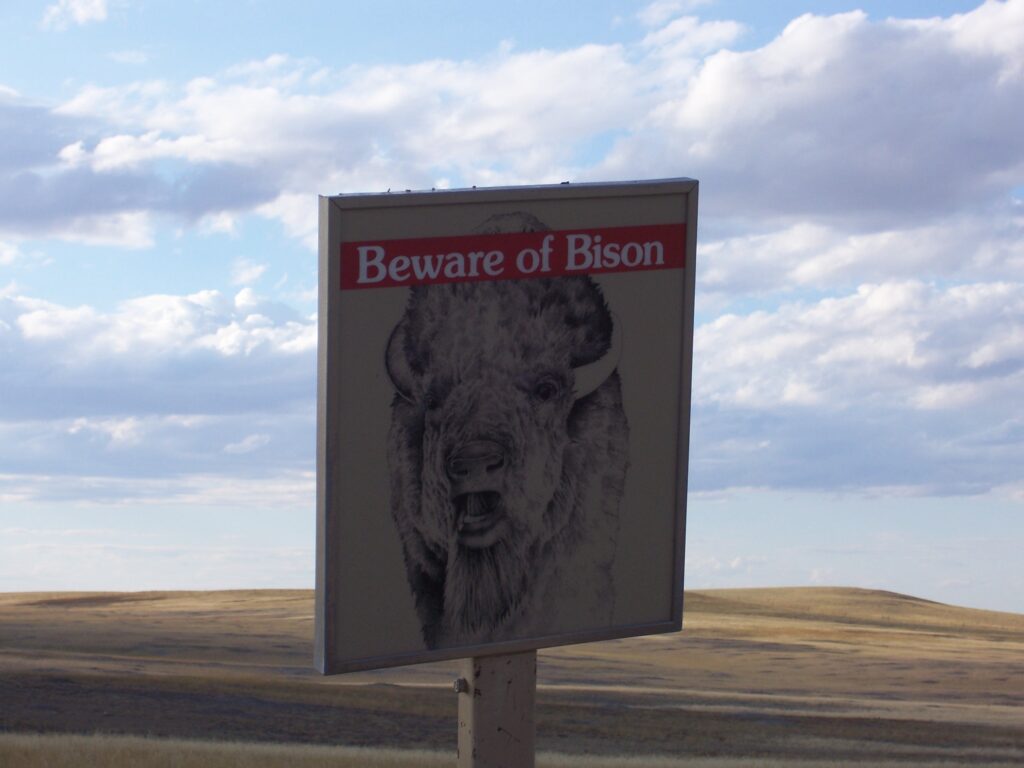
At one point, we took a gravel road to a town called Scenic – just to check out the buffalo grazing area. Instead we found Robert’s Prairie Dog Town. Unreal. For as far as you can see, the ground is riddled with mounds of dirt and thousands of prairie dogs pop up and down, scurrying from hole to hole. We laugh about their effect on the erosion of this limestone. Alas, the only buffalo we sight is the one painted on the sign, “Beware the Bison.”
Lunch place mat has the recipe for Fry Bread
We drove for a long time on the back roads before stopping for lunch at the Badlands Cedar Pass Lodge: Indian Fry Bread with Indian Taco Topping.
The Fry Bread was delicious, fresh and the best we had. To make it: mix together ¼ cup sugar, 2 cups flour, 3 teaspoons baking powder, 1 teaspoon salt and 1 cup water (or enough to make soft dough) and then, using a big spoon, drop the dough onto a floured surface and pat it down to about an inch thick before frying it in one-to-two inches of oil at 350 degrees (F) until golden brown.
The Indian Taco Topping is made by browning buffalo meat and then stirring in refried beans and taco seasoning. You just spread that mix on top of the fry bread and add typical taco accompaniments, like shredded cheese and lettuce, salsa, sour cream and guacamole.
Cloud paintings of spirit animals above The Wall
While eating lunch, I watched over Rob’s shoulder as the clouds shifted in position and shape over The Wall in the distance. In one moment there seems to be a line of animals, standing on their hind legs in some odd ballet-like stance – a bear and a couple of coyotes from a circus, perhaps – and then the sun shifts and they fade away, leaving overlapping cone-shaped mounds of grey and mauve.
It made me wonder if what I saw was real or not and then, poof, before the thought took hold, the cloud moved again and a silhouette of a fox and bear appears, quite clearly. Given a toke of peyote, we could easily become mystic visionaries in this place. Stand still for an hour and you will see many different scenes along The Wall.
It was late afternoon as we left the park toward Rapid City where we will spend the night. The terrain changed yet again as we moved closer to the Black Hills of South Dakota. Up, up and up, to an elevation of 3,200 feet. But that is a story for another day.
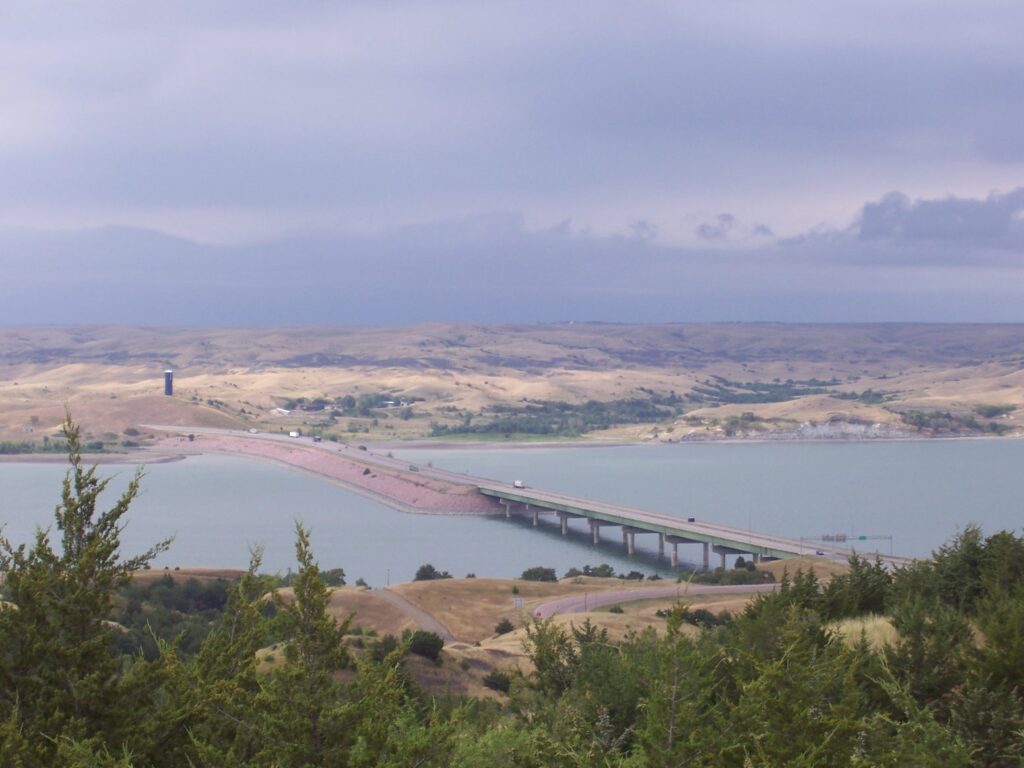
Overlooking the Missouri River along the historic route of Lewis and Clark. We can only imagine their thoughts as they crested the hill and there was no bridge for them to cross this mighty tributary to the Mississippi.
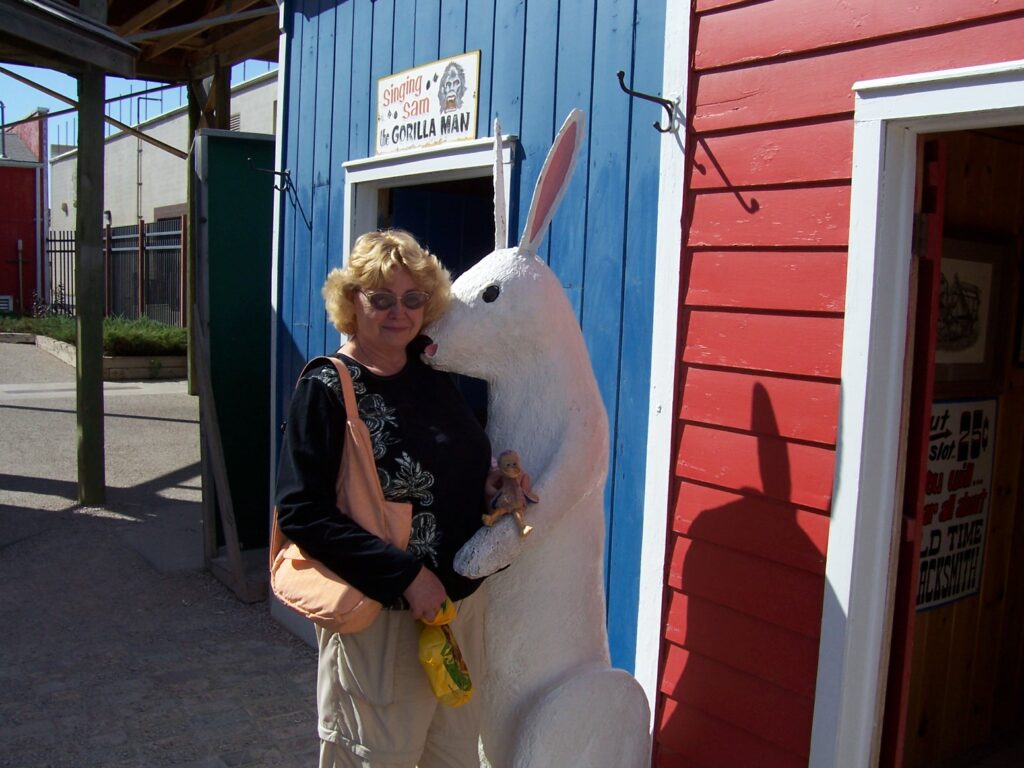
Bunny kisses
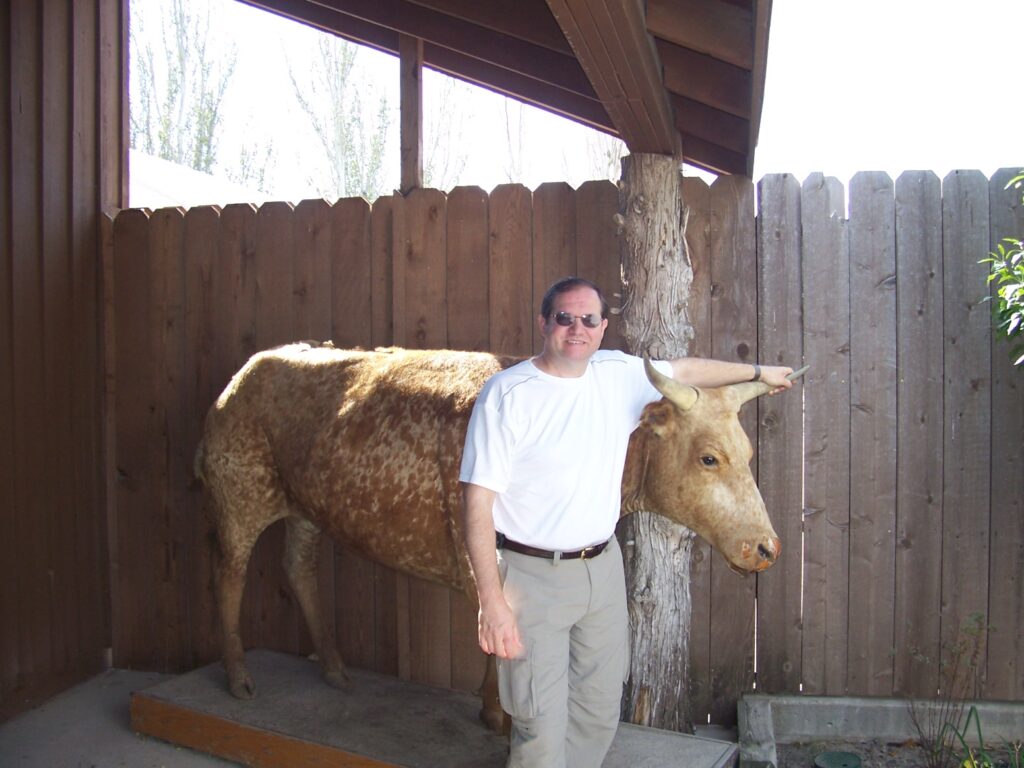
Cowboy Rob
We wandered around Wall so much we nearly got lost — among the critters!
“The Brown Family Homestead” circa 1909.
Kitchen
Fancy Parlor
Front Yard
Albino prairie dog
Cutie Pie
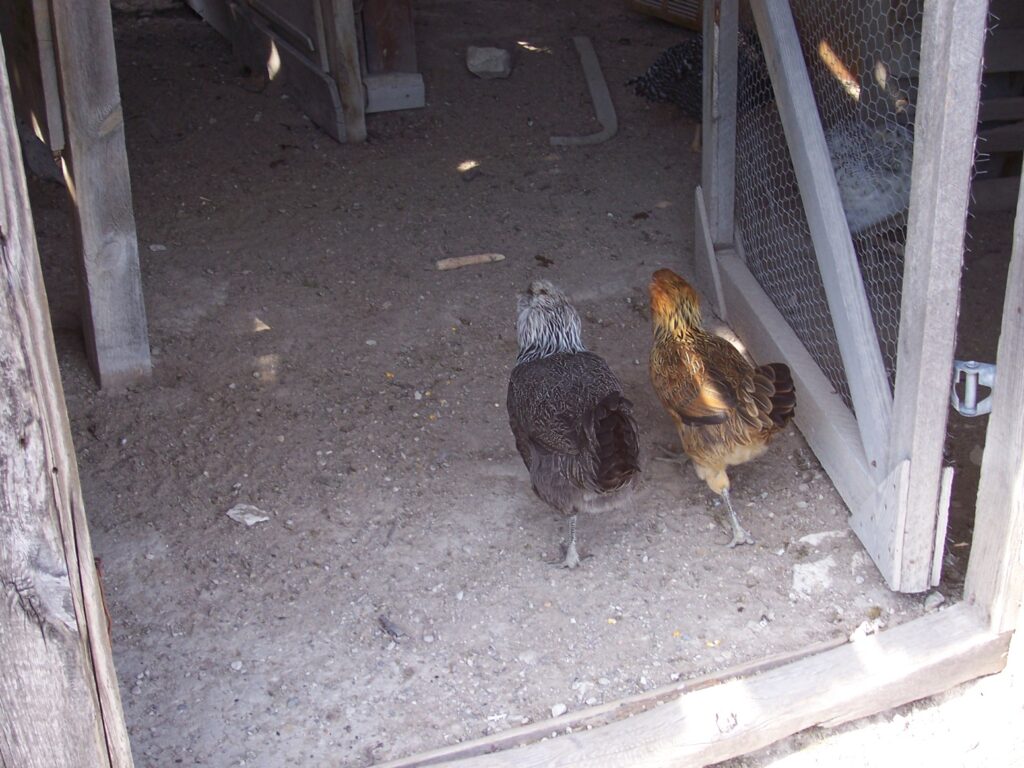
Prairie Chickens
Read this article on Travel South Dakota for a nice explanation of the Homestead Act and the people who purchased 160-acre plots for $18 — all theirs if they could live on it for 5 years.
We took theirs so they insisted on taking ours.
No, this isn’t Egypt.
The Wall, Badlands National Park
Windy
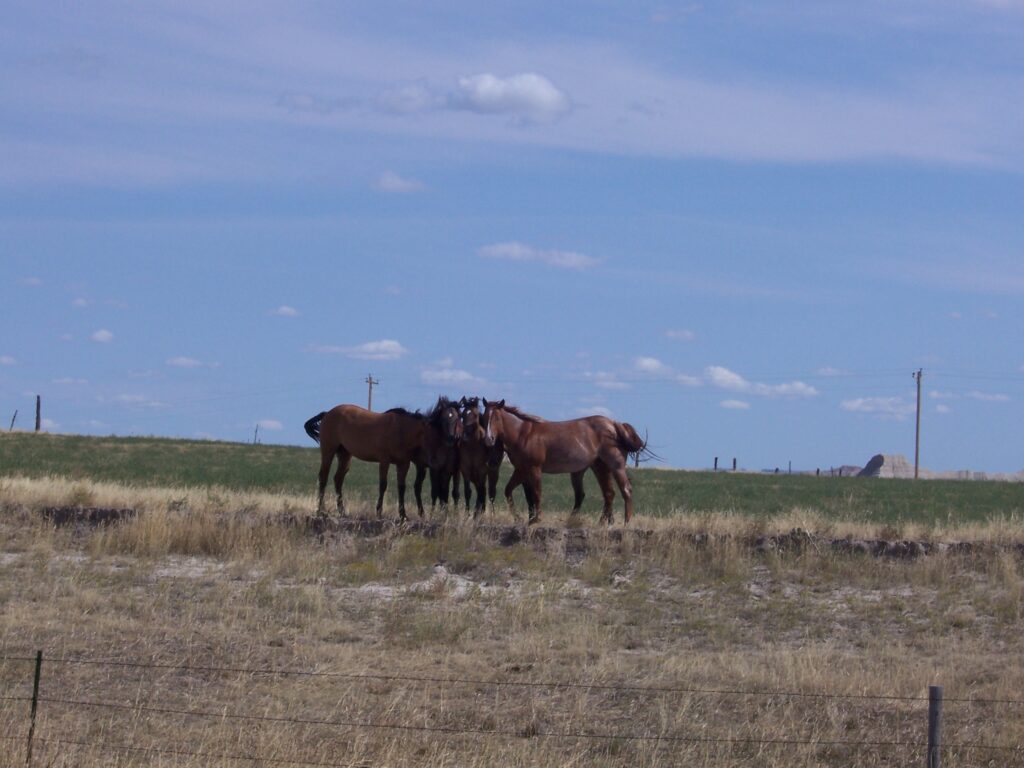
How many horses do you see?
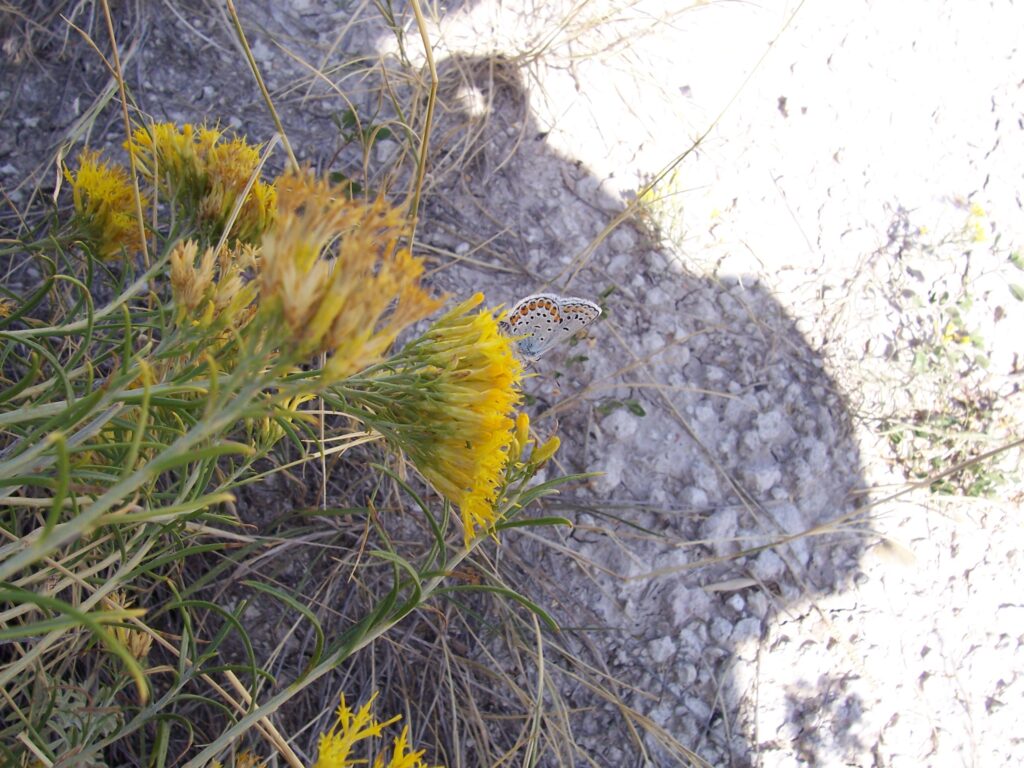
Yellow from prehistoric lake bottom
Robert’s Prairie Dog Town resident
*See my poem, Florida Sunset, for another explanation for this thought.
This post is one in a series that document our 400-day trip round the world (2005-2006). Each segment will be linked in at RTW.
Reprinted from a poem written for a friend in residence at the Brattleboro Retreat in Vermont. This poem repeated itself in my mind for the entire two-hour ride home where, to my relief, I found paper and pen.
Cognitive distortion is used to describe a pattern of thinking that shifts events into a negative framework; leading to feelings of sadness, anger and hopelessness. There are many forms but one is the all-or-nothing or black-or-white of extreme thinking where there is no middle ground.
Cognitive Distortion
There is a terror of the mind
that clouds reality
and gives shape to lie.

   Black, dim emptiness
   hangs heavy like a veil
   to filter out the truth.

   Evil throbs in tune
   with bleak despair
   to magnify the rage.

      Retreat a bit.
      Wait a bit.
      Let the soul begin to heal.

When mist is blown aside
the radiance within
forms first a tint of gray.

That bright-striped rainbow
is pulsing deep within
to bring color into life.

   Light is there.
   Good is there.
   Allow your joy to spread.

Erase the error of the mind
that clouds reality
and gives shape to lie.

-- Marilyn Paluszak
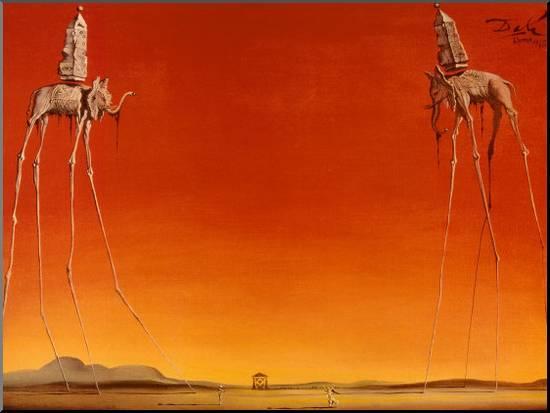
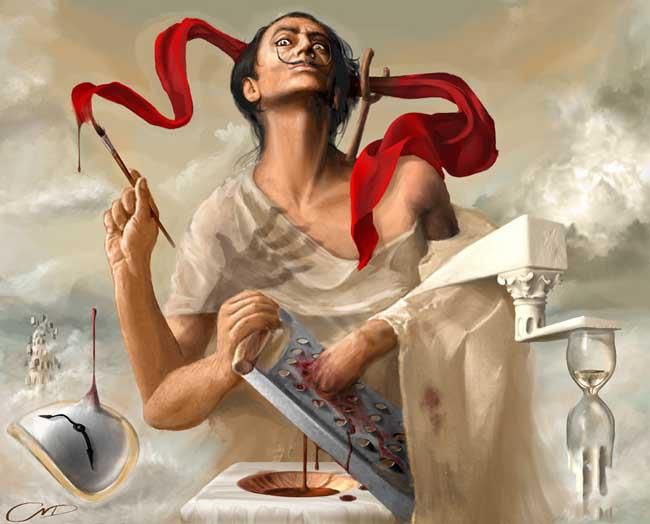
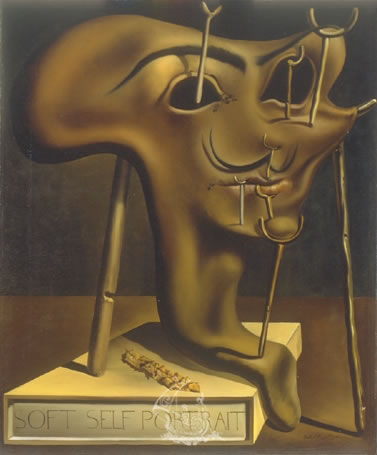
Salvador Dali with his Soft Portrait with Bacon
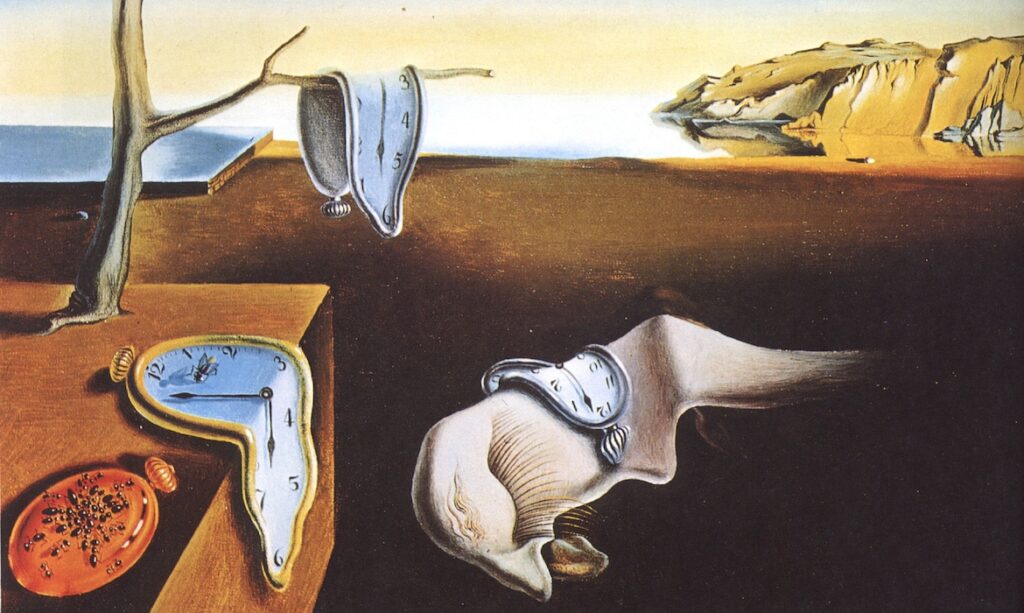
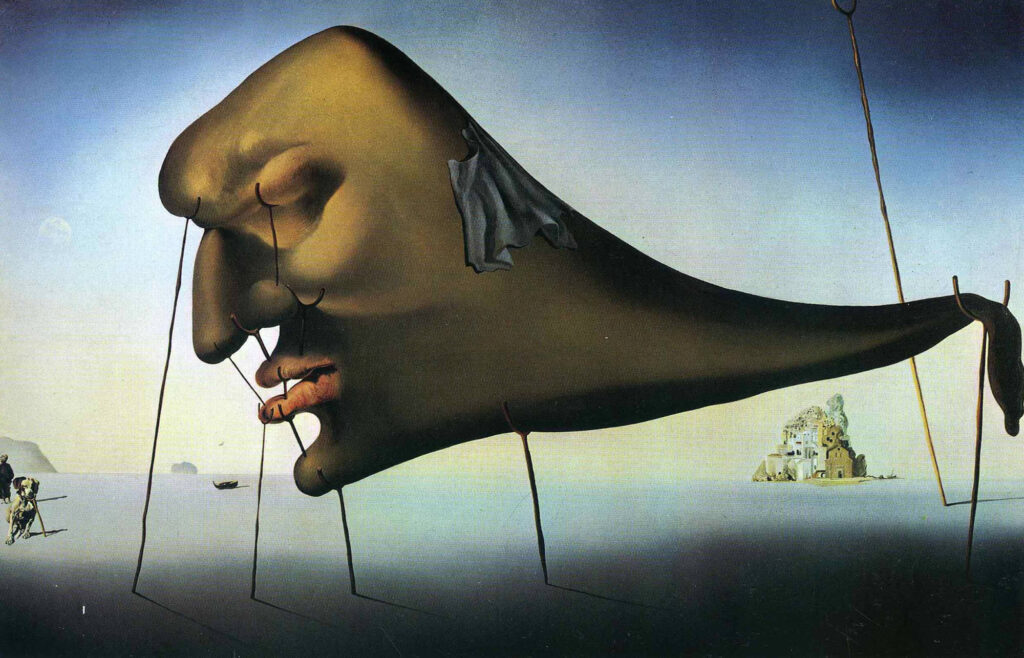
If there were anyone who could understand cognitive distortion I think it would be one of my favorites, the Spanish surrealist, Salvador Dali (1904-1989).
The Persistence of MemoryThe DreamThe ElephantsSelf Portrait, 1921Soft Portrait with Bacon
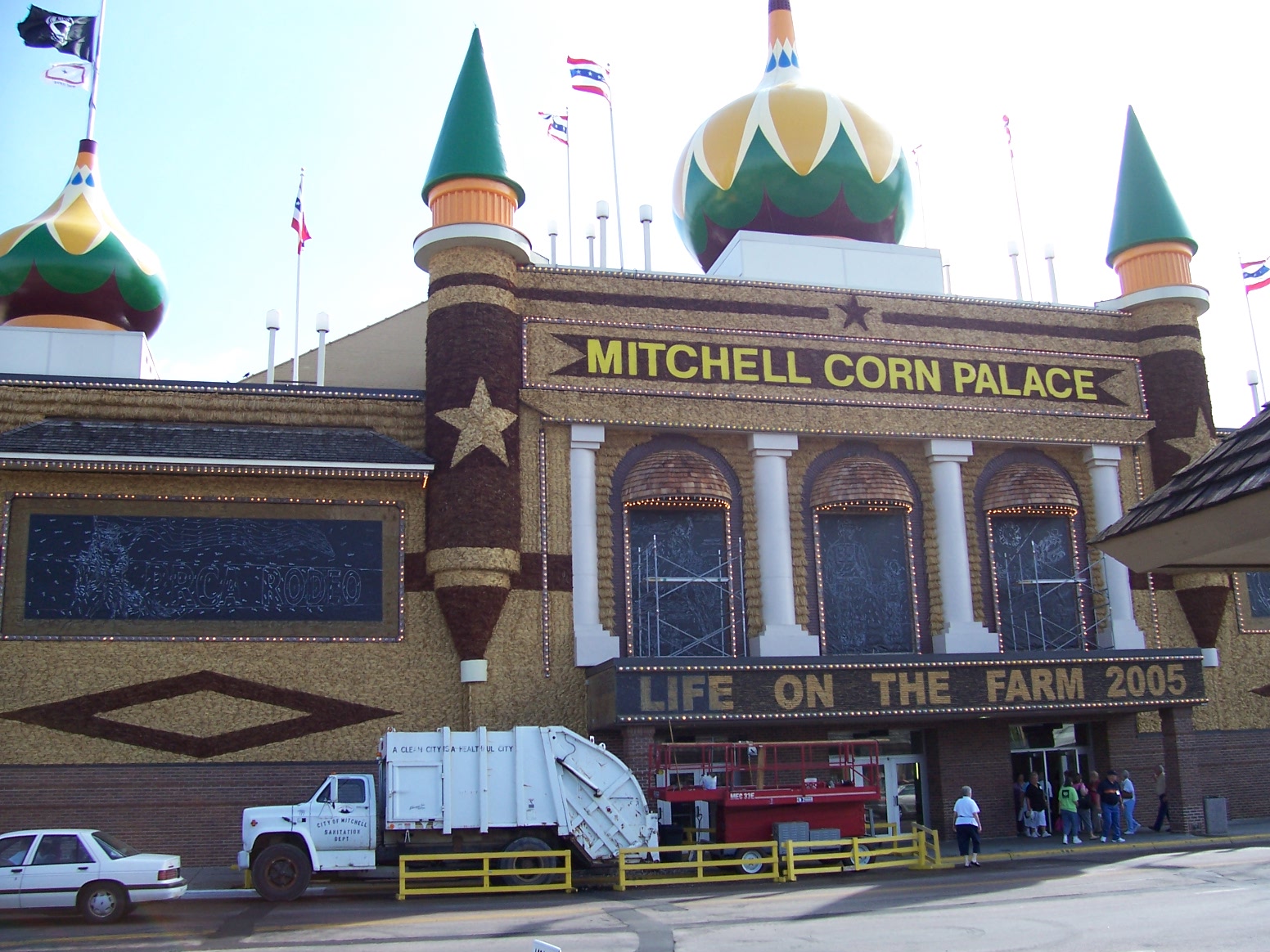
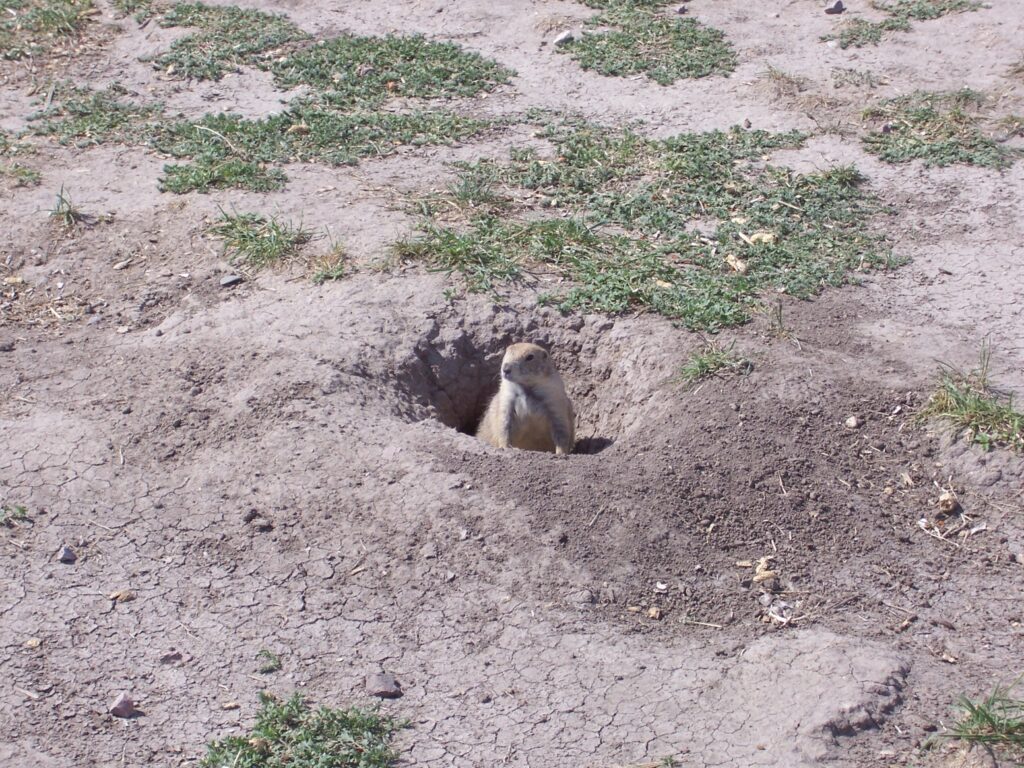
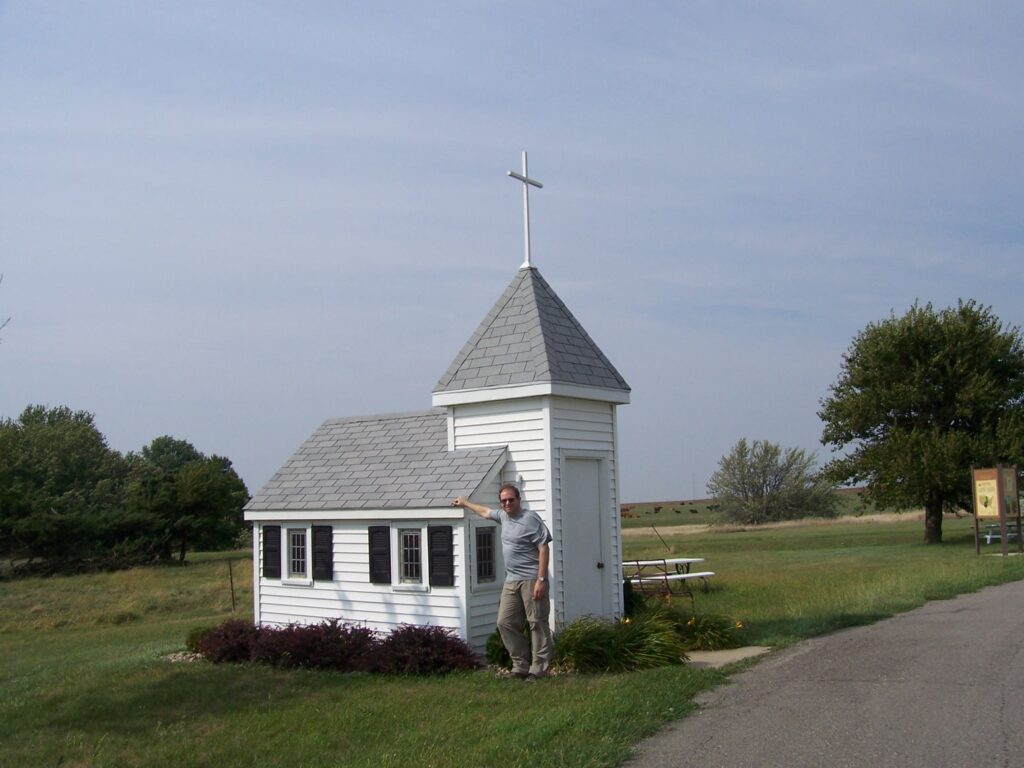
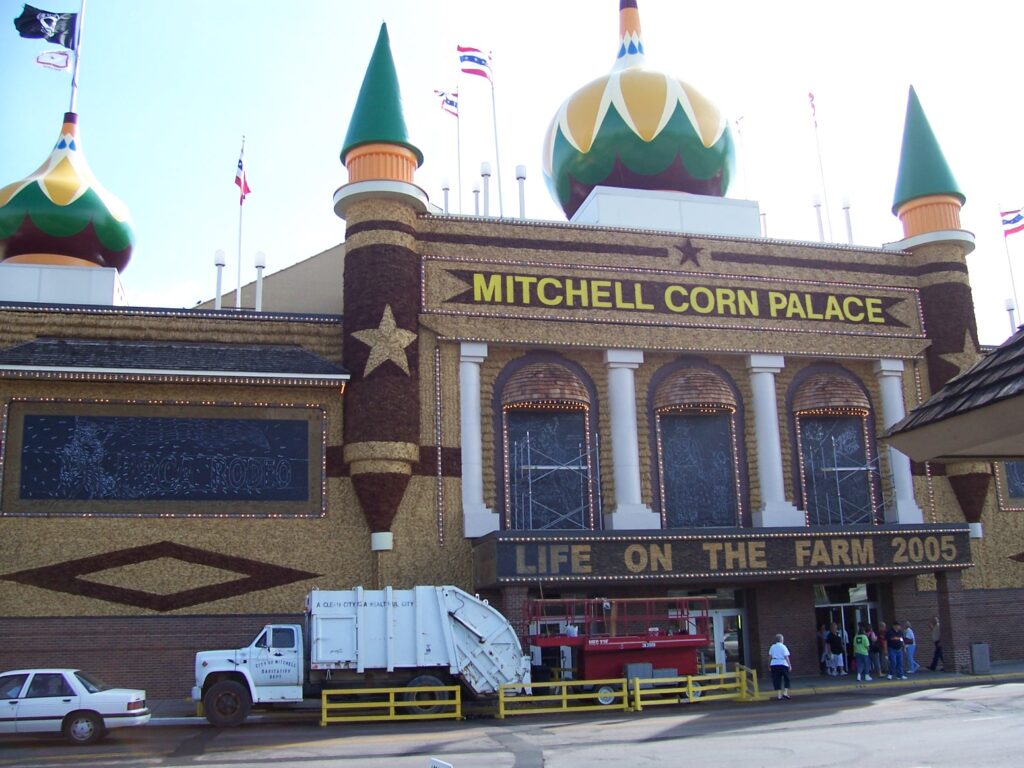
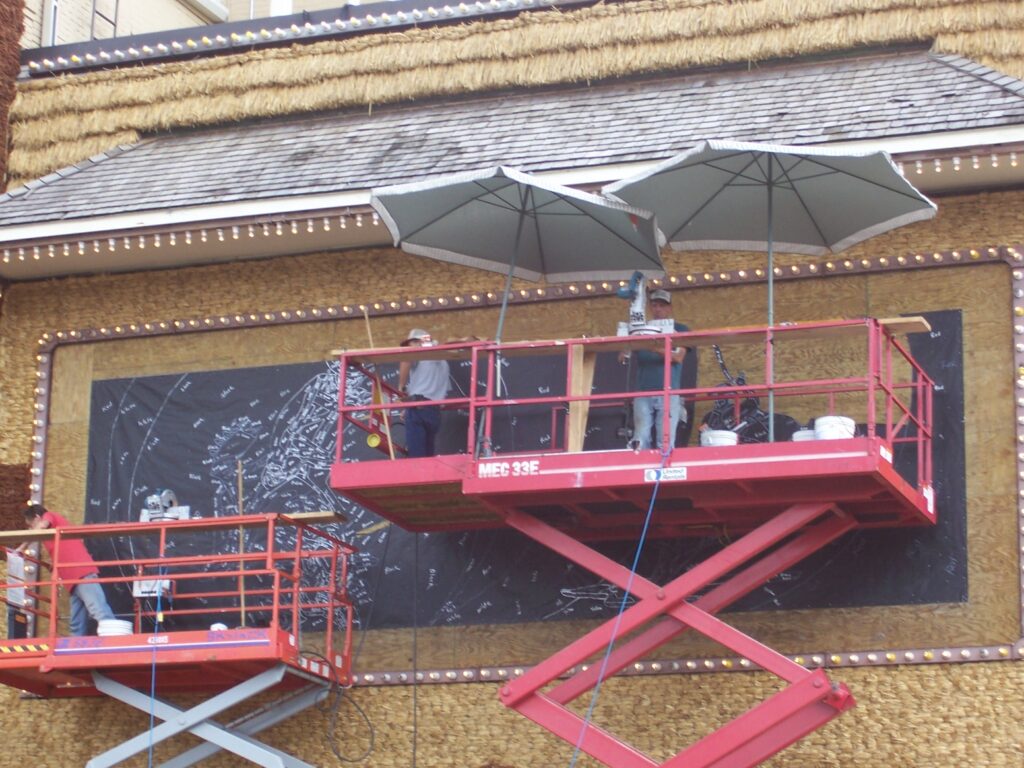
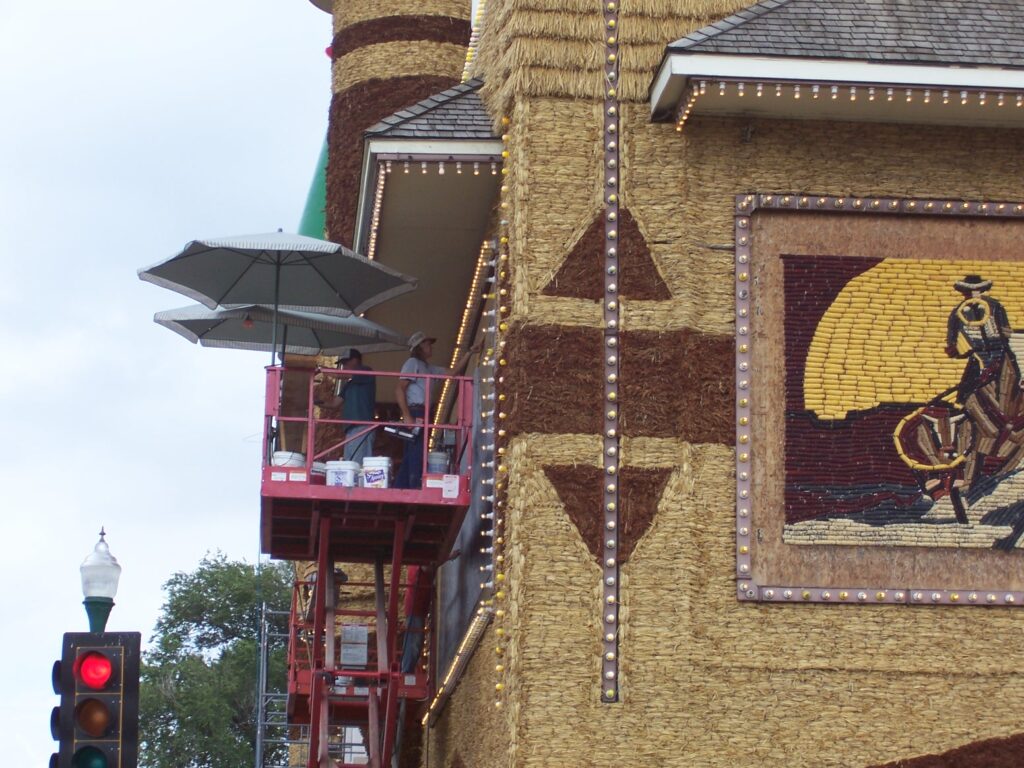
“Look, I think those are trees.” Prairie Dog Peek-a-BooRoadside Chapel; Henry, (SD)Very limited seating.Corn Palace, 2005Aw, shucks!We got to see the construction phase.The Palace gets a new face every year!
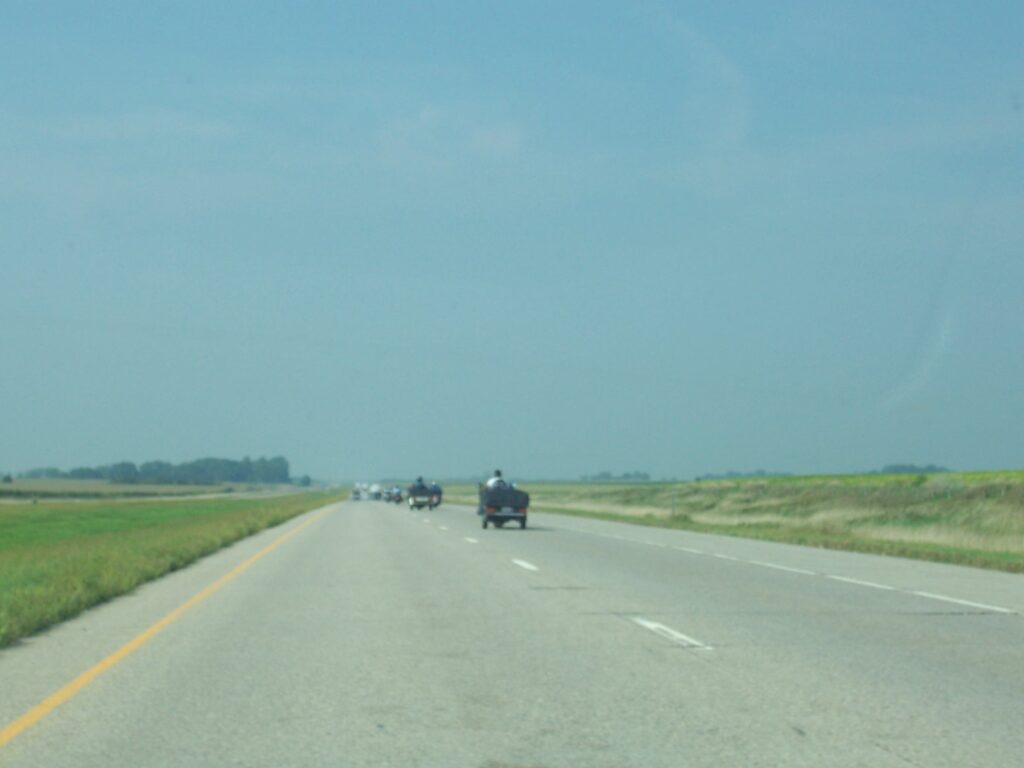
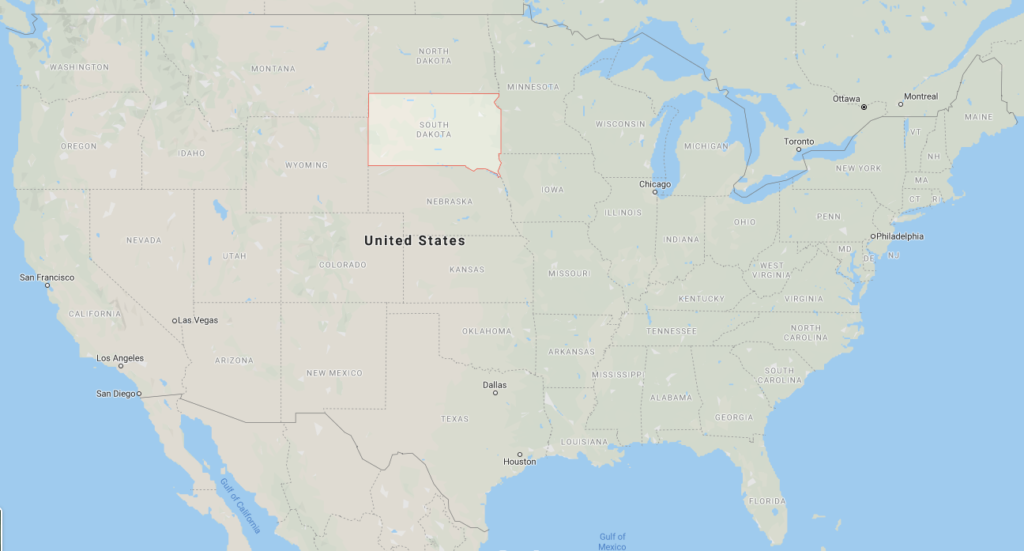
South Dakota is about 380 miles wide, east to west.
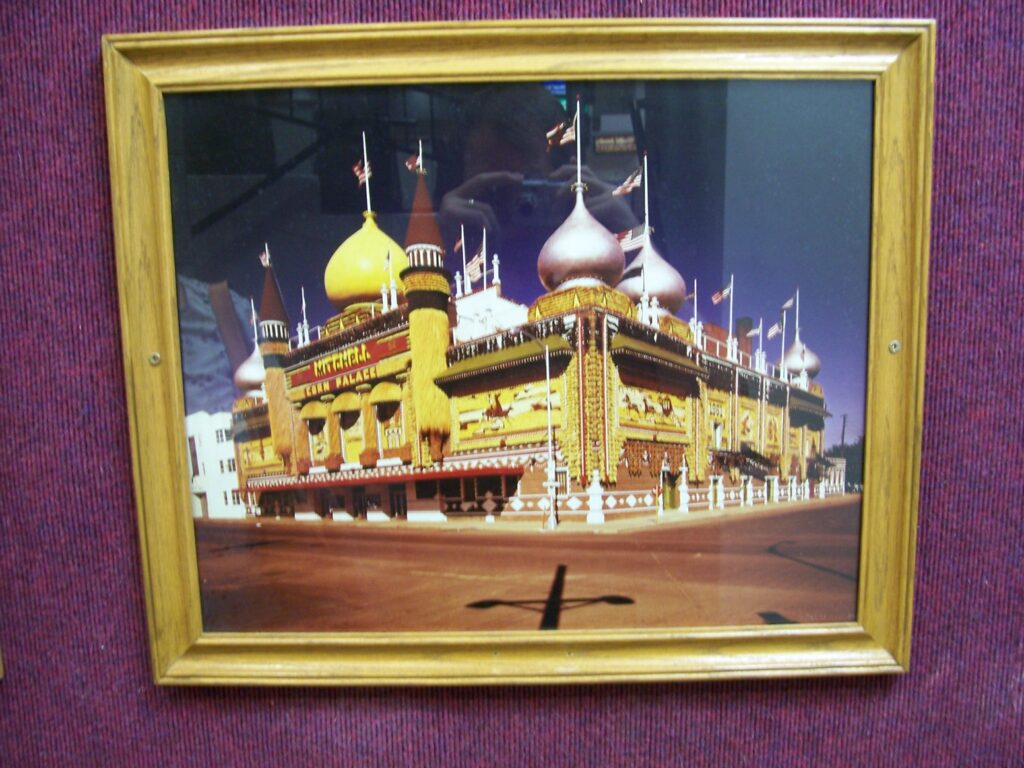
Our introduction to South Dakota takes us from the prairie to the palace. Palace, you ask? Okay we did drive through miles of prairie land to arrive at the Mitchell Corn Palace. It turns out that South Dakota is a very diverse place. It was also our first view of the Great Plains region of the United States from the ground. Those of us who don’t live here think of the Midwest as flat. It turns out it is; and it isn’t.
If you stand by your car and look south you would swear you could see Texas. But there is an east-west tilt that gradually increases your elevation as you go west. The elevation at the Minnesota border is about 970 ft (295 m) but when we reach the town of Wall, just outside the national park, we will be at 2,825 ft (861 m). That is nearly a 2,000 foot climb.
The sky looms large all the time here because there are no large clumps of tall buildings, trees or mountains to break it up. I’m told people love “wide open spaces” but it makes me scrunch my neck down into my shoulders like a turtle avoiding a poking finger at its nose.
Tiny Roadside Chapel in Henry, South Dakota
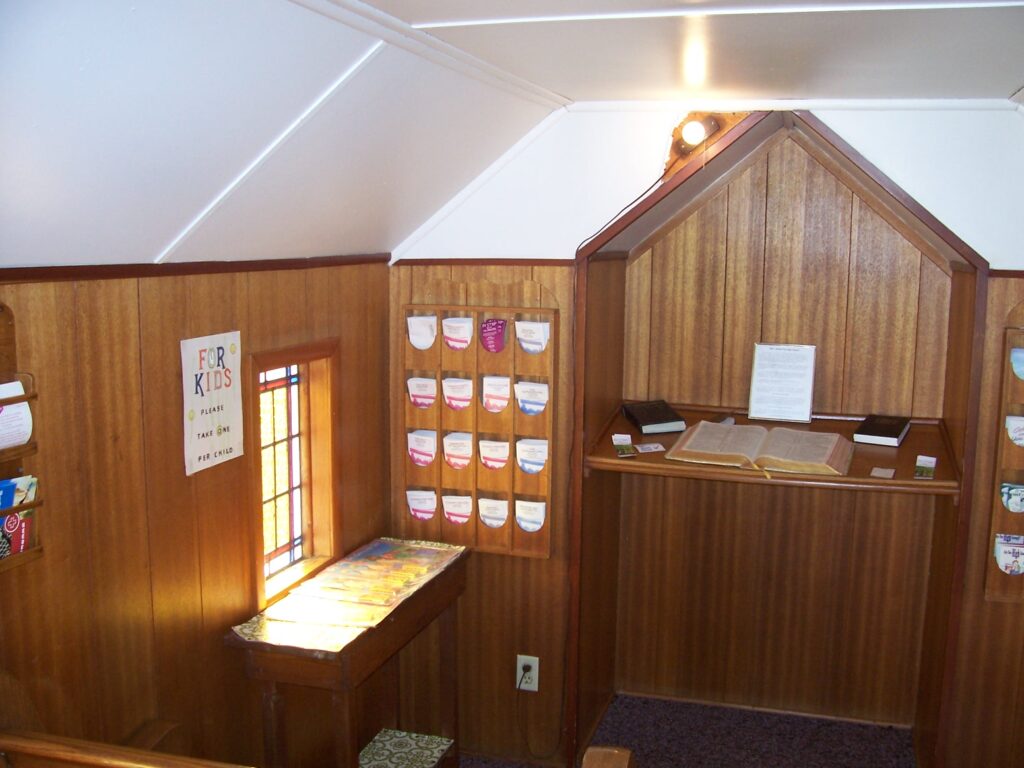
Henry, South Dakota, we learn, has a population of 266; plus or minus 1 or 2. There literally is not much to see because the main attraction, the Roadside Chapel, is literally so small. Like many of these types of buildings that dot the world, it was built to provide a bit of respite to travelers.
It is very well kept up; immaculately clean inside and a welcome stop for us. Maybe because we have an affinity for little white chapels? After all, we were married in theLittle White Chapel in Las Vegas.
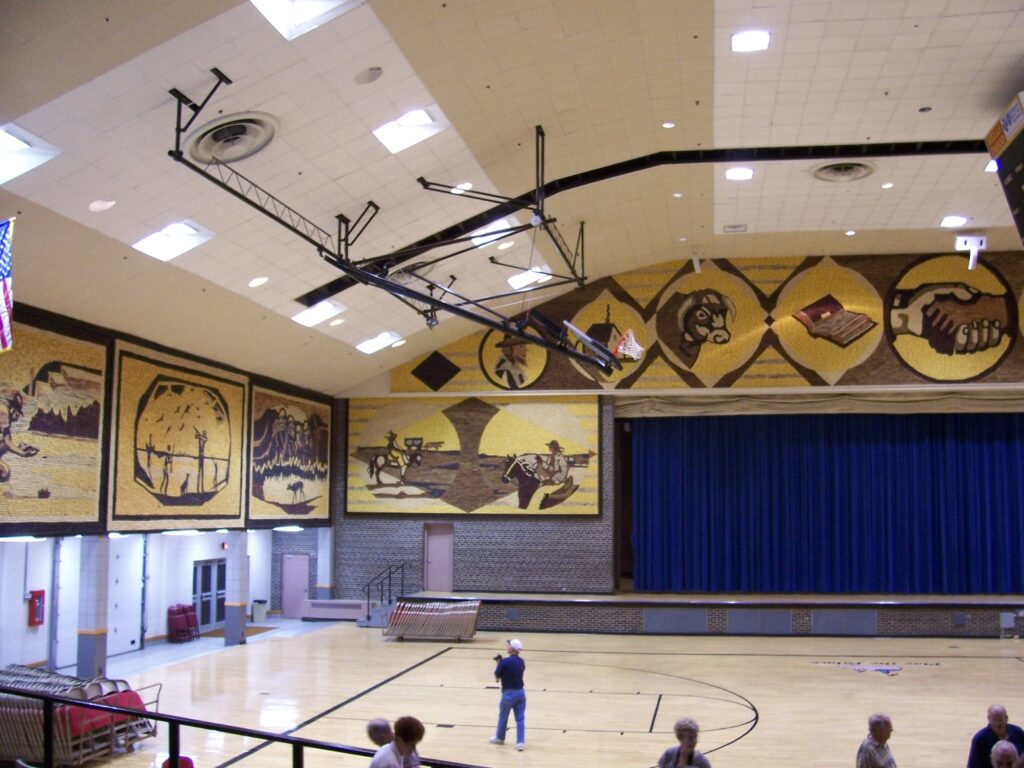
The Corn Palace in Mitchell, South Dakota
Proving that we are not early morning people, we checked out of the Comfort Inn at 11:00 a.m. Proving that we are not big spenders, the Corn Palace was free and the Doll Museum was only $5 per person. Lunch, of course, was corn-on-the cob with one BLT for me and a Corn Dog for Rob; the bill was $12.75, including sodas.
I am so glad the Mitchell Corn Palace exists. It really is a remarkable place and makes such a statement about the kinds of people you find all across the United States. Not the celebrities of headlines, but real people like those who work the land growing corn and wheat that supply food to humans and herds. When long, growing season days turn to cold winter months, what better way to spend your time than to be creative.
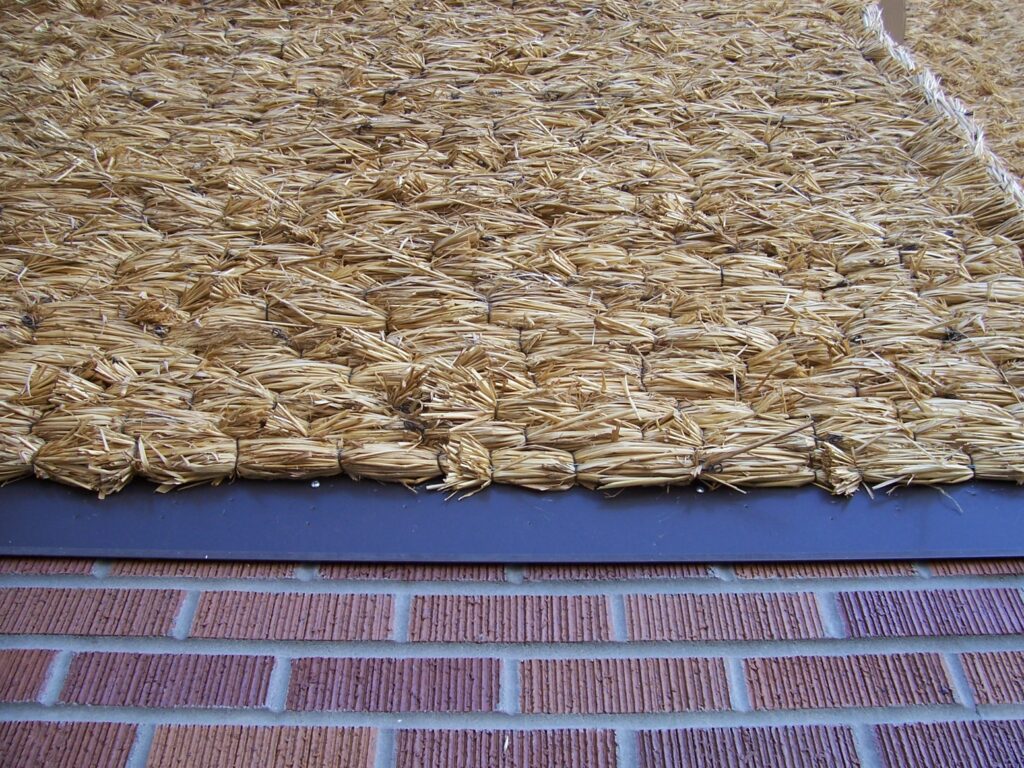
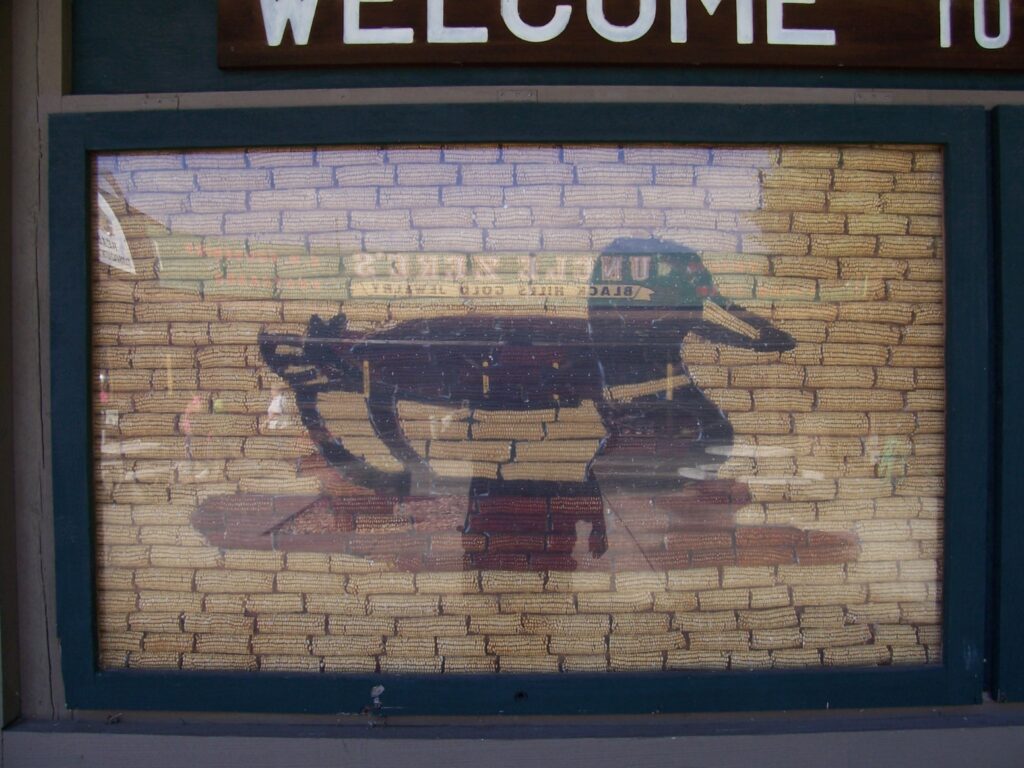
It doesn’t take a stretch of the imagination to see how someone came up with the idea to decorate the outside of a building using corn when it grows by the mile in these parts. What is “a-maizing” (get it?? :>) is how delicate some of the pictures appear. That, and the fact that the façade must be replaced every year. Corn, after all, is biodegradable.
The Science of Corn Painting
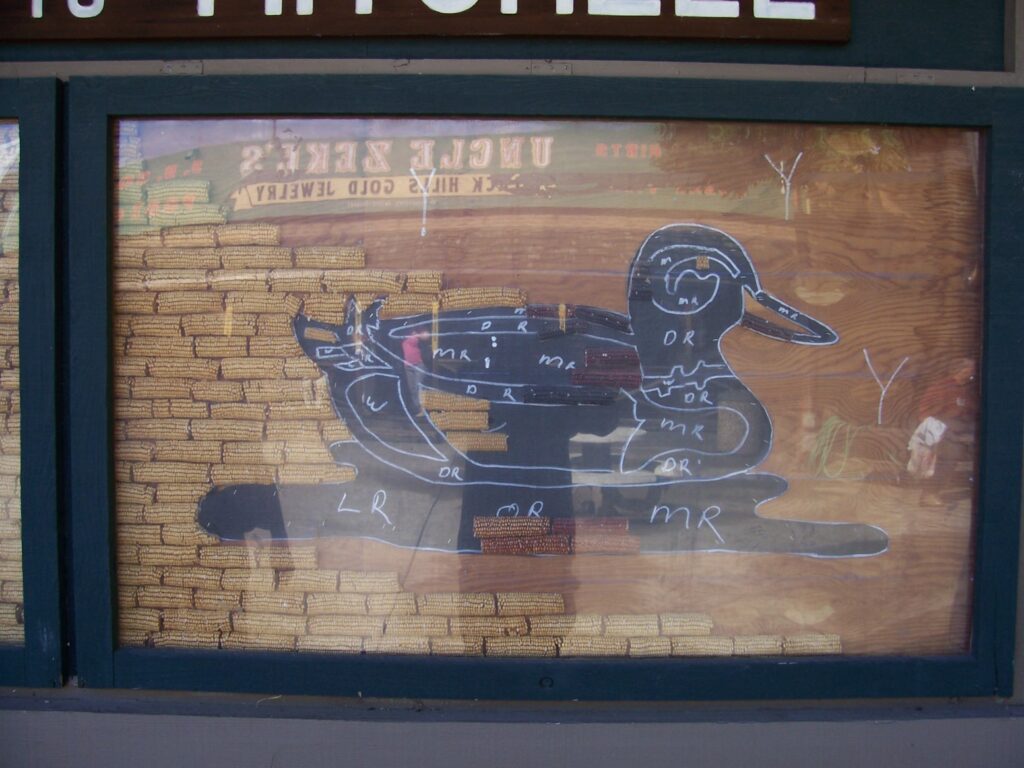
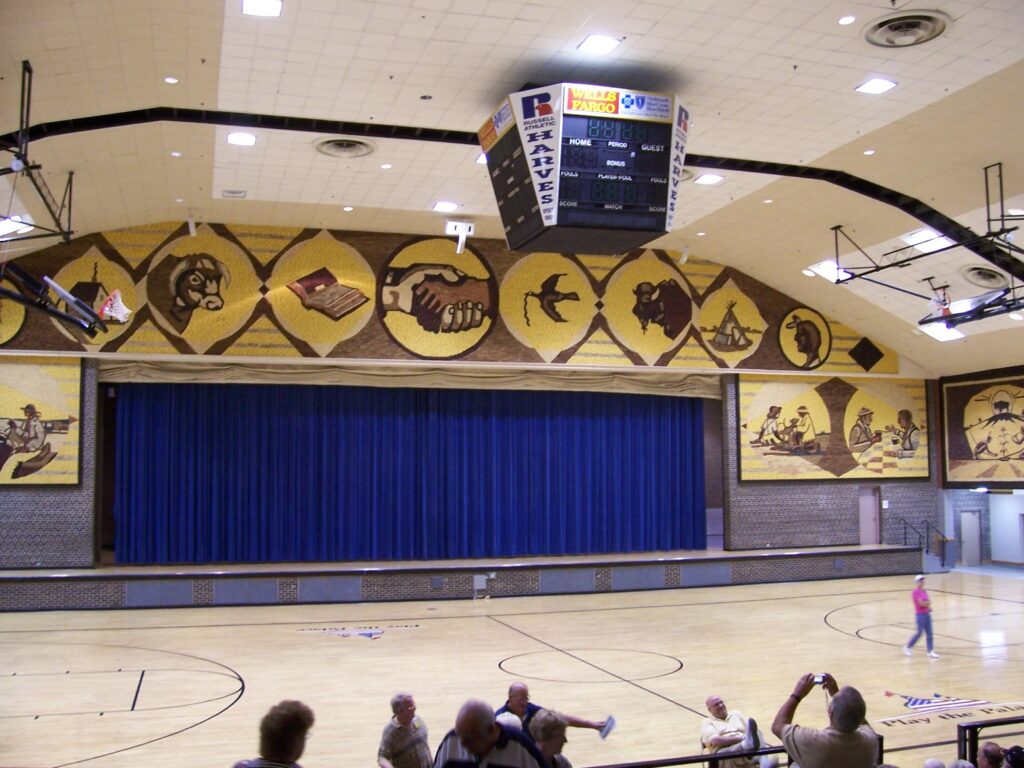
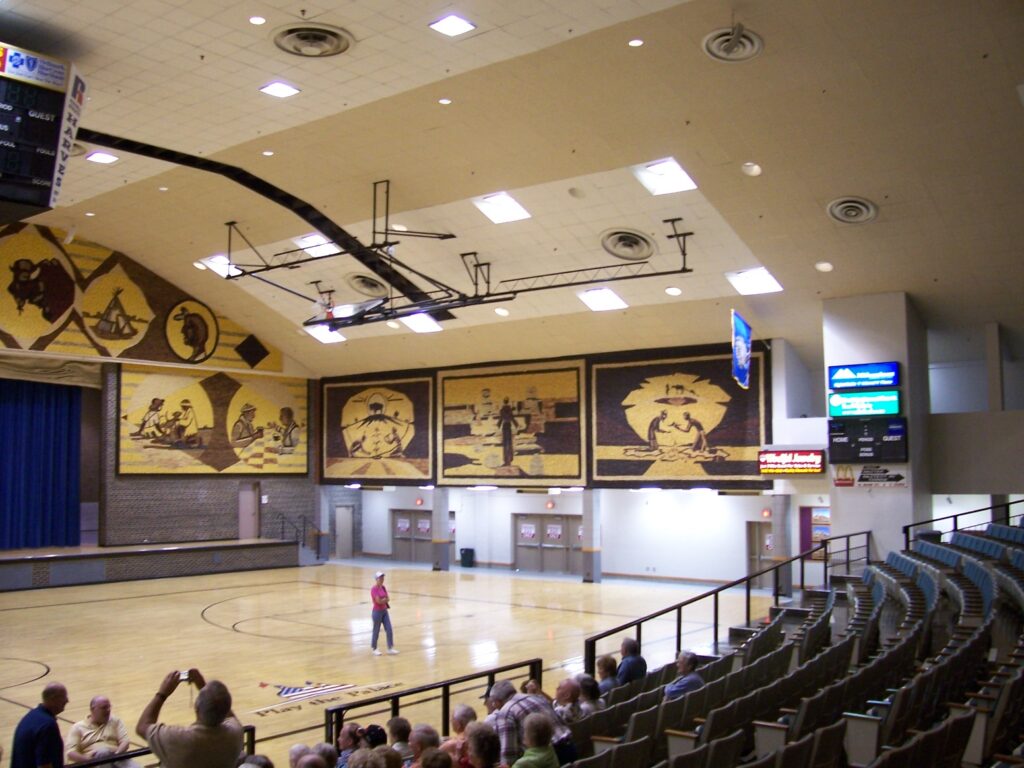
The residents who do this have it down to a science. The artist draws pictures for whatever theme is chosen for the next year and then uses a projector to help enlarge the image onto black roofing paper. They use a coded system to mark which areas are to be filled in with what kind (or color) of corn. This is a true corn-by-code “painting” system developed for the volunteers to follow when placing corn stalks and ears.
The Corn Palace itself contains a small history with photos of previous versions, an explanation of how the façade is created, and a gymnasium with a basketball court that can be used for community activities. After looking around, we sat in the bleachers and listened to a tour guide speak to a group of retirees who had arrived by bus that morning. Half a million people a year visit the Corn Palace and believe me, they are not flying in on jumbo jets.
Later, when coming out of a shop, Rob stopped short when he saw the name tag on one of those visitors – showing he was from Rochester, New York! It turned out he was actually from Greece, a suburb that we are familiar with, as Rob’s mother lived there once. Another case of “it’s a small world after all.”
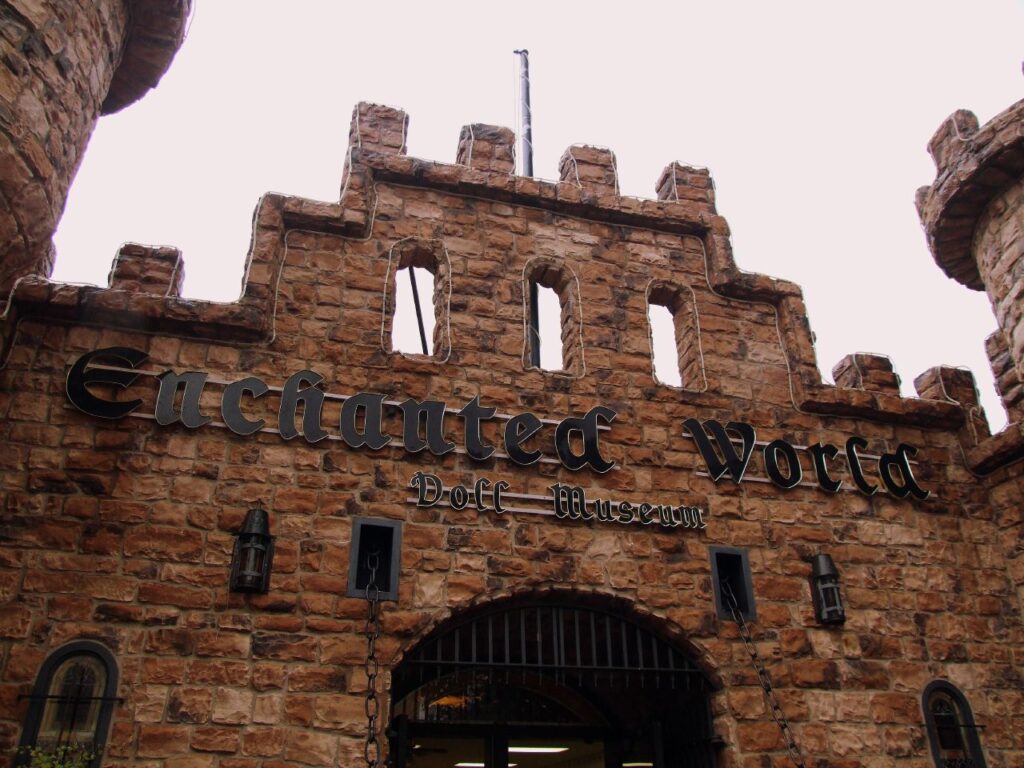
The Enchanted World Doll Museum
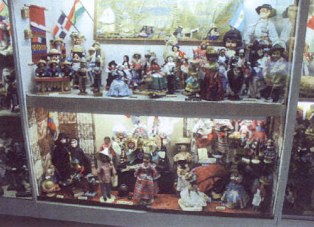
The Enchanted World Doll Museum was enchanting! What a treasure. There were nearly 5,000 dolls of every make, model and description. And they came from nearly everywhere in the world. Some are very old, some are just exquisite, some crudely made – in its entirety, it was well worth the time and minimal cost.
I use the past tense because, I am sorry to say, we just learned that the museum closed in 2008. The collection was most likely sold at auction and the building now is empty. What a terrible loss for everyone involved and to the many visitors to South Dakota.
Just one of the many cases filled with dolls.
Mitchell has a Castle, as well as a Palace
A piece of my heart is broken today.
This post is one in a series that document our 400-day trip round the world (2005-2006). Each segment will be linked in at RTW.
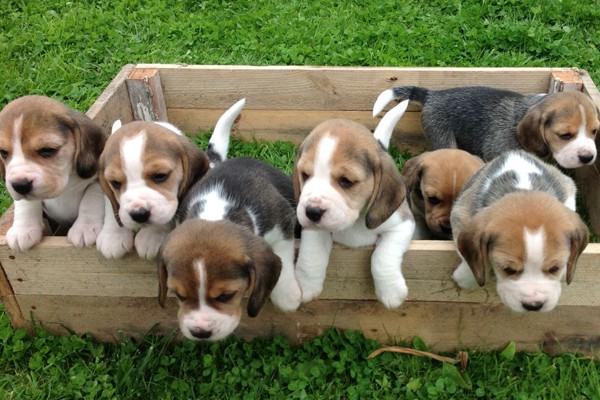
Okay, these are not the puppies that Gertrude mothered but beagle puppies are so cute I had to share!
Gertrude

Mother Nature's
warped imagination
left aches and loneliness
within her breast.

No babes
to mother into life.
Soulful eyes drooped to
emptiness
in her nest.

Poor Gertrude,
born to birth
but forever barren,
alien,
unlike all the rest.

Fate countered
by a miracle of
beagle birth
abandoned,
swelling her breast.

Mother Hen to the rescue
filled with coos, contentment
and overflowing love, eternal.

Happy Gertrude
has puppychicks now.
As if borne
from her breast
like all the rest.

-Marilyn Paluszak
Republished by Marilyn Paluszak from a poem originally written in 1988 and edited in 2011 (thanks to Ted Kooser’s hints in The Poetry Home Repair Manual.
Inspiration came from a Ripley’s Believe It or Not! item published in the (Albany, NY) Sunday Times Union, December 4, 1988.
“Gertrude,” owned by Ken Hatch of Alpena, Michigan, had never laid a single egg, but when seven beagle puppies were abandoned by their mother, she adopted them and at long last became a Mother Hen.
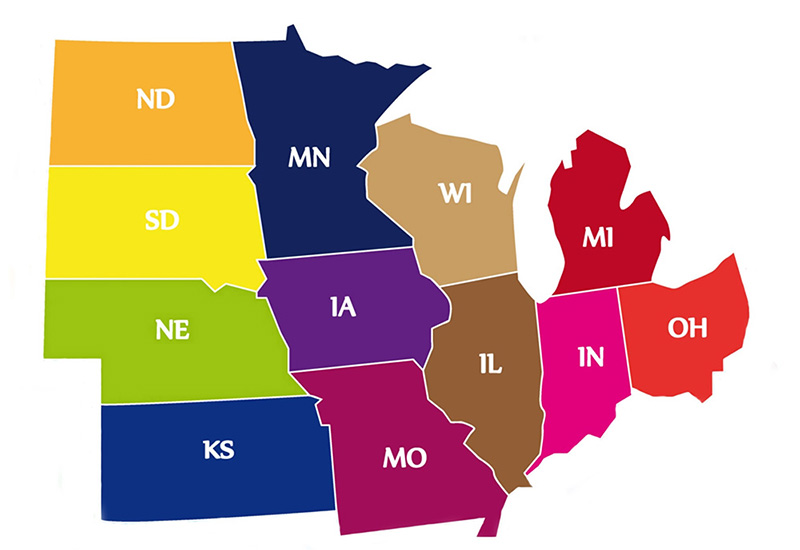
Chicago and Minneapolis are two of the largest cities in the Midwest and we haven’t been to either. We need to fix that!
When you arrive anywhere in the dark, it is always refreshing to wake to sunlight. It is a visual transformation to see how less threatening everything looks.
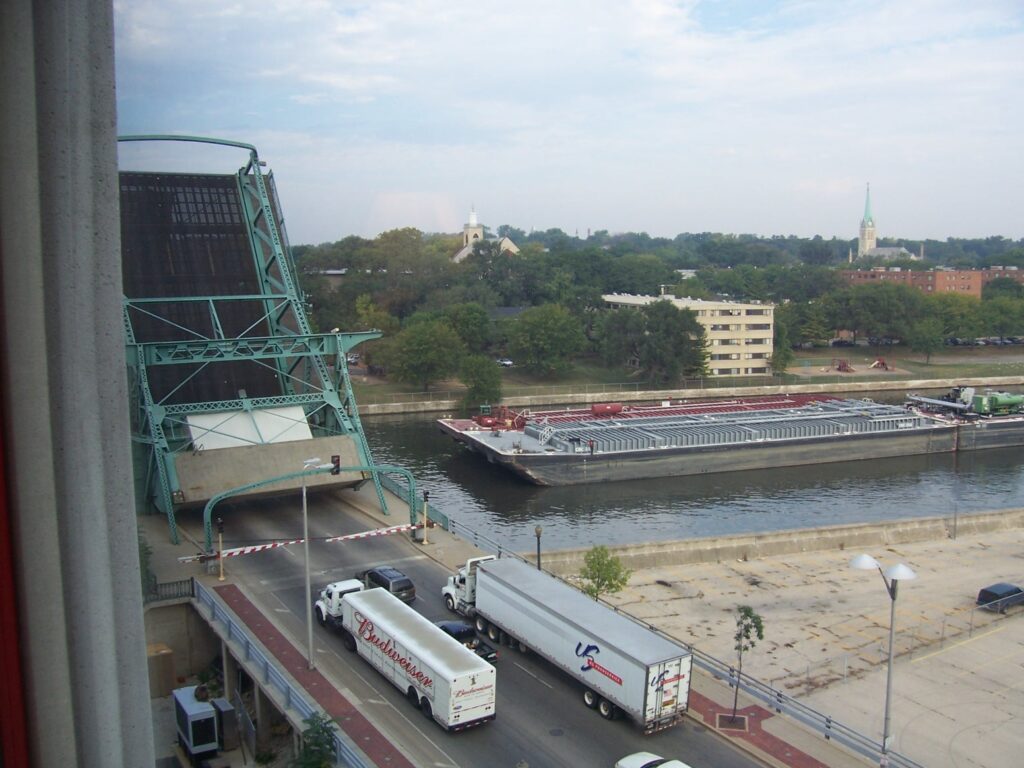
I’ve heard of Joliet but neither of us has ever been here before. I’m ashamed to realize I don’t even know the name of the river just outside our window. There is a lot for us to discover about the Midwest.
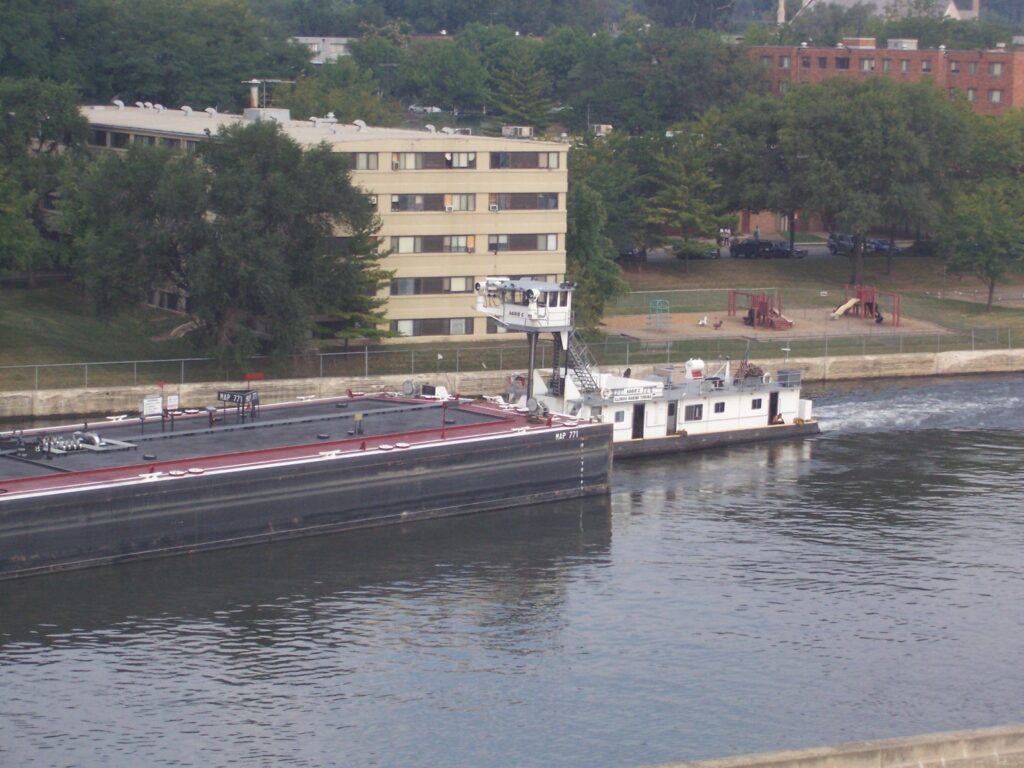
No need to rush this morning because the traffic is stopped outside. A bridge over the river is up as a wide, heavy-looking barge is being nudged along by a tug boat.
The Des Plaines River, the longest stream within the Chicago region, flows southward for 133 miles (105 miles in Illinois) through southern Wisconsin and northern Illinois. It eventually meets the Kankakee River southwest of Joliet to form the Illinois River, a significant tributary of the Mississippi River.”
Today is Robert’s 44th birthday so a leisurely casino breakfast seemed like a good choice. Our travel plans were changed last night. In the morning we will head north. So much for we only Go West!
It was almost noon when we said our farewells to the casino bed — and home. This journey is going to have a lot of “homes.”
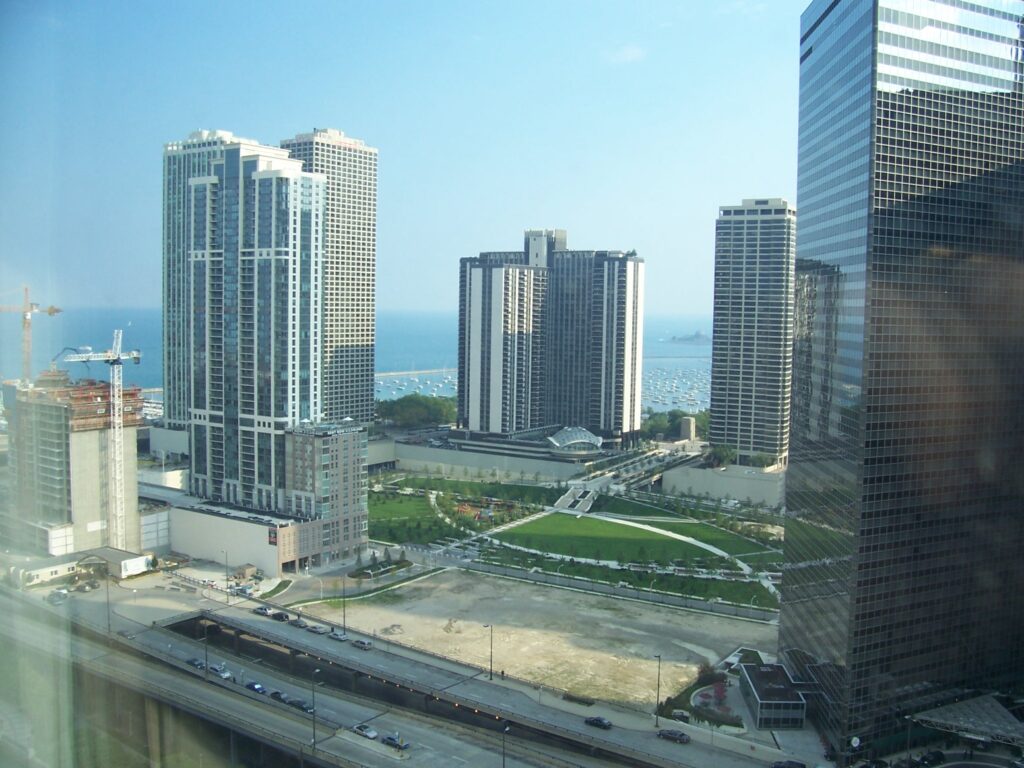
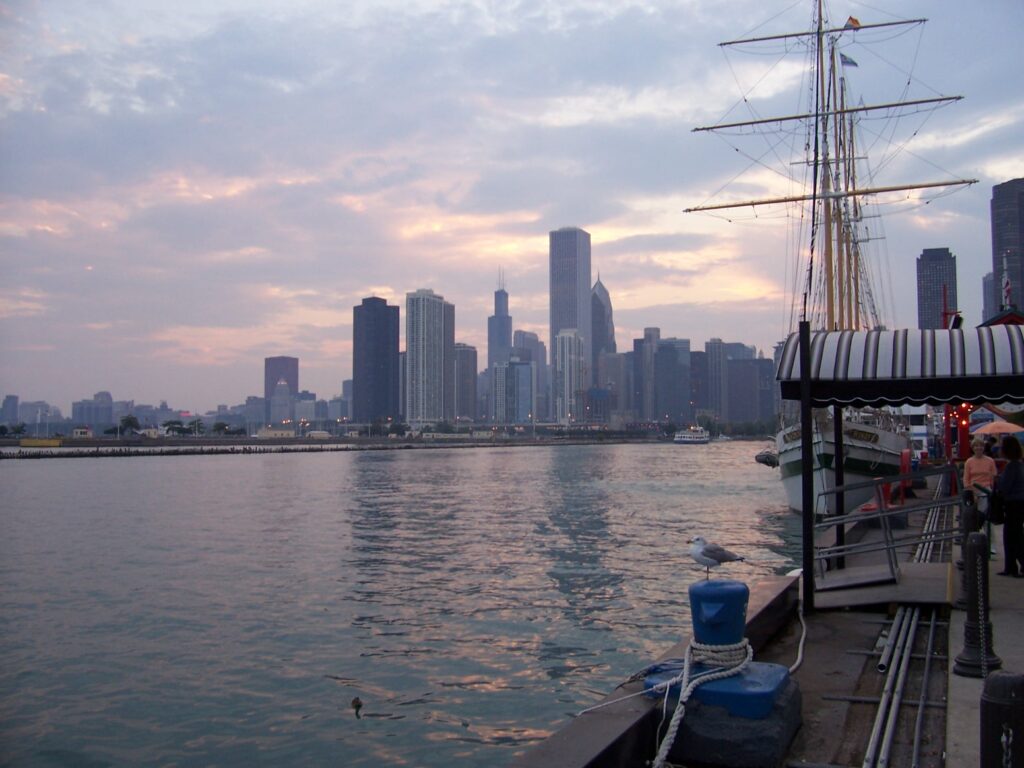
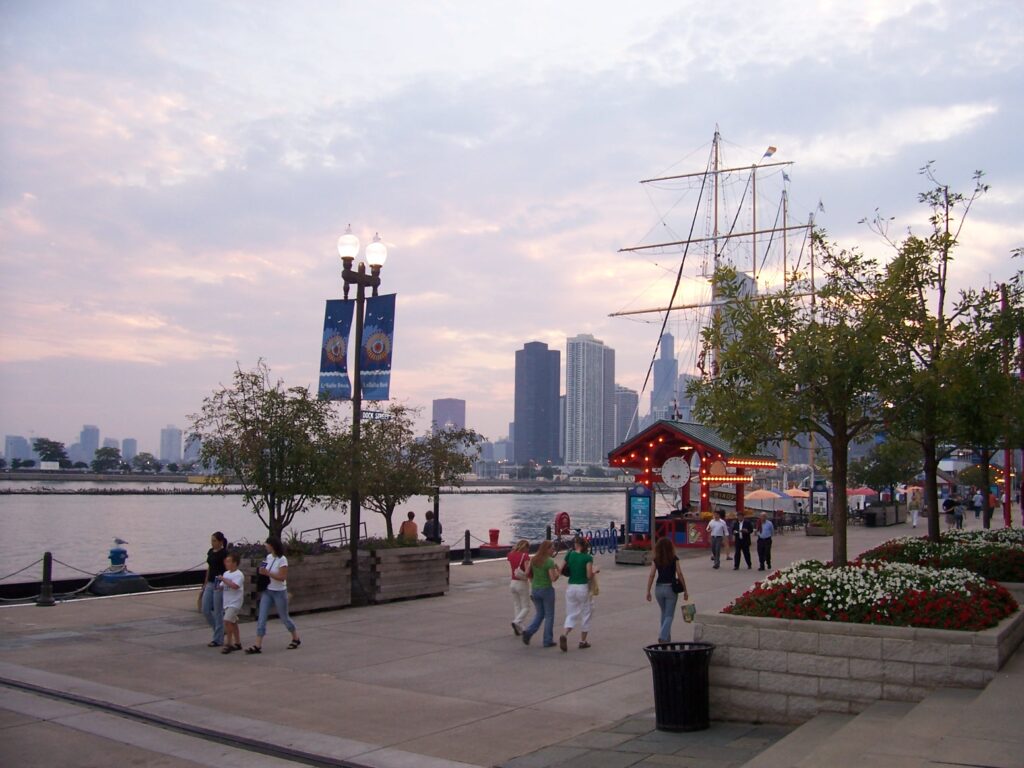
Chicago is the Windy City and home to the Navy Pier
It is only 72 miles from Joliet to Chicago. This is his day, so Rob has his choice of what to do and where to eat. He wants to walk over to the Navy Pier and check out the harbor. So we did.
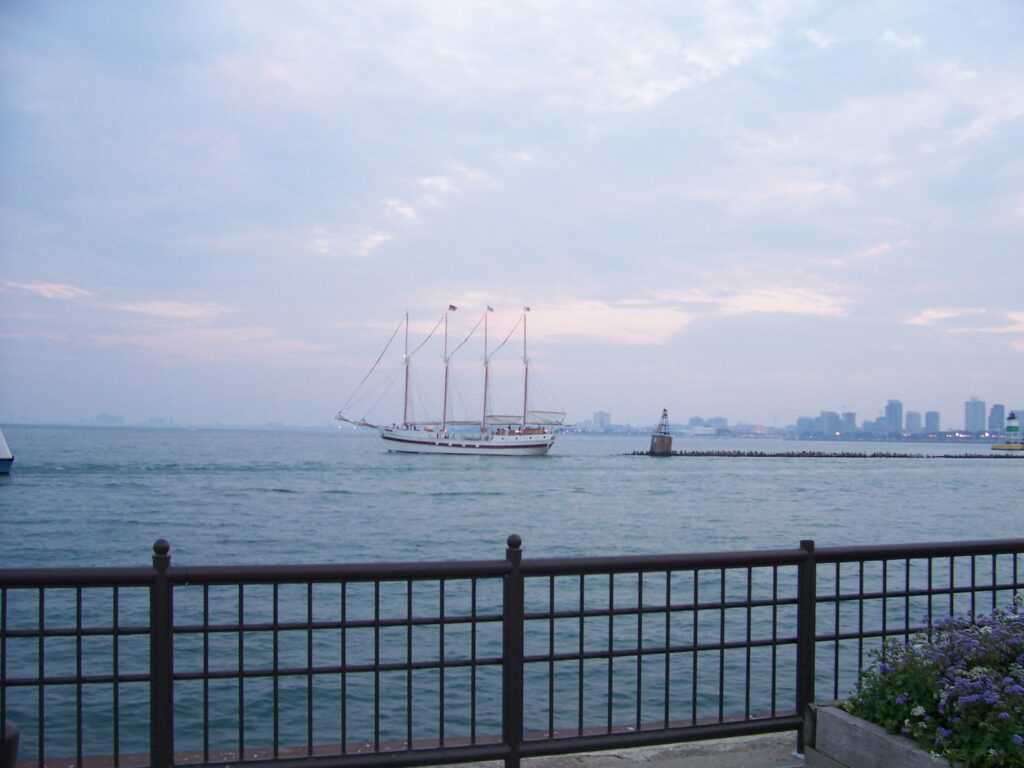
The Navy Pier is 3,300-feet long. That is almost a half mile so a walk to the end to look out onto Lake Michigan takes a while. Especially since I like to window shop and look around like the tourist I am.
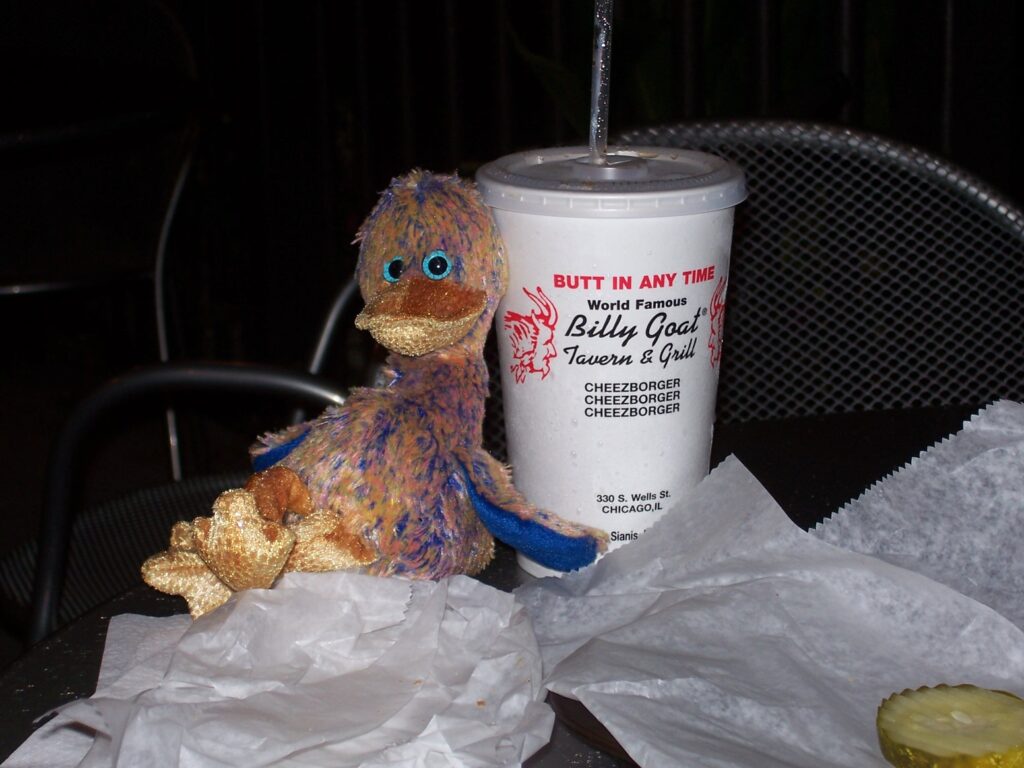
Birthday turned into another beautiful night given to strolling. We stop along the Pier for a birthday dinner of hot dogs. Not fancy, but good American summer picnic food. Then we continued on, to look out over the southern tip of Lake Michigan and back at the Chicago skyline. Rob’s birthday has been a typically beautiful late-summer day. A good counterpoint to yesterday’s long drive.
Driving across the United States
PART 3: Joliet and Chicago (IL) to Minneapolis (MN)
Midwest States
Minneapolis (“Minnie”) is the City of Lakes
It seems we are mixing long drives with short ones. Leaving Chicago we drive 435 miles into and through the southwest corner of Wisconsin, into Minnesota. Tonight’s home is a motel by the gigantic Mall of America in Minneapolis.
Ever practical, we cannot take a year’s worth of clothing with us. In fact, we have only about eight day’s worth of clothes so a Holiday Inn is in order. It has laundry facilities as well as internet access. Besides, we’ll be able to check in with niece, Kelly, for a weekend visit.
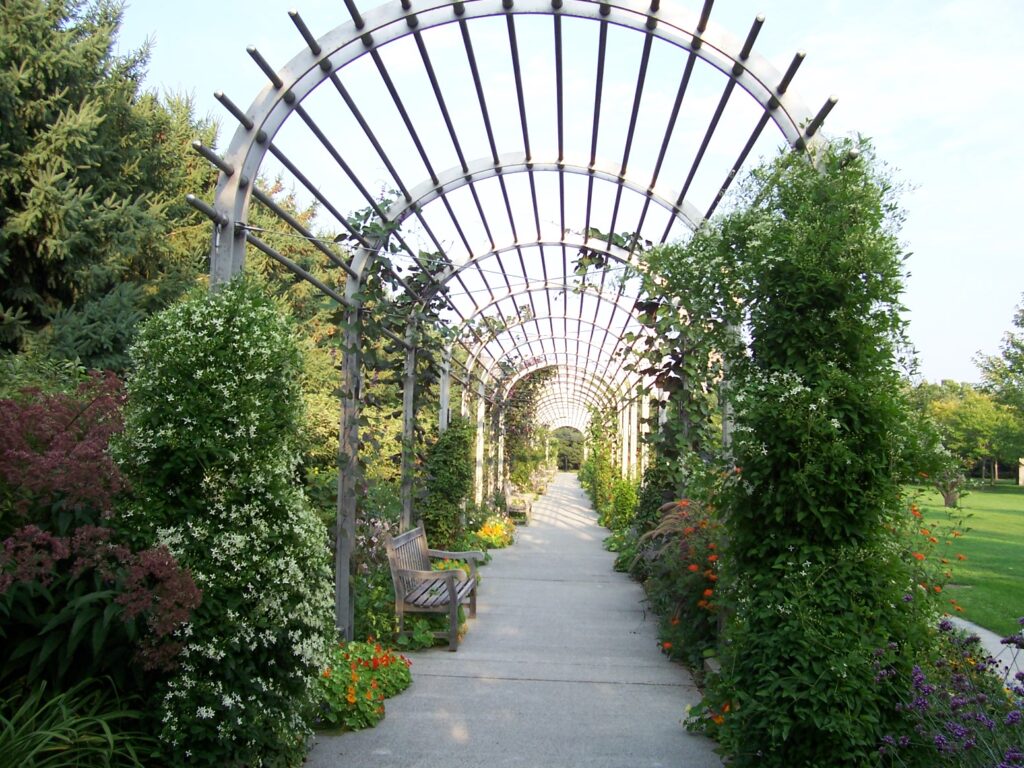
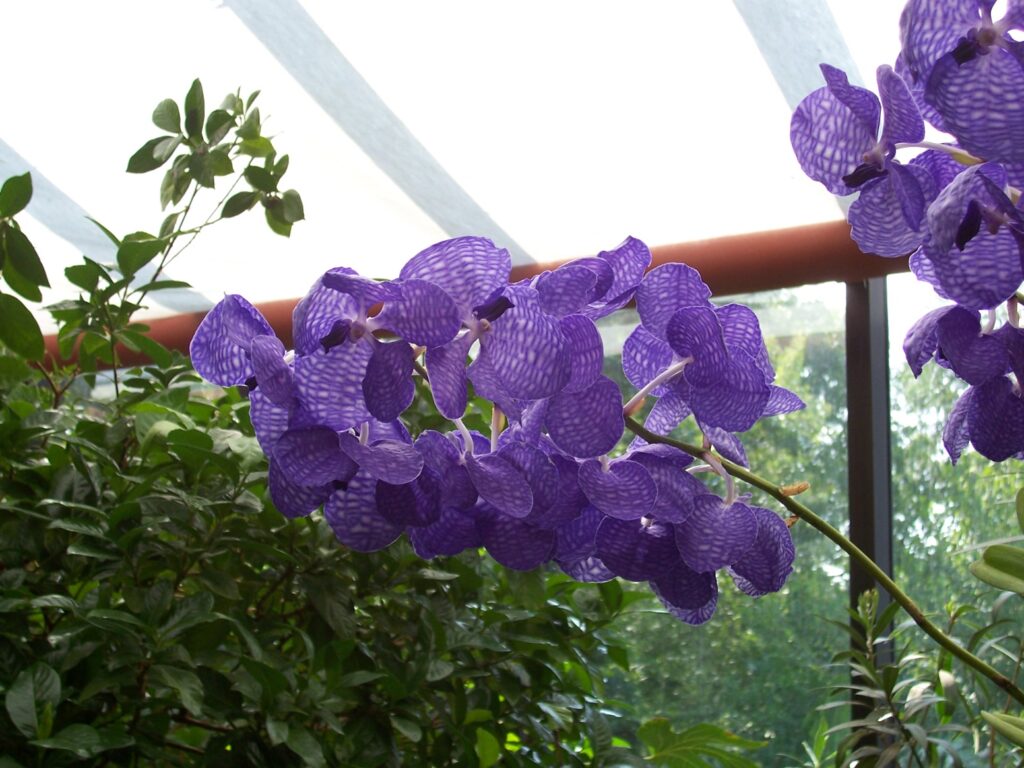
University of Minnesota Landscape Arboretum
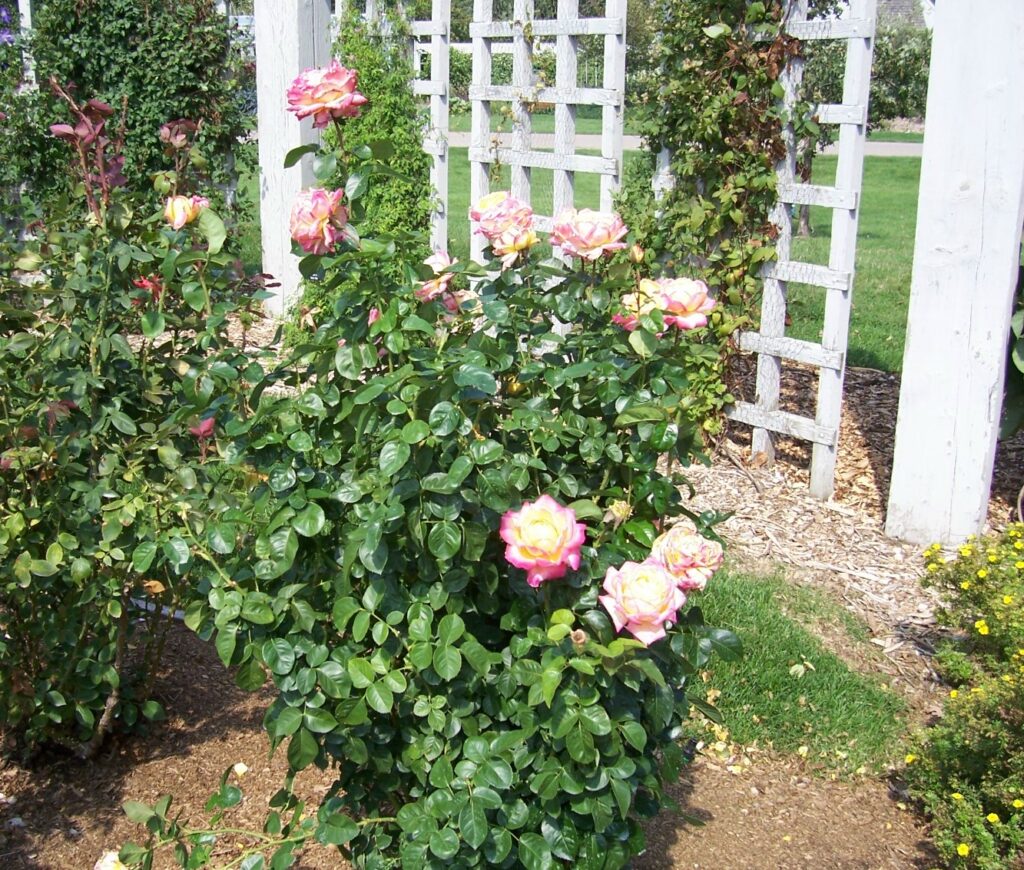
Saturday morning we pick Kelly up and head out of town to the University of Minnesota’s Landscape Arboretum. Another nice sunny day. We all feel healthy for the walking. The arboretum covers a lot of ground and is picturesque by design.
I take a lot of pictures of favorite things. But Kelly and I spend more time catching up on each other’s lives. Despite the physical distances between us, we have a special link in that we share an April birth date. Some in our family say we also share a particular temperament, as well.
Kindred Spirits
There is the family story about the time Kelly’s Mom, Barb, called my Mom to ask what she would do if I were outside at 9 o’clock at night, arms wrapped solidly around a light post, refusing to come inside. My mother said, “I’d leave the door unlocked and go to bed … she’ll come in eventually.”
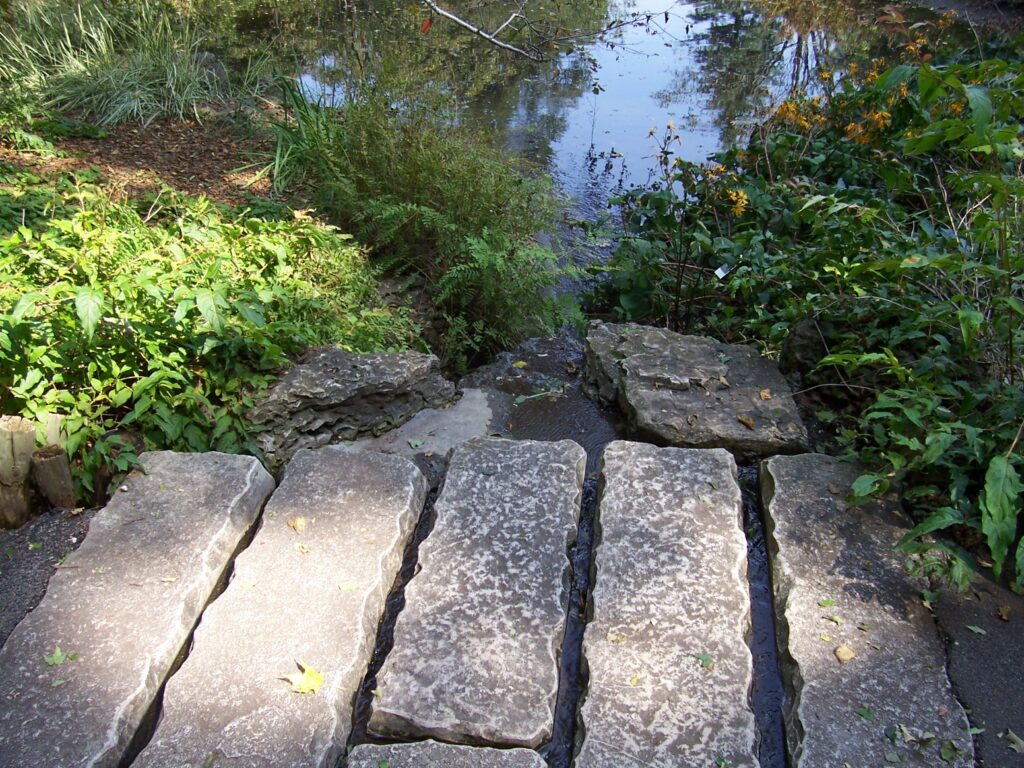
Arboretums and gardens are always a fun place because you literally are encouraged to stop and smell the roses. There are also wonderful water features and stone bridges that form pathways through boggy waters. When we have a house again, I think I want it to have a shallow moat.
The next best thing about this type of outing is that just as you think you cannot take another step, there will be a cafeteria. Yes, time for a sit down with good food at reasonable prices.
Over lunch we share memories from our separate trips to Peru and Machu Pichu. Kelly walked the Inca Trail with friends; we took the train and bus. She tells us about her adventures to the temples of Angkor Wat in Cambodia. That is already on our list of places to see. Apparently that birthday bond includes a bit of wanderlust. Or is it that we have inquiring minds?
Minnehaha Park and Mexican Dinner are a great combo
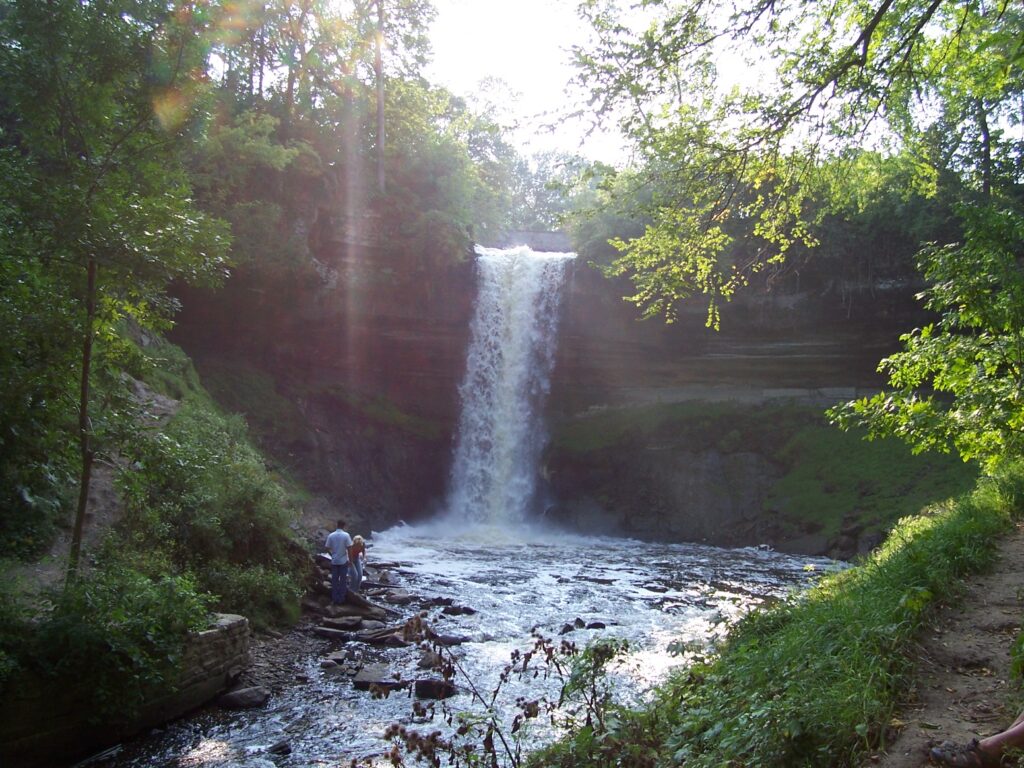
Back to “Minnie,” Kelly directs us to Minnehaha Park, the home of — you got it — Minnehaha Falls. The waters rise each spring to cut the bowl surrounding the falling water. It must be something to see. Unlike the more peaceful arboretum, hundreds of families are milling about in the park. Some are picnicking, others are just out for a stroll much like us, enjoying the sunny, hot day.
Eventually we decide we are hungry again and off we go, back toward Kelly’s neighborhood, to a Mexican restaurant for more great food and drinks. This is not a fast food spot or Tex-Mex mix; tonight is real Mexican food. I thoroughly enjoyed the best Pina Colada I’ve ever had. It turns out it was made with tequila instead of rum. Will I remember that?
We decided to keep moving after we dropped Kelly off. This is counter to all those rules about early starts as it is about 6:30 p.m. It seems prudent, though, to backtrack south and move down toward Albert Lea because we can catch up with the interstate in the morning.
As every day ends, we think about how far we’ve come and how far we have yet to go
Another Marilyn Musing
Tomorrow we will start the long haul across the country. As we get ready for bed, we realize that we will be looking at new territory for the next third of the trip: Minnesota, South Dakota and Wyoming.
A third of the way to California
Rob calculated that we have already driven more than 2,000 miles. That is a lot more than we would have guessed. Americans tend to split the U.S. into thirds: two coasts and the flat, middle bit. And we all know from grade school that our country is 3,000 miles wide, right? I’m not at all sure exactly where that 3,000 mile line was measured, but we are not driving straight even if we were near it. Side trips are too much fun.
Tomorrow morning will be another kind of new beginning.
University of Minnesota Landscape ArboretumOrchidsOrchidsStopping to smell the rosesGreat idea for a boggy walkMinnehaha Falls, MinneapolisMinnehaha Park, Minneapolis
This post is one in a series that document our 400-day trip round the world (2005-2006). Each segment will be linked in at RTW.